
Launch and scale with a proven clothing manufacturer for startups
Building a fashion brand is hard enough—finding a dependable clothing manufacturer for startups should not add more risk. Gavitex, based in Vietnam, helps founders convert sketches and moodboards into consistent, export‑ready product. We blend engineering discipline with designer empathy so your first deliveries arrive on time, look great, and protect your cash flow.
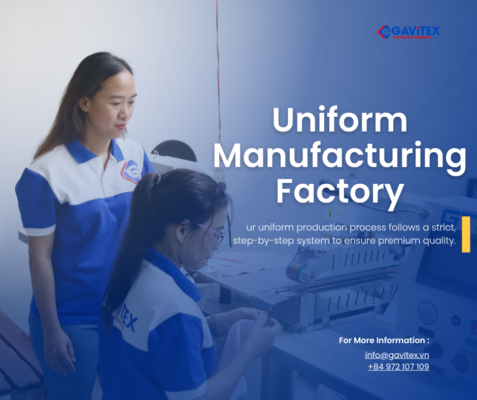
From one capsule to your first full range, we operate synchronized clothing production lines, offer flexible MOQs, and maintain clear calendars. Whether you work under an OEM clothing manufacturer model or evolve into private label apparel, our teams keep development, sampling, and production aligned—so you can focus on brand and growth.
Need flexible MOQs and dependable timelines?
Speak with a clothing manufacturer for startups today.
📑Contents
- 1. What a modern clothing manufacturer for startups delivers
- 2. Partner factory vs. in‑house workshop
- 3. Capabilities, technology, and process
- 4. Contracts, NDA, and brand protection
- 5. Five reasons founders choose Gavitex
- 6. Market view & colorful chart
- 7. Reference pricing (save 35–45%)
- 8. Contact Gavitex / Get a quote
- 9. Frequently asked questions
1. The value behind a modern clothing manufacturer for startups
1.1 From idea to industrial spec—without losing your brand DNA
A great clothing manufacturer for startups translates inspiration into production‑ready assets: patterns and graded size charts, fabric yield and BOMs, approved trims, method of make (MoM), workmanship visuals, packaging and carton rules. At Gavitex, we benchmark fit against your vision—comfort, drape, silhouette—then build testability in: shrinkage and hand targets inform pattern shapes; seam constructions balance appearance with durability.
Inline checkpoints, visual AQL guides, and crisp escalation rules stabilize lines early. For founders, that means fewer firefights and fewer claims at DCs. This is how disciplined routines convert engineering into commercial value: predictable calendars, clean QC data, and repeatable quality at export level—all essential when a clothing manufacturer for startups is your operating backbone.
1.2 Flexible MOQs and staged risk for first seasons
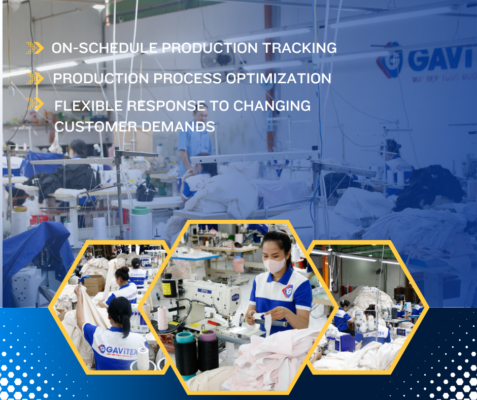
Early seasons have unknowns. We design staged risk: pilot cuts to validate fit and color fastness; controlled ramp‑ups to prove line balance; and replenishment logic to protect bestsellers. With synchronized clothing production lines, we can run basics and experiments in parallel, so your learning cycle accelerates without derailing deliveries.
1.3 Transparent calendars and cash‑flow empathy
Founders live by cash discipline. As a clothing manufacturer for startups, we align PO deposits, sample rounds, and material commitments to your milestones. Clear ex‑factory windows, port cut‑offs, and buffer time mean fewer surprises and healthier cash conversion.
Explore related operations in Vietnam: clothing line manufacturer. Deep‑dive the topic on our service page: clothing manufacturer for startups. Ecosystem partner hub: garment manufacturing.
2. Partner factory vs. in‑house workshop (a practical comparison)
2.1 When building your own workshop fits
A small in‑house workshop can work for micro runs, artisan finishes, or ultra‑fast sampling. You’ll control every stitch, but you also carry fixed costs, training load, and management overhead. As your range widens, manual tracking, variable workmanship, and limited capacity can trigger late ships and inconsistent quality.
2.2 Why most startups partner with a structured factory
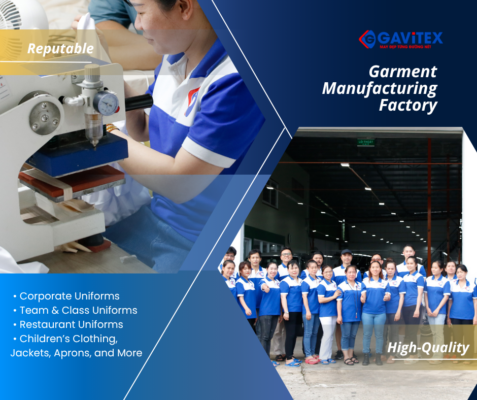
A mature partner like Gavitex brings industrial engineering, trained operators, and QA frameworks that scale. You keep creative direction while execution runs on tuned lines. Capacity flexes with your range plan; calendars tie to logistics reality; costs remain visible and controllable. In short: a seasoned clothing manufacturer for startups lets you scale without chaos.
2.3 Decision guide for founders
| Factor | Your own workshop | Partner factory |
|---|---|---|
| Upfront cost | High (machines, training) | Low to medium (per order) |
| Lead time predictability | Variable | Scheduled to port cut‑offs |
| Quality consistency | Depends on a few people | Process‑driven, audited |
| Scalability | Limited by space and skill | Modular lines, expandable |
Workshops help you start; a professional clothing manufacturer for startups helps you grow with confidence.
3. Capabilities, technology, and process that power Gavitex
3.1 Engineering by category
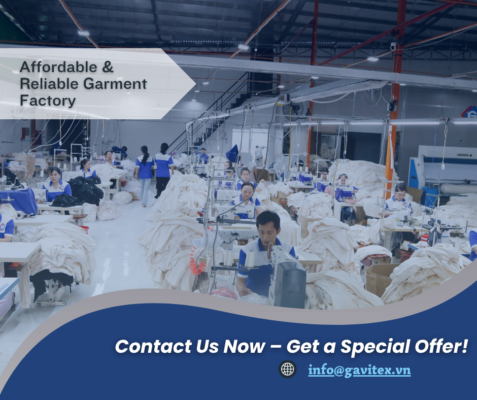
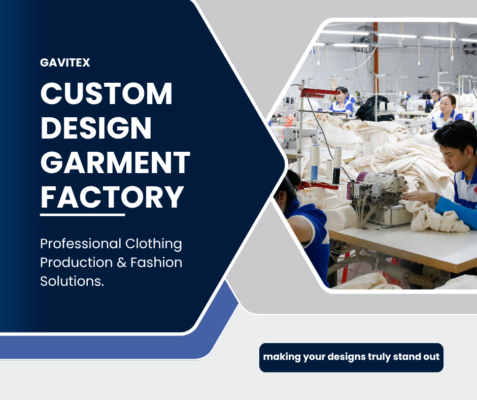
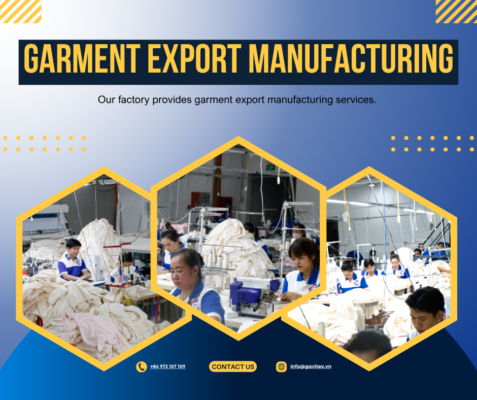
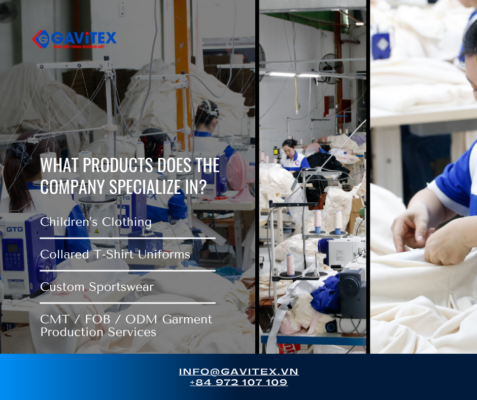
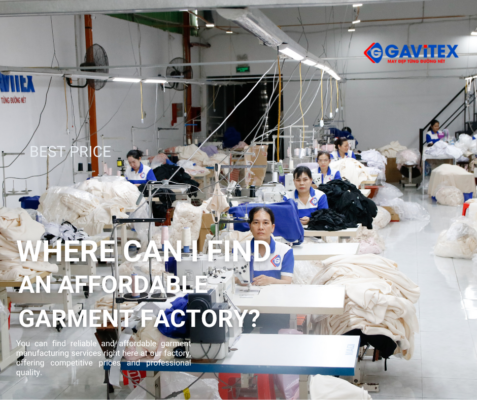
We run synchronized lines for knits, wovens, athleisure, uniforms, and kidswear. Industrial engineers balance operations, set target efficiency, and define the method of make per style. That’s why tees, polos, shirts, chinos, leggings, and light outerwear flow through environments tuned for their construction—core to any reliable clothing manufacturer for startups model.
3.2 Tools that shorten the path from design to bulk
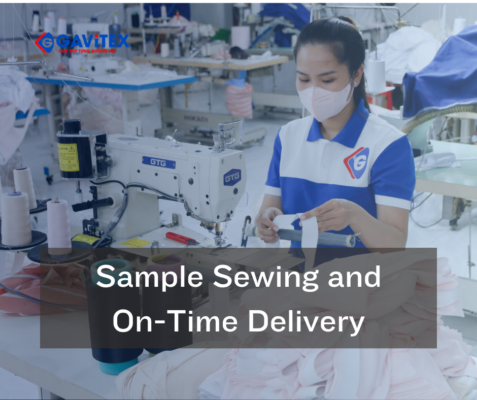
Digital pattern systems, 2D grading, and marker planning connect to automated spreaders/cutters. Specialized machines—auto pocket setters, buttonhole and bartack units, seam sealing—support both basics and technical pieces. Live boards track output, inline quality, and approvals so leaders act quickly when variance appears.
3.3 Service models: OEM, private label apparel, and custom clothing production
As an experienced OEM clothing manufacturer, Gavitex executes bulk programs against your specs. For design‑led clients, we refine fit, construction, and trims to industrialize new aesthetics. We also collaborate with Vietnam partners such as garment manufacturing specialists to scale capacity without compromising control.
Useful links: Learn more about our broader capability as a clothing line manufacturer and see how we stage risk on the dedicated page for clothing manufacturer for startups.
4. Contracts, NDA, and brand protection—founder‑friendly foundations
4.1 Clear agreements and escalation paths
Every startup partnership starts with a manufacturing agreement aligned to your requirements. It defines workmanship standards, rework, claim handling, and Incoterms. Schedules link to port cut‑offs so booking and documentation stay predictable across seasons and destinations. These are the guardrails that let a clothing manufacturer for startups protect founders from avoidable surprises.
4.2 Confidentiality and asset custody
We sign NDAs covering sketches, blocks, prints, and brand assets. Digital folders use role‑based access; physical patterns and salesman samples are stored in controlled rooms. Development pieces are segregated from bulk stock to avoid leaks before launch—an essential safeguard when you manage multiple ranges or pre‑orders.
4.3 Compliance, testing, and traceability
We support social and technical audit schemes required by international retailers and maintain testable specs—shrinkage, colorfastness, restricted substances protocols—so defects and claims drop. Where programs require it, fabric and trim traceability can be documented to support sustainability narratives and customs rules.
Brand protection checklist for founders:
- Signed NDA per account and program.
- Controlled access to digital and physical patterns and samples.
- Non‑reuse clauses for patterns, prints, and trims across accounts.
- Return or destruction procedures for obsolete samples and labels.
5. Five reasons founders choose Gavitex as their clothing manufacturer for startups
5.1 Technical depth that reduces surprises
Pattern engineers, sewing technicians, and industrial engineers collaborate tightly. Small adjustments—needle size, SPI, pressing—are tuned for comfort, durability, and cost. Approvals come faster, and lines reach steady output sooner.
5.2 Cost control without compromise
By removing ambiguity before bulk and balancing operations, we cut rework and idle time. That’s why FOBs stay sharp while workmanship remains consistent—hallmarks of a mature clothing manufacturer for startups operation.
5.3 Flexibility at scale
Stable lines carry evergreen programs; flexible cells handle pilots and seasonal capsules. You can explore trends in parallel with replenishment, then scale winning layouts quickly.
5.4 Communication and visibility
Dedicated merchandisers track milestones from development to ex‑factory. Capacity snapshots and line dashboards give early warnings, enabling decisions before delays appear.
5.5 Partnership mindset
We invest in your fit philosophy, quality language, and commercial goals. Each season benefits from the last, creating a compounding advantage across categories and regions. It’s the practical difference between a vendor and a true clothing manufacturer for startups partner.
6. Market view and colorful chart—how startups typically allocate orders
6.1 Why Vietnam is a strategic base for new brands
A Vietnam base offers skilled labor, improving textile inputs, and reliable lanes to key destinations. For startups, this balance of cost, quality, and predictability supports both basics and fashion capsules. A disciplined hub also integrates with distributors and marketplaces for staged expansion.
6.2 Illustrative order allocation by channel
Below is an illustrative distribution of volume by channel in the first two seasons for a typical startup. Shares vary by category and strategy, but the view shows how a clothing manufacturer for startups can support staged growth while diversifying risk.
7. Reference pricing: how much you can save
7.1 Context
Wages, energy, freight, and compliance all matter, but line engineering and rework rates are decisive. With disciplined execution, a clothing manufacturer for startups program often lands 35–45% below typical market averages for comparable export quality.
7.2 Indicative FOB comparison (USD per piece)
Illustrative FOBs for startup‑friendly programs
| Product type | Market average | Gavitex indicative | Estimated saving |
|---|---|---|---|
| Basic cotton T‑shirt | $2.90 – $3.30 | $1.70 – $1.95 | ≈ 40% lower |
| Knitted polo shirt | $4.10 – $4.80 | $2.40 – $2.90 | ≈ 40–45% lower |
| Fleece hoodie | $7.20 – $8.20 | $4.30 – $4.90 | ≈ 35–40% lower |
| Denim jeans | $9.20 – $10.80 | $5.40 – $6.40 | ≈ 35–40% lower |
| Sports leggings | $6.60 – $7.70 | $3.90 – $4.50 | ≈ 40% lower |
| Corporate shirt (woven) | $7.60 – $8.60 | $4.30 – $5.10 | ≈ 35–45% lower |
Quotes depend on fabric, trims, complexity, and volumes. Share tech packs to get precise offers from our clothing manufacturer for startups team.
8. Contact Gavitex / Get a quote
8.1 What to prepare
Send sketches or tech packs, anticipated volumes, delivery window, size curves, and destination regions. We’ll map development, testing, and line loading, then schedule samples and PP approvals.
8.2 Learn more
Explore the broader capability: clothing line manufacturer. Read this topic in depth on our page: clothing manufacturer for startups. For ecosystem partners, visit garment manufacturing in Vietnam.
Ready to brief your first season?
Hotline (Vietnam): 0972107109
9. Frequently asked questions about working with a clothing manufacturer for startups
1. What is the minimum order quantity and how flexible can it be?
We offer startup‑friendly MOQs that vary by product, fabric, and trim complexity. Rather than quoting a single number that rarely fits all, we start with your launch plan and reverse‑engineer the MOQ to protect quality and cost. For example, a basic T‑shirt in common fabrics can have lower MOQs than a multi‑panel jacket with specialized trims. We also stage risk via pilot cuts and replenishments, so you validate demand without over‑committing. This approach lets a clothing manufacturer for startups support both cautious first seasons and fast ramps when a style wins.
2. How long does sampling and production typically take?
Timelines depend on fabric mills, approvals, and destination logistics. A simple knit can move from tech pack to PP in a few weeks; complex wovens and outerwear take longer due to testing and trims. Our calendars clarify fit rounds, fabric booking, PP, inline checks, and ex‑factory windows. By mapping dependencies up front, a clothing manufacturer for startups removes uncertainty and helps you plan marketing and channel drops with confidence.
3. Can you support both a basics range and smaller fashion capsules?
Yes. Stable lines carry evergreen programs at high efficiency while flexible cells focus on experimentation. Designers can test new silhouettes, fabrics, or finishes without disrupting replenishment. If a capsule gains traction, we replicate the best‑performing layout to scale quickly—one of the practical advantages of partnering with an experienced clothing manufacturer for startups.
4. How do you protect our designs and brand while working with multiple clients?
We sign NDAs covering creative and technical assets. Digital files are stored with role‑based permissions; physical patterns and salesman samples remain in controlled rooms. We commit to non‑reuse of patterns, prints, or trims across accounts, and development items are segregated from bulk stock until launch. These routines ensure your clothing manufacturer for startups acts as a safe extension of the brand—not a risk to it.
5. What information should we send to get a precise quote and timeline?
Share sketches or tech packs, anticipated volumes, size curves, target FOBs, and destination regions. Include brand blocks or previous samples if available. We will propose a plan mapping development rounds, required testing, and line loading. Quotes reflect fabric usage, making time on clothing production lines, trims, and overhead. With approvals in place, your program moves into scheduling with clear milestones to ship on time.
