
Gavitex Insight into the fabric manufacturing process
Behind every reliable garment collection lies a controlled fabric manufacturing process. For brands and retailers, understanding how fibres become finished fabric – and how that fabric flows into garment manufacturing – is key to building durable products, fair pricing, and on-time delivery. Gavitex works closely with its textile partners to make sure that each roll supports export-quality standards, so your styles look and feel consistent across markets.
Need a Vietnam-based production partner that can really explain and control the fabric manufacturing process behind your collections? Share your target products and markets with Gavitex to receive transparent options.
1. Why the fabric manufacturing process matters for brands
From yarn to garment: unseen decisions that define quality
When shoppers pick up a T-shirt, dress, or hoodie, they instantly judge softness, thickness, drape, and colour. All of these impressions are shaped by the fabric manufacturing process long before a garment reaches the sewing floor. Fibre selection, spinning, weaving or knitting, dyeing, and finishing decide how a fabric behaves during cutting, sewing, and everyday wear. If these steps are not aligned with your brand’s positioning, no amount of careful sewing can fully rescue the product experience.
Why garment manufacturers care deeply about fabric
As a Vietnam-based partner with strong garment manufacturing capabilities, Gavitex pays close attention to how fabric is made, not just how garments are sewn. Stability in shrinkage, consistent weight, and predictable shade results are essential for running efficient clothing production lines. When the fabric manufacturing process is well controlled, patterns can be used repeatedly, yields become more predictable, and lines can run without constant interruptions due to unexpected fabric behaviour.
Connecting mills, Gavitex, and global brands
Gavitex works with selected textile mills that understand international expectations. Together they plan the fabric manufacturing process from yarn specification and construction choices to dyeing recipes and final finishing. For brands running private label apparel or custom collections, this partnership provides a reliable backbone: the same fabric quality can be reproduced across seasons, and new styles can be developed faster because the base textiles are well understood.
Key idea: Treating the fabric manufacturing process as part of your brand strategy – not just a technical detail – is one of the simplest ways to improve customer satisfaction and reduce hidden costs.
2. Step-by-step explanation of the fabric manufacturing process
Fibre and yarn: the foundation of performance
The first stage of the fabric manufacturing process is fibre selection and yarn production. Mills decide whether to use cotton, polyester, viscose, blends, or special functional fibres. They then spin these fibres into yarns with specific counts and twist levels. These decisions strongly influence softness, pilling resistance, and fabric strength. For export programs, Gavitex insists on yarn parameters that balance handfeel, durability, and cost, ensuring that resulting fabrics perform well in both production and everyday use.
Construction: weaving or knitting
The next stage in the fabric manufacturing process is turning yarns into greige fabric through weaving or knitting. Weaving interlaces warp and weft yarns to create structures such as plain, twill, or satin, common in shirts, trousers, and outerwear. Knitting uses loops, as in jersey or rib fabrics, often used for T-shirts, sweatshirts, and casualwear. Construction density, machine type, and gauge all affect weight, stretch, and drape. Gavitex collaborates with mills to select constructions that suit the intended category and the capabilities of its clothing production lines.
Pretreatment, dyeing, and finishing
Once greige fabric is created, it passes through pretreatment steps such as desizing, scouring, and bleaching to remove impurities. The fabric manufacturing process then moves into dyeing or printing, where colour and patterns are applied. Recipes are carefully controlled to achieve required shades and fastness levels. Finally, finishing gives the fabric its final handfeel and technical properties – for example, brushing for fleece, mercerising for lustre and strength, or chemical finishes to manage shrinkage and wrinkle recovery. For export programs, Gavitex reviews test reports to ensure these finishes meet buyer and market expectations.
Inspection, packing, and flow into garment manufacturing
Before fabric is shipped to the sewing lines, mills inspect width, weight, shade, and visible defects, then roll or fold according to agreed standards. Gavitex performs incoming checks to verify that the fabric manufacturing process has produced textiles within tolerance. Only then is fabric issued to cutting rooms, where custom clothing production takes over. By connecting upstream controls with disciplined garment manufacturing, Gavitex reduces rework and protects lead times.
Value of a well-managed fabric manufacturing process
- Predictable shrinkage and dimensional stability.
- Consistent colour from lab dip to bulk roll.
- Fewer line stoppages and quality disputes.
- Better customer experience through stable handfeel and performance.
3. Comparison: controlled fabric manufacturing process vs opportunistic fabric sourcing
Opportunistic sourcing: buying whatever is available
In opportunistic sourcing, suppliers simply buy fabrics that are available at attractive prices in local markets or stock warehouses. They may skip detailed checks on yarn origin, construction, or finishing. While this can reduce costs in the short term, it often leads to issues: unpredictable shrinkage, colour variation between batches, and performance problems such as pilling or twisting. For brands using such approaches, it becomes difficult to maintain a coherent identity across regions and seasons.
Controlled fabric manufacturing: a strategic asset
When brands and factories invest in a controlled fabric manufacturing process, fabric moves from being a commodity to a strategic asset. Mills and garment partners agree on specifications, testing plans, and approval workflows. Once a fabric is validated, it can be reused across styles and seasons with confidence. Gavitex and its partners approach fabric in this way, particularly for ranges that must support export-quality clothing. The result is greater consistency for customers and smoother operations for sourcing teams.
Impact on garment manufacturing and brand reputation
In poorly controlled setups, cutters and sewing operators constantly fight with fabric issues, which slows clothing production lines and increases defect rates. In contrast, a disciplined fabric manufacturing process supports efficient custom clothing production and lowers the risk of disappointing customers. Over time, this discipline directly influences repeat sales, return rates, and word-of-mouth. For brands operating in multiple markets, the cumulative impact on reputation can be significant.
At a glance
- Opportunistic fabric sourcing: short-term savings, long-term inconsistency.
- Controlled fabric manufacturing process: predictable quality, fewer surprises.
- Brands working with Gavitex benefit from a more strategic, data-backed approach to fabric.
5. Gavitex capabilities: from fabric manufacturing process to finished garments
Integrated planning with textile mills
Although Gavitex is primarily a OEM clothing manufacturer, the company plans production in lockstep with its fabric partners. Together they review fibre mixes, constructions, and finishing options at the beginning of each season. By aligning the fabric manufacturing process with expected garment silhouettes and order volumes, they reduce surprises and secure capacity in advance. This is particularly important for export schedules where delays at the fabric stage can cascade through the entire supply chain.
Efficient clothing production lines built for controlled fabrics
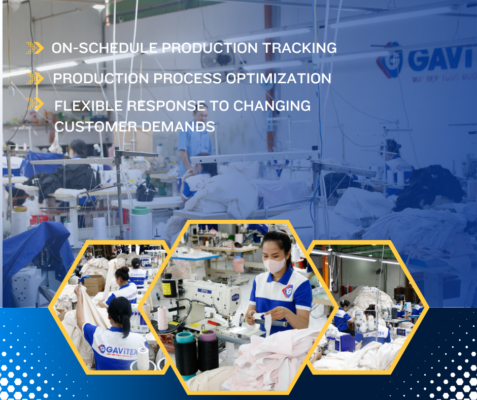
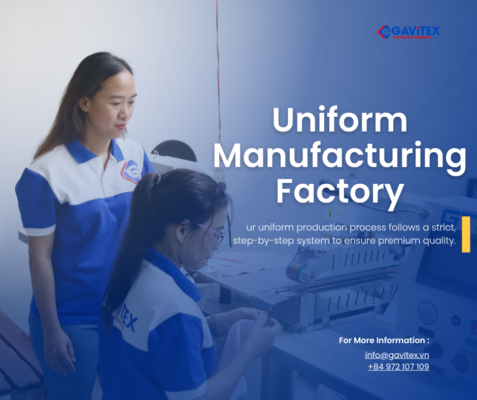
Inside the factory, Gavitex operates efficient clothing production lines for knits and wovens, supported by CAD-driven cutting and clear work methods. When fabrics arrive with stable properties thanks to a disciplined fabric manufacturing process, these lines can run at planned speeds with fewer quality incidents. That means better on-time performance and fewer last-minute changes, which benefits brands as well as the factory.
Cost-effective custom clothing production
Gavitex combines fabric discipline with competitive labour and overhead costs in Vietnam to offer attractive pricing on custom clothing production. Whether you are building basics, fashion ranges, or special capsules, the combination of a controlled fabric manufacturing process and reliable garment manufacturing keeps your offers competitive. To see how this links to export programs, you can also review the dedicated page on fabric manufacturing process at Gavitex.
Key strengths of Gavitex
- Close collaboration with mills on the fabric manufacturing process.
- Stable, well-organised garment lines powered by CAD and real-time data.
- Competitive FOBs across multiple categories.
- Experience with export programs for international brands and private label apparel.
6. Legal compliance, NDAs, and brand protection
Contracts that reflect fabric and garment realities
Supplying export collections involves commitments not only on delivery dates and prices, but also on fabric performance and regulatory compliance. Gavitex structures contracts to reflect how the fabric manufacturing process interacts with finished garments. Agreements cover testing responsibilities, performance benchmarks, and procedures if a fabric fails to meet agreed standards. This clarity helps both sides manage risk and supports repeat cooperation across seasons.
NDAs and confidentiality
Brands regularly share sensitive data with Gavitex: fabric recipes, proprietary finishes, fit blocks, and commercial strategies. Non-disclosure agreements protect this information. Only relevant staff can access technical details of the fabric manufacturing process and associated styles. This is especially important for brands developing unique handfeels, finishes, or performance claims as part of their identity.
Protecting brand identity in materials and finished goods
Gavitex keeps branded materials, trims, and packaging segregated by client. Surplus or rejected fabrics and garments are handled in controlled ways, avoiding unauthorised market leakage. These practices, combined with a disciplined fabric manufacturing process, help brands maintain their positioning and price integrity. For broader strategy around brand-building and consumer communication, some partners also explore external support through platforms such as private label apparel marketing specialists.
Brand safeguards at Gavitex
- Contracts aligned with fabric and garment performance goals.
- Confidential management of recipes, finishes, and fits.
- Controlled storage and disposal of branded components.
These safeguards make Gavitex a reliable partner for brands that care about both product and reputation.
7. Four reasons to choose Gavitex
1) Deep technical understanding from yarn to garment
Gavitex teams understand how decisions in the fabric manufacturing process translate into performance on the sewing line and in the customer’s wardrobe. This allows them to suggest realistic improvements and avoid specifications that look good on paper but cause trouble in practice.
2) Strong garment manufacturing capabilities
As an experienced OEM clothing manufacturer, Gavitex runs stable lines for basics, fashion, and light outerwear. The combination of smart layout, trained operators, and reliable fabrics from a controlled fabric manufacturing process supports both speed and consistency, key to competitive export programs.
3) Partnership mindset for long-term programs
Gavitex aims to become a strategic partner, not just an order taker. Teams collaborate with brands to rationalise fabric types, streamline the fabric manufacturing process across categories, and phase in improvements over several seasons. This mindset is particularly valuable for retailers building multi-country private label apparel programs.
4) Integration into export-focused networks
Clients often position Gavitex as a key node within a network of export suppliers, along with other export-quality clothing partners. Thanks to its deep familiarity with the fabric manufacturing process, Gavitex frequently sets benchmarks for quality, communication, and on-time delivery that other factories are asked to follow.
8. Contact Gavitex / Get a quote
Information that helps us respond quickly
To prepare a meaningful proposal, Gavitex benefits from understanding your product categories, expected volumes, target markets, and preferred timing. If you already source garments elsewhere, sharing pain points related to fabric – such as pilling, twisting, or colour inconsistency – helps us design a better fabric manufacturing process together with our mills.
From trial programs to long-term partnerships
Many brands start with a small program to test communication, quality, and lead-time performance. Once satisfied, they gradually move more volume and more categories to Gavitex, knowing that the underlying fabric manufacturing process and garment operations can scale responsibly.
Talk to Gavitex about your next collection
Whether you need everyday basics or more complex ranges, Gavitex can connect a disciplined fabric manufacturing process with reliable garment manufacturing. Hotline: 0972107109.
FAQ
Why is the fabric manufacturing process so important for my brand?
Does Gavitex own textile mills, or how do you manage fabric?
Can you help upgrade existing fabrics we already buy?
How does a controlled fabric manufacturing process affect lead times?
How can we start a pilot with Gavitex focusing on fabric?