

Understanding global clothing export markets with Gavitex
For brands and retailers, choosing the right clothing export markets can unlock growth, lower risk, and stabilize margins. Gavitex—an experienced Vietnam‑based partner for garment manufacturing—helps you translate market signals into practical assortments, quality levels, and price points. With synchronized clothing production lines, disciplined planning, and a consultative team, we turn country requirements into industrial reality.
Whether you sell through wholesale, marketplace, or direct‑to‑consumer channels, we connect product design, compliance, and logistics so your collections ship on time and meet expectations. From
private label apparel staples to specialized capsules under a flexible OEM clothing manufacturer model, Gavitex provides clarity on where and how to compete across regions.
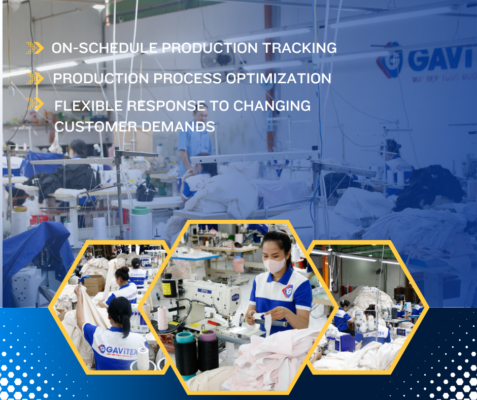
Planning your next season for multiple regions?
Our team will align compliance, specs, and costing for your target clothing export markets.
🧭Contents
- 1. What defines winning in clothing export markets
- 2. Export markets vs. domestic markets
- 3. Gavitex capabilities for multi‑market programs
- 4. Legal compliance & brand protection across borders
- 5. Five reasons global buyers choose Gavitex
- 6. Colorful chart: focus regions for apparel exports
- 7. Reference pricing and expected savings
- 8. Contact Gavitex / Get a quote
- 9. Frequently asked questions
1. What defines success in modern clothing export markets?
1.1 Product‑market fit across regions
Winning in clothing export markets begins with calibrated assortments. Climate, size curves, fabric expectations, and price psychology differ between North America, the EU/UK, Japan, Australia, and the Middle East. Gavitex helps translate these variables into construction methods, fabric weights, and finish levels that keep quality credible while protecting margin. Our experience in
custom clothing production lets you localize details—neck shapes, hem lengths, trims—without reinventing core patterns every time.
1.2 Compliance and documentation readiness
Export programs require auditing, testing, and accurate declarations. We design specs with testability in mind and plan shipping documents early so cartons clear smoothly. This discipline allows brands to scale across clothing export markets with fewer last‑minute surprises.
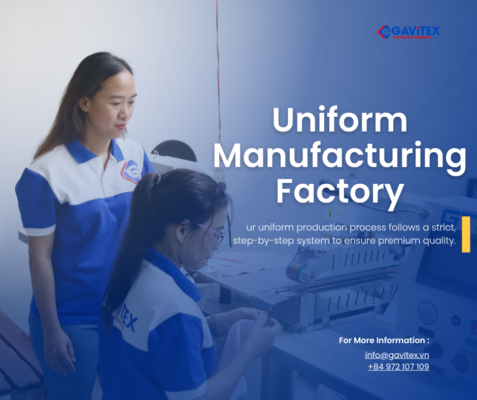
1.3 Value creation: cost, speed, and predictability
A strong export partner controls needle time and rework while balancing line loads. With disciplined
garment manufacturing and data‑led planning, Gavitex stabilizes output and improves landed cost. The result in most clothing export markets: faster replenishment, fewer claims, and healthier gross margins.
2. Clothing export markets vs. domestic apparel markets
2.1 The domestic‑only approach
Brands operating only domestically enjoy simpler logistics and fewer paperwork layers. However, demand spikes or seasonality can strain capacity. Exposure to a single market also concentrates risk and may cap price ceilings. Product specs sometimes tolerate wider variability because regulatory pressure is lower than in mature clothing export markets.
2.2 The export‑ready model
By contrast, export‑ready programs formalize specs, test methods, and packaging early. They align with retailer manuals and product safety rules across borders. Lead times are planned backward from port cut‑offs. When executed through synchronized
clothing production lines, this model supports higher volume, broader reach, and more resilient cash flow than a domestic‑only stance.
2.3 Clear comparison for decision makers
| Aspect | Domestic focus | Export‑ready approach |
|---|---|---|
| Risk profile | Concentrated in one economy | Diversified across clothing export markets |
| Specs & testing | Often minimal | Built for audits and retailer manuals |
| Scalability | Limited by local demand | Engineered via OEM clothing manufacturer networks |
| Cash flow | Seasonal swings | Balanced by varied buying calendars |
In short, exporting demands structure—but repays with scale, resilience, and brand reach.

3. Gavitex capabilities for multi‑region clothing export markets
3.1 Engineering capacity for mixed assortments
Gavitex runs synchronized lines for knits, wovens, sportswear, and uniforms. Each program is engineered by industrial specialists so cycle times, attachments, and checkpoints suit target clothing export markets. Our modular approach supports both high‑volume basics and smaller, style‑rich capsules under a
custom clothing production track.
3.2 Technology stack, data, and transparency
Digital pattern systems, 2D grading, and marker planning connect directly to auto spreading/cutting, pocket setters, buttonhole and bartack units, and seam sealing. Live boards track output and inline quality. As a collaborative
OEM clothing manufacturer, Gavitex shares capacity snapshots and milestones so buyers can plan replenishment around port cut‑offs.
3.3 Ecosystem partnerships in Vietnam
When volumes spike or categories expand, we coordinate with trusted Vietnam partners such as
garment manufacturing specialists, while keeping a single point of contact for you. This networked model preserves consistency and speed across your chosen clothing export markets.

Tip: Combine development with execution. Explore Gavitex
clothing design development alongside export execution for fewer hand‑offs and faster approvals.

4. Legal compliance & brand protection for clothing export markets
4.1 Contracts and commercial clarity
Every substantial export engagement begins with a manufacturing agreement aligned to your retailer manuals. It defines workmanship standards, penalties, rework processes, and Incoterms. With this foundation, multi‑market programs run predictably, even when shipping calendars are tight.
4.2 NDA, data security, and sample custody
Gavitex signs NDAs covering sketches, fit blocks, and brand assets. Access to digital folders is role‑based; physical patterns and salesman samples are stored in controlled rooms. Development items are segregated from bulk stock to reduce visibility before launch in your target clothing export markets.
4.3 Compliance, testing, and traceability
We support audit schemes requested by international retailers and maintain testable specs—shrinkage, colorfastness, restricted substances protocols—so claims drop. When needed, fabric and trim traceability is documented to support sustainability narratives and customs requirements across varied clothing export markets.
Brand protection checklist at Gavitex:
- Signed NDA for each major account and program.
- Controlled access to digital/physical patterns and samples.
- Clear ownership clauses for prints, artwork, and trims; non‑reuse across accounts.
- Documented return or destruction of obsolete samples.
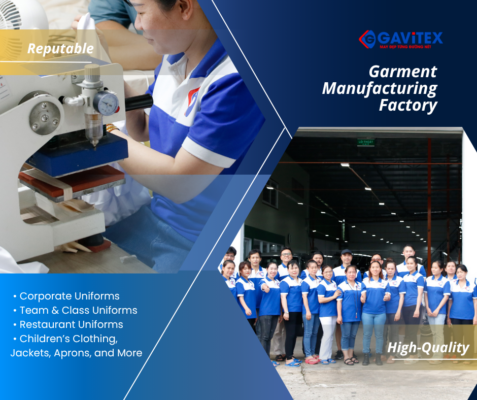
5. Five reasons buyers choose Gavitex for clothing export markets
5.1 Technical depth and disciplined execution
Pattern engineers, sewing technicians, and planners work as one team. This reduces ambiguity, speeds approvals, and stabilizes output—critical when you ship to calendars that differ across clothing export markets.
5.2 Cost control without cutting corners
Lean line design, balanced attachments, and early risk removal lower defect and rework rates. That translates into competitive FOBs and reliable landed cost across regions.
5.3 Flexibility for basics and innovation
Stable lines handle evergreen programs; flexible modules enable
custom clothing production for capsules and collaborations. You can test and scale without disrupting replenishment.
5.4 Clear communication and visibility
Dedicated merchandisers maintain calendars, report milestones, and escalate risks early. Capacity snapshots help your team book vessels and manage channel commitments across clothing export markets.
5.5 A partnership mindset
We invest in understanding your fit, quality language, and commercial goals. Over time, learning curves shorten and development cycles speed up—unlocking more markets with less friction.

6. Colorful chart: focus regions for apparel exports
6.1 Our typical regional mix (illustrative)
The distribution below is an illustrative breakdown of volume allocation across major clothing export markets. Actual mix varies by season and category, but the visualization shows how brands commonly prioritize scale, price realization, and calendar balance.
7. Reference pricing and expected savings
7.1 Market context
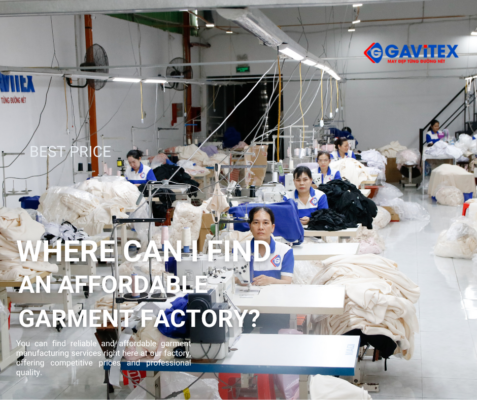
Wages, energy, freight, and compliance influence prices—but line engineering remains a major driver. As a disciplined
OEM clothing manufacturer, Gavitex often delivers 35–45% savings versus typical market averages for comparable export quality, thanks to lean methods and reliable defect prevention.
7.2 Illustrative FOB comparison
Indicative FOB (USD per piece) for export programs
| Product type | Market average | Gavitex indicative | Estimated saving |
|---|---|---|---|
| Basic cotton T‑shirt | $2.90 – $3.30 | $1.70 – $1.95 | ≈ 40% lower |
| Knitted polo shirt | $4.10 – $4.80 | $2.40 – $2.90 | ≈ 40–45% lower |
| Fleece hoodie | $7.20 – $8.20 | $4.30 – $4.90 | ≈ 35–40% lower |
| Denim jeans | $9.20 – $10.80 | $5.40 – $6.40 | ≈ 35–40% lower |
| Sports leggings | $6.60 – $7.70 | $3.90 – $4.50 | ≈ 40% lower |
| Corporate shirt (woven) | $7.60 – $8.60 | $4.30 – $5.10 | ≈ 35–45% lower |
| Workwear jacket | $16.20 – $18.20 | $9.70 – $11.10 | ≈ 35–40% lower |
Quotes depend on fabric, trims, complexity, and volumes. Share tech packs to get destination‑specific costings for your chosen clothing export markets.
8. Contact Gavitex / Get a quote
8.1 What to send
Provide style sketches or tech packs, target FOBs, volumes, and destination clothing export markets. We’ll confirm testing needs, packaging standards, and ship calendars, then schedule samples and PP approvals.
8.2 Learn more
Explore our development capability here: clothing design development. See how we structure export programs on our service page: clothing export markets.
Ready to brief a multi‑market season?
Hotline (Vietnam): 0972107109
9. Frequently asked questions about clothing export markets
1. Which regions are best for first‑time exporters of apparel?
It depends on category, price point, and compliance readiness. For basics at sharp prices, North America and parts of the EU are strong if your specs and testing are robust. Japan values impeccable workmanship and stable sizing—great for brands with disciplined quality and strong
clothing production lines. Australia and New Zealand can work well for seasonal capsules due to clear calendars and smaller but responsive demand. The Middle East offers potential in modest fashion and uniforms with focused requirements. A structured pilot in two or three
clothing export markets often outperforms a scattered launch across many regions.
2. How do I choose fabrics and constructions for multiple destinations?
Start from climate and washing habits, then design for testability. In cooler regions, heavier weights and brushed back finishes may sell better; in humid climates, lighter knits and moisture management matter. During development, we codify seam types, SPI targets, and tolerances so styles hold up under local care norms. With Gavitex
garment manufacturing, you can maintain a common core pattern while adjusting necklines, lengths, and trims to local preference—streamlining SKUs without sacrificing relevance in key
clothing export markets.
3. What documents are necessary for compliant exports?
Typically: commercial invoice, packing list, certificate of origin, HS codes, carton and labeling specs, and testing reports required by the destination. Retailers may add vendor manual forms and audit confirmations. Gavitex builds these needs into the plan early so there’s time for corrective actions if test results require tweaks. Proper documentation keeps shipments moving and avoids costs that destroy margin in
clothing export markets.
4. Can I run fashion capsules alongside high‑volume basics?
Yes. We separate stable lines for core volume from flexible modules for
custom clothing production. This setup prevents experiments from disrupting replenishment. It also lets you test trend‑driven designs tuned to specific
clothing export markets—for example, colorways aligned to regional holidays—while protecting on‑time delivery for evergreen items.
5. How does Gavitex keep costs competitive while meeting strict standards?
We engineer cycle times and attachments for each style, maintain inline quality checks, and balance work content so efficiency stabilizes quickly. That reduces defect rates and rework, which are the hidden taxes of exports. As a disciplined
OEM clothing manufacturer, we combine lean execution with transparent costing, helping you hit target prices for competitive
clothing export markets without cutting corners on safety or performance.
