
A practical guide to co-manufacturing in fashion with Gavitex
When I first explored co-manufacturing in fashion, I was looking for more than a supplier. I needed a partner who shared risks, decisions and responsibility for each collection. That is exactly what I found at Gavitex – a Vietnamese apparel manufacturer that treats brands as strategic partners instead of just purchase orders.
My first real experience with co-manufacturing in fashion
From stressful outsourcing to a shared-ownership model
Before discovering co-manufacturing in fashion, I worked with traditional factories where my brand had to do everything: fabric sourcing, technical packs, trims, quality checkpoints and forecasting. I would send tech packs, wait weeks for sampling, then chase updates on WhatsApp or email. When something went wrong on the line, the factory pointed at my design team, and my team blamed the factory. Nobody truly owned the outcome together.
The turning point came when I visited Gavitex in Vietnam. Instead of the usual “send PO – receive goods” approach, the team proposed a co-manufacturing in fashion partnership: we align demand forecasts, co-develop styles, and build a joint production roadmap. The conversation shifted from “your MOQ vs our capacity” to “how do we grow this category side by side over the next three seasons?” That mindset alone changed how I view supply chain partnerships.
What surprised me when working with Gavitex
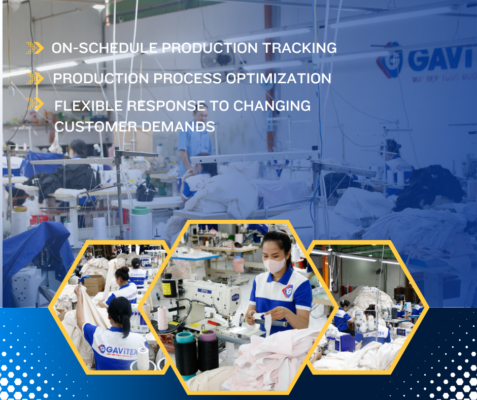
Instead of pushing me to place large orders immediately, Gavitex mapped out a pilot phase. We started with a smaller capsule collection using garment manufacturing lines already optimized for athleisure and bodywear. They showed me how their clothing production lines could be rebalanced to support my drop calendar. Real-time production dashboards, transparent costing worksheets and open-book fabric yields gave me confidence to commit more styles.
This is what a genuine co-manufacturing in fashion model feels like: transparent, data-driven and collaborative. As a brand, I suddenly had visibility into labor minutes, machine layouts and quality risks – all without managing a factory myself. It felt less like outsourcing, and more like adding an operations department to my own team based in Vietnam.
If you want to dive deeper into how different partnership models work, you can also study the comparison between CMT and OEM models here:
CMT vs OEM apparel. It provides useful context for deciding where co-manufacturing in fashion fits in your sourcing strategy.
Understanding co-manufacturing in fashion
What co-manufacturing in fashion really means
At its core, co-manufacturing in fashion is a partnership model where brand and factory share responsibility for product, process and performance. Instead of the brand handling design and sourcing while the factory simply sews garments, both sides co-own critical decisions: fabric selection, construction options, line layout, as well as risk buffers for delays and quality.
In this model, a partner like Gavitex does not just sew according to a spec sheet. They act as an extension of your technical and operations team. They help you convert design ideas into production-ready patterns, optimize markers, and design custom clothing production flows that match your price and lead time targets. The result is a tighter loop between design, sampling and bulk production, which is exactly what modern brands need.
How co-manufacturing differs from simple outsourcing
When brands use a simple outsourcing model, they often treat the factory as a transactional vendor. The brand sends tech packs and measurements, negotiates the price, and then waits. This approach can work for commodity products, but it does not unlock the full value of a modern OEM clothing manufacturer or a sophisticated Vietnamese partner like Gavitex.
With co-manufacturing in fashion, the factory is involved much earlier, during concept validation and costing. Gavitex can simulate different options on their clothing production lines, showing what happens if you change seam types, fabric GSM or packaging requirements. This early involvement avoids costly mistakes, letting you launch styles with more confidence, better fits and smarter cost structures.
Strategic value of co-manufacturing for modern apparel brands
For brands that rely on limited drops, influencer capsules or private label apparel collections, speed and agility matter more than ever. Co-manufacturing in fashion enables shorter development cycles, smoother repeats of winning styles, and flexible minimum order quantities. Because Gavitex plans capacity together with your team, they can keep greige fabrics or trims on standby, making reorders significantly faster.
Beyond speed, there is also a strategic benefit: knowledge sharing. Your merchandisers and Gavitex’s engineers learn from each other – your team brings market and consumer insights, while the factory offers hands-on experience from thousands of styles across categories. Together, you build a more resilient garment manufacturing ecosystem that can handle trend spikes, supply shocks and changing regulations.
Co-manufacturing in fashion vs other production models
Co-manufacturing vs traditional CMT outsourcing
Cut-Make-Trim (CMT) is a well-known model in Vietnam. In a pure CMT setup, the brand provides all materials and designs, and the factory focuses mostly on labor. While this secures a basic level of cost visibility, it also forces the brand to manage fabric sourcing, testing, logistics and a lot of operational firefighting. Many brands graduate from CMT to co-manufacturing in fashion once they realize the hidden overhead costs of doing everything themselves.
With co-manufacturing, a partner like Gavitex not only stitches garments but also leverages its network of mills, trim suppliers and print houses. They support you in consolidating volumes, improving yields and negotiating better prices. Compared to pure CMT, this model delivers more value per dollar spent – less chaos, more predictability and more innovation capacity.
Co-manufacturing vs fully independent OEM partners
A classic OEM clothing manufacturer can design, source and produce garments based on broad brand guidelines. This is convenient but can lead to a black-box effect: you receive finished products without understanding the cost drivers or technical trade-offs. In contrast, co-manufacturing in fashion keeps the brand deeply involved in decision-making. Gavitex shares tech packs, cost sheets and line efficiency reports, turning opaque processes into shared dashboards.
For example, when we evaluated a recycled nylon leggings program, Gavitex presented several material and construction options along with their impact on price and lead time. Instead of pushing the easiest option, they invited us to choose what aligned most with our positioning. That is the spirit of co-manufacturing – a structured collaboration rather than a one-way service.
Where co-manufacturing fits in your sourcing portfolio
Most successful brands use a mix of models: basic staples with a predictable volume may stay in CMT or standard OEM, while high-impact capsules, innovation programs and private label apparel launches shift to co-manufacturing in fashion. Working with Gavitex, you can gradually move key product lines into this collaborative framework while keeping more transactional items in simpler setups.
For brands that want to explore partnership structures further, Gavitex also shares detailed case studies on
CMT vs OEM apparel
and the role of co-manufacturing in fashion in building resilient supply chains.
Gavitex capabilities for co-manufacturing in fashion
Production lines designed for agile collaborations
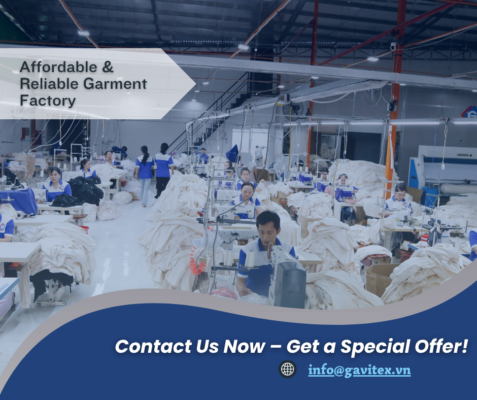
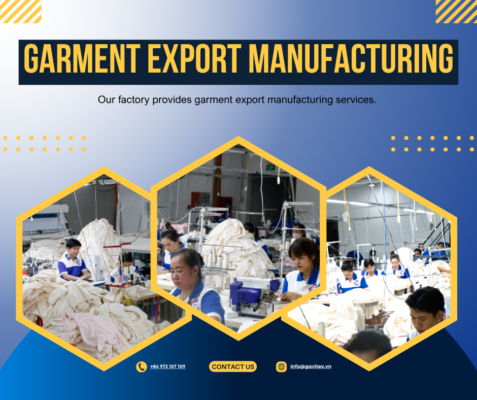
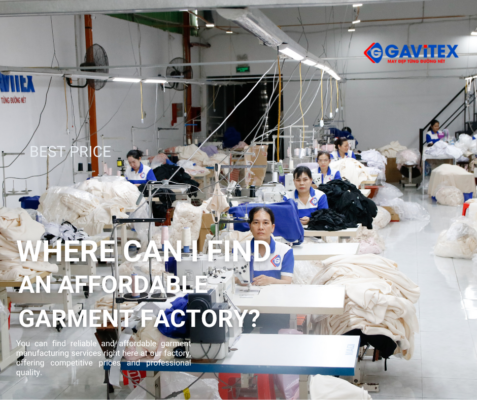
Gavitex operates modern clothing production lines with modular layouts. This means the factory can quickly rearrange sewing modules to fit different product categories – from technical sportswear to delicate intimates. For co-manufacturing in fashion, agility is crucial. Styles evolve fast, and lines must be able to handle small pilot runs, rapid fit corrections and fast scale-up when a design goes viral.
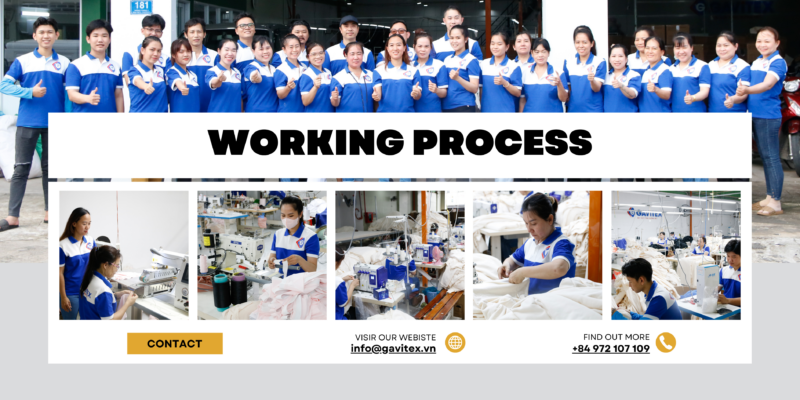
On the floor, digital line-balancing tools help supervisors shift operators and machines to remove bottlenecks. Real-time quality checkpoints ensure that decisions taken jointly during development actually show up in bulk production. This integration makes Gavitex a strong partner for brands that need a dependable base in Vietnam for ongoing garment manufacturing programs.
From custom clothing production to multi-category portfolios
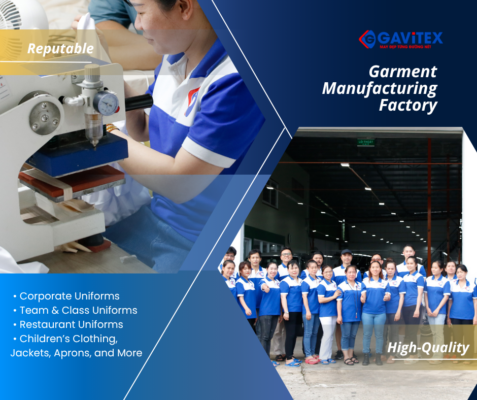
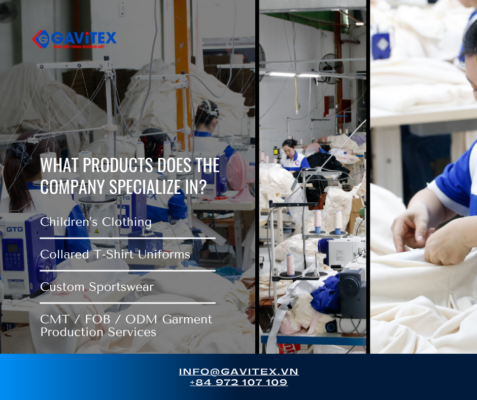
Many partners start by testing one product type with Gavitex – leggings, sports bras, lounge sets or custom clothing production for influencer collaborations. As trust grows, they expand into additional categories: casual tops, dresses, sleepwear, or private label apparel lines for large retailers. Because the engineering team documents each style’s best practices, launching new lines becomes easier over time.
Beyond the factory, Gavitex coordinates with fabric mills, printing houses and accessories suppliers. This ecosystem is essential when brands pursue innovation or sustainable materials. The team frequently shares sourcing resources and industry insights from platforms such as
GOCY,
helping partners benchmark options within and beyond Vietnam.
Data, traceability and continuous improvement
In a serious co-manufacturing in fashion partnership, data is one of the most valuable assets. Gavitex tracks style efficiency, defect trends and capacity utilization over time. These insights are shared with brand partners in the form of reports and review meetings. Together you can decide whether to shift styles between lines, improve training, or redesign construction details to reduce quality risks.
Legal framework and brand protection in co-manufacturing in fashion
Contracts designed for long-term partnerships
In any serious co-manufacturing in fashion setup, contracts matter. Gavitex works with detailed manufacturing agreements that define responsibilities clearly: forecasting rules, liability for delays, quality thresholds, and dispute resolution mechanisms. These agreements are not one-page purchase orders; they are structured documents built for ongoing collaboration season after season.
For brands, this creates a stable environment for planning. Commercial terms can be reviewed annually, but the overall framework stays constant. You are not renegotiating every detail with each order; instead, you fine-tune a living partnership agreement.
NDA, design protection and IP safety
Protecting creative work is critical in the fashion industry. Gavitex signs non-disclosure agreements (NDA) with brand partners to safeguard designs, tech packs, brand strategies and consumer data. Within the factory, access to certain digital folders, print files and samples is restricted to authorized staff only. All these measures help ensure that designs developed under a co-manufacturing in fashion model are never reused without permission.
For sensitive categories, brands can request extra protections: dedicated rooms for proto samples, limited photography, or restricted access zones on the production floor. These processes are fully documented and can be audited during partner visits.
Traceability and compliance for modern markets
Markets such as the EU and North America now require strong evidence of social and environmental compliance. Gavitex maintains clear traceability of materials and production batches across its garment manufacturing network. Bills of material, supplier codes and lot numbers are organized in a way that supports audits and sustainability reporting.
Five reasons to choose Gavitex for co-manufacturing in fashion
1. Strategic thinking beyond simple garment manufacturing
Gavitex does not see itself merely as a factory. The team understands assortment planning, sell-through targets and retail calendars. That is why co-manufacturing in fashion with Gavitex feels like working with an operations partner instead of just a vendor. They help you position styles, avoid over-complexity in collections, and plan volumes that make sense for your brand’s stage of growth.
2. Flexible capacity for both emerging brands and large retailers
Whether you run a young e-commerce label or manage multiple clothing production lines across regions, Gavitex can create the right cell for you. Smaller capsules can run on dedicated lines with highly skilled operators, while volume programs can be moved to larger modules with optimized throughput. This flexibility is ideal for brands that want to scale gradually while keeping the same partner.
3. Transparent costing and fair pricing
One of the main reasons I enjoyed working with Gavitex is how openly they share cost structures. Labor minutes, material yields, accessories and finishing operations are clearly presented. When you practice co-manufacturing in fashion, surprises should be creative, not financial. Transparent costing supports honest negotiations and protects long-term trust.
4. Integrated support for custom clothing production
Brands that rely on custom clothing production, influencer collaborations or special drops need factories that can think outside the box. Gavitex offers pattern development, grading, digital sampling and even packaging suggestions to ensure each launch feels cohesive. Combined with the co-manufacturing mindset, this makes them a powerful partner for creative teams that want to test new concepts without losing control over quality.
5. Proven experience and local network in Vietnam
Vietnam is a key hub for garment manufacturing, and Gavitex has long-standing relationships with mills, laundries and accessory suppliers. This ecosystem matters in co-manufacturing in fashion, because having the right partners nearby reduces lead times and risk. Instead of juggling dozens of contacts yourself, you can rely on Gavitex’s network while still being involved in final decisions.
FAQ about co-manufacturing in fashion
Below are some of the questions I had before starting my partnership with Gavitex, along with detailed answers based on real experience with co-manufacturing in fashion. Click each question to reveal the answer.
1. What exactly is co-manufacturing in fashion and who is it suitable for?
Co-manufacturing in fashion is a partnership where brand and factory work as one integrated team rather than as two separate entities. It goes beyond simple outsourcing because decisions about fabrics, trims, construction, planning and even assortment strategy are discussed jointly. This approach is ideal for brands that want to grow sustainably, maintain strong product identity and improve operational reliability. Emerging direct-to-consumer labels benefit from the extra guidance and technical expertise, while established retailers appreciate the transparency and flexibility it adds to their global garment manufacturing network. If you want more control over quality and timelines but do not want to build your own factory, co-manufacturing offers a balanced solution.
2. How is co-manufacturing different from working with a typical OEM clothing manufacturer?
A typical OEM clothing manufacturer can handle design, sourcing and production with limited brand involvement. While this is convenient, it can also disconnect your product from your market insight, as many decisions happen inside the factory with little visibility. In contrast, co-manufacturing in fashion keeps your brand firmly in the driver’s seat while still using the factory’s technical know-how to its fullest. At Gavitex, you see breakdowns of cost, cycle time and line efficiency; you participate in design-for-manufacturing conversations and can influence how clothing production lines are configured for your programs. This transparency helps align product decisions with your positioning, price points and customer promises, which is hard to achieve in a purely OEM environment.
3. What minimum order quantities (MOQs) can I expect in co-manufacturing projects?
MOQs depend on fabric type, construction complexity and how many colorways are involved, but one advantage of co-manufacturing in fashion is that partners like Gavitex can design MOQs in a more flexible way. For example, rather than demanding a large quantity per color, the factory can plan around total fabric usage across multiple styles or drops. This is especially helpful for custom clothing production, micro-collections or private label apparel ranges where you want to test market response without committing to huge volumes. By planning together, you can often negotiate MOQs that align with your sales projections while still being efficient for the factory’s lines and material supply chain.
4. How does Gavitex handle quality issues in a co-manufacturing model?
In a transactional setup, quality issues can lead to a blame game: the factory claims that the tech pack was unclear, while the brand says the factory did not follow instructions. With co-manufacturing in fashion, Gavitex and the brand share responsibility from the start, so potential problems are addressed earlier. Joint pilot runs, line trials and clear quality checkpoints help catch most issues before bulk shipments. If something still goes wrong, root cause analysis is conducted together and corrective actions are integrated into both the technical file and the garment manufacturing process. This collaborative mindset turns each challenge into a learning opportunity rather than a conflict, which is essential for long-term partnerships.
5. How can I start a co-manufacturing partnership with Gavitex?
The best way to begin with co-manufacturing in fashion is to start a focused pilot project. You can select a product line that represents your brand well, such as a hero legging, a signature top or a small capsule of private label apparel. Share your brand story, target customers, price range and any existing tech packs with the Gavitex team. Together you will review construction options, fabric choices and efficiency opportunities on their clothing production lines. During this pilot phase, communication is intensive so both sides can align expectations and working styles. Once the first project is successful, you can expand the scope gradually, knowing that your partner understands your brand deeply and is committed to growing alongside you.
Ready to explore co-manufacturing in fashion with Gavitex?
If you are considering Vietnam as a strategic base for garment manufacturing and want a partner that thinks beyond simple order fulfillment, Gavitex is ready to talk. Whether you manage large seasonal assortments or niche custom clothing production, the team can help you design a roadmap that fits your brand’s ambitions.
You can learn more about partnership models on the dedicated pages for
CMT vs OEM apparel
and
co-manufacturing in fashion.
When you are ready to discuss your next collection, simply reach out to the team.
Hotline: 0972107109 – Gavitex will be happy to review your plans, evaluate your current sourcing mix and suggest how a co-manufacturing in fashion partnership could unlock new growth for your brand.