Turn concepts into collections with design to delivery manufacturing at Gavitex
Gavitex in Vietnam offers complete design to delivery manufacturing for global fashion brands, from creative brief to packed
cartons – combining smart garment manufacturing, disciplined clothing production lines and transparent project management.
Call for consultation & Get a quick quote
Hotline / WhatsApp / Zalo: 0972107109
design for manufacturing (DFM) principles, helping brands align
creative ideas, materials, fits and timelines with real-world factory capability.
1. What design to delivery manufacturing really means for modern apparel brands
1.1 From first sketch to packed cartons
In simple terms, design to delivery manufacturing is the ability to carry a product from the first sketch all the way to packed
cartons, ready to ship, under one integrated industrial umbrella. Instead of treating design, development, fabric sourcing, cutting, sewing,
finishing and logistics as separate islands, everything is coordinated as one continuous flow. For fashion brands, this transforms the way
collections are created and delivered.
Creative teams can present concepts and mood boards knowing that industrial engineers, sourcing specialists and quality professionals will sit
at the same table. Gavitex uses this model to turn ideas into production-ready styles, aligning silhouettes, materials and trims with real
factory capabilities and realistic timelines across multiple clothing production lines.
1.2 Why this approach matters more than ever
Shorter seasons, online drops and capsule collections put pressure on every step of garment manufacturing. When design and
production are disconnected, delays and mismatches become unavoidable: fabrics arrive late, fits are inconsistent or deliveries miss key
launch dates. Design to delivery manufacturing reduces these disconnects by pulling functions together and making them share the
same objectives.
For B2B partners – brands, retailers and owners of private label apparel – this means more predictable lead times, fewer
surprises and better use of capital. Every decision, from fabric choice to packaging, is evaluated not only for aesthetics but also for
manufacturability and time-to-market.
1.3 Gavitex – end-to-end partner in Vietnam
Gavitex is a Vietnam-based OEM clothing manufacturer that has built its organization around
design to delivery manufacturing. The company supports T-shirts, polos, sweatshirts, hoodies, joggers, shorts, dresses and
light woven pieces, combining custom clothing production with structured project management. From the first call to the final
inspection, Gavitex works as a single, accountable partner for international B2B clients who need reliable manufacturing in Asia.
As a result, brand teams can focus on collection stories, merchandising and marketing while trusting that all industrial steps behind the
scenes are coordinated by one experienced supplier.
2. Features and value of structured design to delivery manufacturing
2.1 Integrated teams instead of isolated functions
The first defining feature of design to delivery manufacturing is the way teams are organized. At Gavitex, designers, merchandisers,
pattern makers, industrial engineers, sourcing specialists and quality controllers work as one project group, not as individual silos. From the
moment a style enters development, it is reviewed by people who understand both fashion and industrial realities.
This integration prevents many common issues: fabrics that cannot handle certain washes, fits that are hard to reproduce in bulk, or trims that
cause bottlenecks on clothing production lines. Instead, solutions are found early, while there is still room to adjust before
committing to large volumes in custom clothing production.
2.2 Clear critical path and time management
Another key characteristic of design to delivery manufacturing is a well-defined critical path. Every step – design handover,
prototype, fit sample, size set, fabric booking, bulk cutting, sewing, finishing and packing – has a timeline and an owner. Gavitex uses
detailed calendars and checklists to ensure that nothing is overlooked.
By monitoring this critical path, the team can quickly see if a step is slipping and propose options: expediting approvals, adjusting delivery
windows or reallocating work across garment manufacturing lines. For brands that sell globally and run tight market calendars,
this visibility is a major advantage.
2.3 Cost transparency and value creation
Design to delivery manufacturing also brings clarity to cost structures. Rather than receiving one opaque price per piece, brands
can see how materials, labor, overheads and value-added operations interact. Gavitex is open about these components, especially when clients
want to compare scenarios such as different fabrics, constructions or packing methods.
This transparency allows sourcing and merchandising teams to make informed trade-offs. For example, they may decide to use a slightly more
expensive fabric that improves sell-through, while simplifying construction to keep the garment price aligned with target margins. The result is
higher overall value, not simply lower cost.
complexity from sketch to shipment, turning scattered tasks into a controlled and measurable industrial flow.
3. Design to delivery manufacturing vs traditional fragmented sourcing
3.1 How fragmented sourcing works
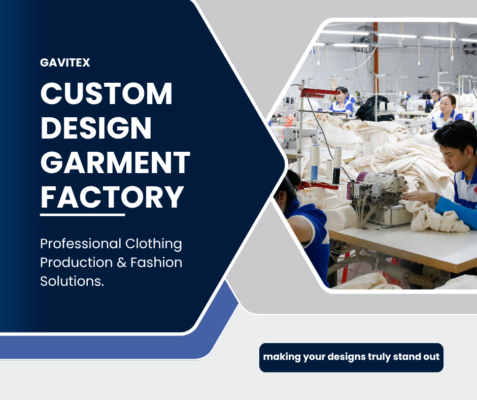
Many brands still operate with fragmented chains: one agency for design, another for pattern making, separate mills, independent sewing factories
and external logistics partners. Each vendor sees only a slice of the story and optimizes their slice. Designers push for complexity, mills push
volume, and factories push efficiency. Nobody fully owns the entire journey from idea to store.
This model can work for small programs, but problems grow quickly as collections become larger or more frequent. Miscommunication increases,
approvals take longer, and bottlenecks appear at the worst moments. Ultimately, customers may see inconsistent quality, late deliveries or
unbalanced size runs, all of which hurt the brand’s reputation.
3.2 The integrated alternative
In contrast, design to delivery manufacturing places one industrial partner – such as Gavitex – in charge of the whole chain from
a factory perspective. The brand still defines the creative direction and market positioning, but the manufacturing partner coordinates all
technical and operational tasks. Because Gavitex manages its own clothing production lines, pattern room, sample room and
sourcing team, it can foresee potential issues and adapt early.
When design, development and garment manufacturing sit under one roof, the feedback loop is faster. Fit changes, fabric updates
or packaging tweaks move through the system in days rather than weeks. The result is greater agility, fewer errors and better use of production
capacity in custom clothing production.
3.3 Comparison at a glance
| Aspect | Fragmented multi-vendor model | Gavitex design to delivery manufacturing |
|---|---|---|
| Ownership of end-to-end process | Split between many vendors. | One accountable partner from concept to shipment. |
| Speed of communication | Slow – multiple handovers. | Fast – integrated teams and tools. |
| Visibility of costs | Limited – prices added layer by layer. | High – transparent view across sourcing and production. |
| Best suited for | Simple, small-scale projects. | Ambitious brands, multi-season and private label apparel programs. |
For many international brands, especially those scaling online channels, the move from fragmented sourcing to integrated
design to delivery manufacturing is not a trend; it is a necessity to stay competitive.
4. Gavitex capacity, technology and process for design to delivery manufacturing
4.1 Production scale and product families
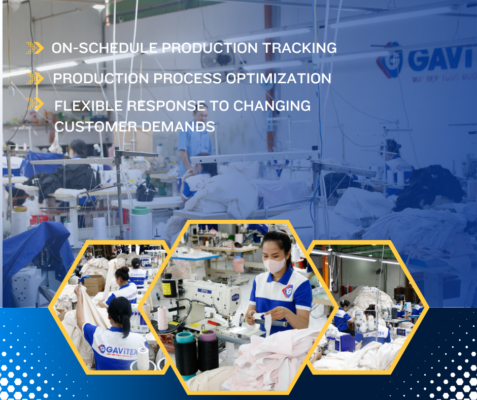
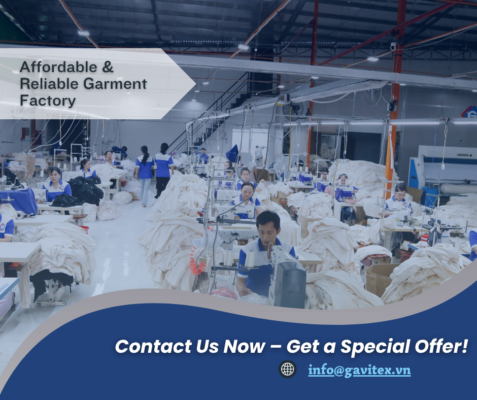
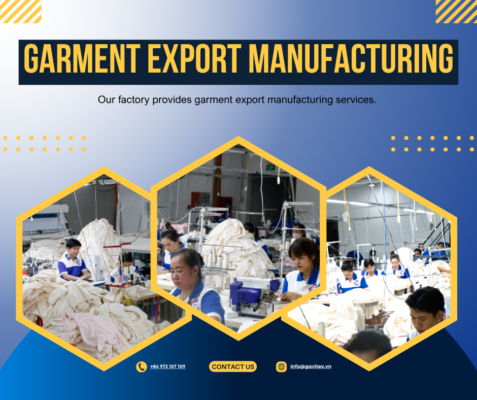
Gavitex runs multiple clothing production lines dedicated to knits and light wovens, handling core items and fashion capsules.
Typical assortments include T-shirts, polos, sweatshirts, hoodies, joggers, shorts, dresses and casual shirts for men, women and youth. As an
export-focused OEM clothing manufacturer, the factory designs its line loading to balance efficiency with flexibility.
Volumes can be scaled up or down within reasonable ranges, which allows brands to test new styles and expand successful ones without completely
rebuilding their supply base. This is essential for custom clothing production in fast-changing markets.
4.2 Technology infrastructure
CAD systems support pattern making, grading and marker optimization. This reduces fabric waste and keeps fits consistent from development to
bulk. Gavitex applies the principles of design to delivery manufacturing by feeding back pattern and marker data into style
development, ensuring that shapes are attractive and practical to sew at scale.
Cutting rooms follow strict rules regarding lay height, shrinkage and grain direction, vital for high-quality garment manufacturing.
Sewing lines mix specialized and versatile machines to handle different fabric weights and constructions. Inline quality checkpoints ensure that
any issues are detected early, minimizing rework and delays.
4.3 Structured end-to-end process
Cooperation with Gavitex under a design to delivery manufacturing model generally follows these stages:
- Briefing & design review: You share collections, target markets and price points. Gavitex reviews designs and proposes
adjustments using design for manufacturing (DFM) thinking. - Development & sampling: Fabrics, trims and constructions are selected and tested. Prototype, fit and sales samples are
produced and refined. - Industrialization: Operation bulletins, line layouts and quality plans are defined so that clothing production lines
can run efficiently. - Bulk production: Materials are booked, lines start, and status is tracked closely throughout custom clothing production.
- Finishing, packing & delivery: Garments are finished, packed to your specifications and prepared for shipment, ready for
distribution to stores or warehouses.
Throughout the process, the Gavitex team provides clear communication and documentation, giving brand and sourcing managers a reliable view of
progress from design to delivery.
For certain specialized fabrics and finishes, Gavitex cooperates with trusted external partners such as
garment manufacturing specialists, while still centralizing coordination and quality control.
5. Contracts, NDA and brand protection in design to delivery manufacturing
5.1 Clear commercial agreements
When a partner manages your design to delivery manufacturing, contracts must reflect this expanded responsibility. Gavitex uses
structured agreements that describe the scope of services, quality expectations, testing standards, delivery calendars, payment terms and claim
procedures. These agreements cover the entire value chain: development work, bulk production, packing and shipment preparation.
With clearly defined roles and responsibilities, both sides know how to act if problems arise – for example, if upstream material delays affect
final delivery. This clarity supports long-term partnership instead of short-term transactions.
5.2 NDAs and confidentiality
In design to delivery manufacturing, factories gain deep insight into your collections long before they reach the market.
Tech packs, measurement tables, grading rules, fabric and color strategies, and marketing calendars are all sensitive information. Gavitex
regularly works under non-disclosure agreements, ensuring that this knowledge is handled with strict confidentiality.
Access to digital and physical data is limited to teams directly involved with your account. Samples are not displayed to other clients, and
internal training uses neutral references instead of your branded styles. This protects the uniqueness of your private label apparel
and mainline collections.
5.3 Control over branded elements and over-runs
Labels, hangtags, packaging and brand-exclusive trims are controlled carefully. Under a design to delivery manufacturing model,
these items often move in larger volumes through the factory, because programs run continuously across seasons. Gavitex tracks them through
internal systems and uses them only on authorized orders.
When over-runs or rejected goods occur, Gavitex agrees with you on how they will be handled – destruction, donation, or carefully managed outlet
channels, depending on your policy. The factory does not release branded stock into uncontrolled local markets. For strategic lines, additional
measures like unique serial labels or QR codes can be integrated into garment manufacturing and logistics, increasing security
and traceability.
what matters most: better products, smoother custom clothing production and on-time deliveries.
6. Five reasons to choose Gavitex for design to delivery manufacturing
6.1 Deep apparel specialization and global experience
Gavitex focuses on apparel and only apparel. This specialization means that every improvement in design to delivery manufacturing
directly supports the performance of fashion programs. The team has worked with brands and retailers from Europe, North America and Asia, and
understands different fit expectations, labeling requirements and testing standards.
Whether you operate a lifestyle label, sports brand, streetwear concept or corporate apparel program, Gavitex can adapt its
garment manufacturing processes to fit your identity and customer base.
6.2 Competitive pricing through engineering and sourcing
As a Vietnam-based OEM clothing manufacturer, Gavitex benefits from competitive labor costs and strong regional supply chains.
But the real savings come from disciplined engineering: smart markers, balanced lines, stable quality and efficient finishing. These strengths
allow Gavitex to offer attractive prices compared with many intermediary structures, often 35–45% lower than typical market levels for similar
service quality.
By combining design to delivery manufacturing with cost transparency, Gavitex helps brands hit challenging margin targets without
sacrificing garment value.
6.3 Structured communication and project management
Distance and time zones can complicate international projects. Gavitex addresses this by assigning dedicated merchandisers and project managers
to each client. They coordinate information from design review to final shipment, using shared calendars and regular updates. When issues arise,
you receive early visibility and options, not last-minute surprises.
This systematic communication style is especially important for design to delivery manufacturing, where multiple steps are linked
together and delays in one area can affect the entire chain.
6.4 Flexibility for basics and innovation
Brands rarely work with just one type of product. They mix core basics with fashion-driven pieces, seasonal capsules and special collaborations.
Gavitex structures its clothing production lines and sample room to support this mix. Basics run in efficient flows, while more
complex pieces receive extra engineering attention and targeted capacity.
This flexibility means you can pilot new silhouettes, functional fabrics or special prints within the same design to delivery manufacturing
framework that runs your stable programs.
6.5 Long-term partnership mindset
Finally, Gavitex sees itself as a strategic partner, not just a factory. The team invests in understanding your brand roadmap, sustainability
goals and financial structure. That insight informs yearly negotiations, capacity planning, fabric strategies and continuous improvement projects.
As your collections evolve, Gavitex adapts its custom clothing production and service offering, aiming to be the long-term base
that supports your growth across channels and regions.
Ready to streamline your path from design to delivery?
Share your collection plan, target prices and markets, and Gavitex will create a practical
design to delivery manufacturing roadmap tailored to your brand.
7. Reference pricing – cost advantages in design to delivery manufacturing with Gavitex
Real prices depend on fabric, construction, embellishments, packaging, volumes and service scope. The table below illustrates indicative FOB
prices comparing a typical market average with reference offers from Gavitex as an integrated design to delivery manufacturing
partner. In each case, Gavitex pricing is 35–45% lower than general market levels while preserving the same or better quality expectations.
| Product type | Typical market price (USD) | Gavitex ref. price (USD) | Approx. saving |
|---|---|---|---|
| Basic cotton T-shirt | 4.80 | 3.00 | ≈ 37% lower |
| Premium printed T-shirt | 6.80 | 3.90 | ≈ 43% lower |
| Fleece hoodie | 14.50 | 8.40 | ≈ 42% lower |
| Jogger pants | 13.80 | 8.10 | ≈ 41% lower |
| Light woven shirt | 11.20 | 7.15 | ≈ 36% lower |
These figures are indicative, but they show how a disciplined design to delivery manufacturing partner like Gavitex can improve
cost structures and support stronger margins across your apparel channels.
8. Market insights – colorful chart on demand for design to delivery manufacturing
Industry data and on-the-ground feedback show a clear shift: brands want fewer suppliers, but deeper capabilities. Instead of managing many
small vendors, they prefer strategic partners that can handle design to delivery manufacturing for entire categories. Vietnam,
with its strong expertise in garment manufacturing, is at the center of this shift.
Online-first labels, established retailers and corporate apparel buyers are all looking for integrated partners that can manage
custom clothing production from concept to shipment. The illustrative chart below highlights how different buyer groups are
increasing their use of integrated manufacturing partners in Vietnam.
Illustrative growth in demand for Vietnam-based design to delivery manufacturing partners
Higher bars indicate stronger adoption of integrated design to delivery manufacturing rather than fragmented multi-vendor chains.
By partnering early with a reliable manufacturer like Gavitex, brands secure capacity and expertise in this evolving landscape, positioning
themselves ahead of competitors still juggling fragmented networks.
9. Frequently asked questions about design to delivery manufacturing with Gavitex
1. What information do we need to start a design to delivery manufacturing project with Gavitex?
should have a clear overview of your brand identity, target customers and initial product ideas. Typically, brands share design boards or
sketches, reference garments, approximate size ranges, target price brackets and preferred delivery windows. It is also useful to explain
which markets you sell into and what quality level you expect for your private label apparel. Based on this information,
the Gavitex team will propose fabrics, constructions and development steps, plus an estimated timeline that covers design review, sampling,
testing and bulk garment manufacturing. As the project moves forward, details such as exact colorways, packaging and
labeling are refined inside the same integrated process, so the path from concept to packed cartons stays visible and manageable.
2. How is design to delivery manufacturing different from standard OEM production?
design to delivery manufacturing means that Gavitex is involved much earlier, helping to shape styles so they are both
attractive and industrially feasible. The company participates in material selection, fit development and construction choices, often
suggesting options that simplify production or improve durability. The process also extends further downstream, covering packing,
documentation and logistics coordination where needed. For brands, this integrated model reduces handovers and gives one partner
responsibility for the entire journey, rather than splitting design, development and production among separate vendors with limited
communication between them.
3. What minimum order quantities apply in design to delivery manufacturing with Gavitex?
the number of colorways or sizes. Gavitex usually supports more flexible quantities for basic items such as T-shirts and fleece pieces,
while more complex styles or special techniques may require higher MOQs to keep clothing production lines efficient. The
factory does not enforce a single fixed threshold; instead, each style is assessed individually, and the team looks for smart ways to
combine volumes across styles or markets. This allows brands to test new concepts at reasonable scale while still benefiting from the
structured processes of custom clothing production. As orders grow and become more predictable, it is often possible to
revisit MOQs and negotiate more favorable conditions for recurring programs.
4. Can Gavitex work with our nominated mills and still provide design to delivery manufacturing?
the design to delivery manufacturing flow, coordinating fabric and trim deliveries while still managing development,
sampling and bulk garment manufacturing. In this case, the Gavitex team works closely with your sourcing organization to
ensure that material lead times align with production capacity. The same integrated calendars and project-management tools are used,
regardless of whether fabrics are sourced by Gavitex or by your own network. This flexibility allows your company to maintain existing
material strategies while still gaining the speed, clarity and accountability of an integrated factory partner in Vietnam.
5. How does Gavitex protect our designs and brand identity in design to delivery manufacturing?
contracts and internal procedures to ensure that tech packs, measurement charts, grading rules and artwork are treated confidentially.
Only teams directly assigned to your account can access sensitive data, and samples are not displayed to other clients. Branded labels,
hangtags and packaging for your private label apparel or mainline ranges are stored securely and applied exclusively to
your orders. Over-runs and seconds are managed in line with your policy, with no unapproved sales into local markets. For strategic
collections, additional safety layers – such as unique labels or codes – can be integrated into garment manufacturing and
packing, giving your organization extra confidence that your creative work and brand reputation are protected all the way from design to
delivery.
10. Contact Gavitex – your partner for design to delivery manufacturing in Vietnam

If you are searching for a dependable partner to manage design to delivery manufacturing in Asia, Gavitex offers the combination
of technical expertise, industrial discipline and partnership mindset that modern brands require. As a specialized
OEM clothing manufacturer in Vietnam, the company supports B2B clients who want to reduce complexity, stabilize quality and
strengthen margins in custom clothing production.
You can explore Gavitex’s approach through its
design for manufacturing (DFM) resources and dedicated
design to delivery manufacturing service page, then reach out
with your next project brief. Together, you can build a supply base that is agile, cost-effective and ready for future growth.
Take the next step toward integrated production
- Share your designs, target markets and approximate volumes.
- Receive a clear proposal for design to delivery manufacturing in Vietnam with realistic timelines.
- Build a long-term collaboration that supports profitable growth for your brand.
Hotline: 0972107109 (WhatsApp / Zalo available)