Economies of Scale in Manufacturing for Apparel Brands | Gavitex
In a competitive fashion market, brands are under constant pressure to do more with less: more styles, more sustainability, more speed — all with tighter margins. Understanding how economies of scale in manufacturing work, and how to unlock them with a capable partner, is one of the smartest ways to protect profit while keeping products attractive and consistent.
Instead of treating production volume as a risk, Gavitex helps brands transform it into an advantage. By aligning product development, garment manufacturing and clothing production lines around smart planning, we turn economies of scale in manufacturing into measurable cost savings, consistent quality, and reliable delivery.
- Lower unit costs: spread fixed expenses across larger volumes without losing control.
- Stable quality: repeatable operations on balanced lines for custom clothing production.
- Room to invest: scale makes it easier to support eco-friendly garment production and better equipment.
Call our team today to explore how a Vietnam-based OEM clothing manufacturer like Gavitex can help your brand capture these advantages.
- Understanding economies of scale in manufacturing
- Features, characteristics & value for apparel brands
- Economies of scale in manufacturing vs small-batch models
- How Gavitex builds scale in real operations
- Contracts, NDAs & brand protection at scale
- 5 reasons to choose Gavitex
- FAQ on economies of scale in manufacturing
- Contact Gavitex / Get a quote
Understanding Economies of Scale in Manufacturing for Apparel
From theory to cutting tables and sewing lines
In simple terms, economies of scale in manufacturing describe what happens when the unit cost of a product decreases as production volume increases. In apparel, this shows up in very practical ways: spreading pattern development and sampling costs across more pieces, using full capacity on clothing production lines, booking fabric in larger lots, and running larger markers to reduce waste. Instead of paying the same fixed cost for many small batches, you pay it once and spread it over a bigger base.
For brands, this effect is powerful. When you work with a partner like Gavitex that understands economies of scale in manufacturing, you can design your assortment and volume mix so that the most strategic styles carry more of the fixed costs. That relieves pressure on smaller or experimental pieces in the collection, giving you room to test without destroying margins. The discipline is not just about producing more; it is about producing in a structured way.
Fixed vs variable costs on clothing production lines
Apparel production involves a mix of fixed and variable costs. Rent, equipment, line setup time, pattern development, and quality systems are largely fixed. Thread, fabric consumption, certain trims, and direct labor hours are variable. Economies of scale in manufacturing happen when fixed elements and some semi-variable elements are used more efficiently as volume rises. For example, setting up a line for a complex hoodie might take hours, but if you run the style for several weeks at stable volumes, that setup cost per piece becomes very small.
Gavitex looks at each style and program with that lens. When we plan for custom clothing production across a season, we help brands identify where to concentrate volume, which styles are suitable for long runs, and how to group similar operations together. This planning logic is at the heart of capturing economies of scale in manufacturing rather than leaving them on the table.
As brands move from small online drops to regional or global retail, the stakes change. Without a good handle on economies of scale in manufacturing, growth can actually shrink margins because complexity rises faster than efficiency. With the right partner, scale becomes a tool: it justifies investments in better machinery, stronger quality systems, and more sustainable materials, making your private label apparel more resilient and competitive.
Features, Characteristics & Value of Economies of Scale in Manufacturing
What strong economies of scale look like in real factories
When economies of scale in manufacturing are working properly, you can see it in how a facility operates. Lines are balanced, with clear operation breakdowns and minimal idle time. Machines are chosen and configured for the products that run most frequently. Fabric consumption is managed through tight markers and smart nesting, and trims are bought in volumes that unlock better pricing without causing excess waste. Supervisors and industrial engineers use data instead of guesswork to decide where to focus improvement efforts.
Gavitex builds these conditions step by step. Our approach to garment manufacturing starts with the style mix: which styles should carry heavy volume, which ones are seasonal experiments, and which are long-running basics. We then design clothing production lines around the core volume profiles, so the highest-running items get the smoothest path on the floor. That way, as volume grows, the unit cost for those anchor styles decreases, and the savings can support broader brand ambitions.
Key characteristics brands should look for
- Repeatable styles and operations: a clear core range that returns season after season.
- Data-backed planning: using outputs, SMVs and defect rates to tune economies of scale in manufacturing.
- Investment mindset: willingness to invest in better equipment once volume justifies it.
- Integrated development: linking sampling and industrialization so large runs are stable.
- Partnership culture: a factory that behaves like a long-term OEM clothing manufacturer, not a short-term vendor.
How Gavitex converts scale into value for brands
As a Vietnam-based apparel producer, Gavitex has grown by supporting international partners in building volume steadily rather than chasing one-off orders. This approach lets us reinvest in better cutting equipment, stronger quality systems, and skill development for our people. For a brand, that means that as your orders grow, unit costs are not the only thing improving: fit consistency, on-time performance and product life cycles all benefit from the same underlying economies of scale in manufacturing.
Our team also understands that scale must be balanced with flexibility. We design our clothing production lines so that they can handle size curve changes, repeat orders and mid-season top-ups without needing a full reset every time. Working this way allows partners to capture the value of scale without being trapped in rigid, outdated setups.
Economies of Scale in Manufacturing vs Small-Batch Apparel Models
Where small-batch shines — and where it struggles
Small-batch or made-to-order models offer flexibility and reduced inventory risk. They are well suited to early brand stages, capsule collections, and highly specialized garments. However, they can be expensive on a per-unit basis because each style carries the full weight of development costs, line setups, and fabric negotiations. When every order is small, fixed costs repeat again and again. For basic T-shirts, hoodies or uniforms, this can quickly erode margins.
By contrast, economies of scale in manufacturing focus on repeatability and volume. Core styles are produced in larger quantities, allowing the factory to optimize markers, standardize trims and build stable work routines on the line. The trade-off is clear: less flexibility on micro-details, but much better control over cost and quality for the styles that carry most of your revenue.
Combining both models intelligently
The most successful brands rarely choose between small-batch and scale; they blend them. Gavitex often helps partners design a structure where a handful of anchor products run at high volume under strong economies of scale in manufacturing, while a rotating set of smaller, trend-led pieces are produced in controlled numbers. The high-volume heroes pay for line setups, engineering work and overhead, while the smaller runs add freshness to the range without destroying profitability.
With this approach, a brand enjoys the storytelling benefits of limited drops and capsules while still relying on core styles to deliver predictable gross margin. It is a very practical way to mix custom clothing production for seasonal ideas with disciplined, scale-driven programs for essentials.
- High flexibility and trend responsiveness.
- Good for testing new concepts and niche products.
- Higher unit costs and frequent line changes.
- More difficult to invest in advanced machinery.
- Optimized for economies of scale in manufacturing.
- Lower unit cost on core, repeatable items.
- Stable planning for private label apparel and long-term programs.
- Better ability to support sustainable and quality investments.
Gavitex can support both models, but our strength lies in helping partners design a balanced portfolio: enough volume on key styles to unlock economies of scale in manufacturing, and enough agility on selected lines to keep the collection innovative and relevant.
How Gavitex Builds Economies of Scale in Real Operations
Strategic capacity and line configuration
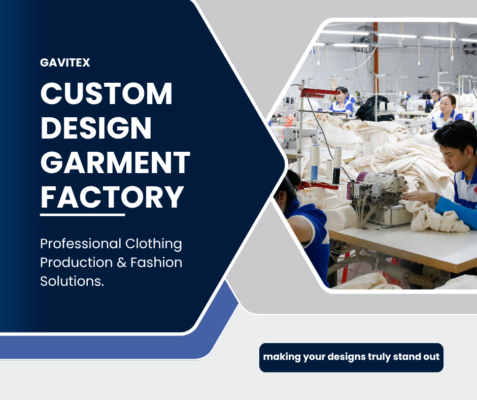
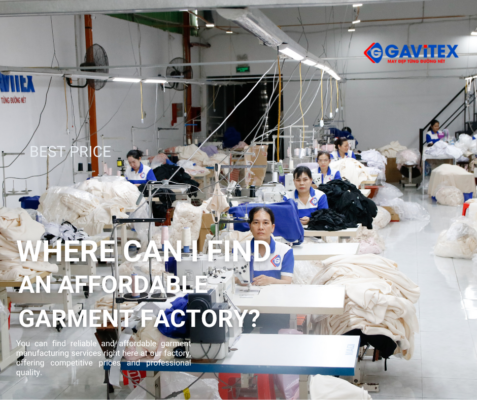
As an experienced clothing producer, Gavitex designs its capacity, workforce and clothing production lines around the needs of long-term partners. We do not chase every order; we prioritize relationships where both sides commit to building volume with continuity. That allows us to configure lines optimally for specific product families such as T-shirts, fleece, shirts or workwear and to tune each setup for long runs. This is where economies of scale in manufacturing start to become visible for your finance team.
Our engineering team breaks each style into operations, builds line layouts, and reviews potential bottlenecks before bulk production. Once a style proves stable, we can replicate the model on additional lines to absorb larger orders without losing control. Combining this with careful operator training gives brands predictable output — a key ingredient in any serious garment manufacturing strategy.
From sampling to bulk: connecting development and scale
Economies are only useful when they are tied back to what you approved in development. At Gavitex, sampling is never isolated from the production floor. Patterns, measurement charts, construction methods and trim details are all tested with an eye on future economies of scale in manufacturing. If a certain seam type or design detail will cause issues when multiplied by tens of thousands of units, we talk about it at the sampling stage, not after bulk has shipped.
This approach is especially important for private label apparel programs, where consistency across seasons matters as much as creativity. By aligning sampling and bulk, we help brands make decisions that work not only for photoshoots but also for large, multi-country deliveries.
Supporting different business models with scale
Whether you are building a direct-to-consumer label, a retail chain collection, or corporate uniform lines, Gavitex uses the same logic: focus volume where it makes the most difference. For basic jersey, fleece and woven shirts, we apply strong economies of scale in manufacturing. For more niche styles, we still leverage shared fabrics, trims and operations to soften costs. This creates a flexible but disciplined environment for custom clothing production.
Because we behave as an OEM clothing manufacturer, we also share insights on material usage, yield and style consolidation. When combined with external resources such as garment manufacturing insights, our partners get a clearer view of how to organize their assortments around scale, not just aesthetics.
Contracts, NDAs & Brand Protection at Scale
Why legal structure matters when volume grows
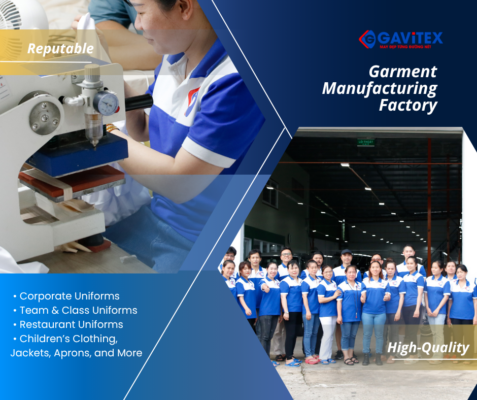
As order volumes increase, the impact of mistakes, misunderstandings or leaks becomes larger. A single issue on a high-volume style can affect multiple markets and seasons. That is why any discussion about economies of scale in manufacturing must include the legal and compliance side. Gavitex works with partners under clear manufacturing contracts and NDAs that define responsibilities, quality expectations, and the handling of sensitive information.
These agreements cover topics such as sampling ownership, pattern and artwork rights, confidentiality terms, and procedures for corrective actions. We see them not as bureaucracy but as a shared map: both parties know how to navigate issues if they arise, even in the middle of a busy season.
Practical sample and data protection
Legal language is only useful when it is backed by daily routines. For sensitive private label apparel projects, Gavitex controls who can access samples, digital files and production areas. Samples are labeled and stored in designated zones, digital patterns are handled by authorized staff, and photo or visitor policies are adjusted depending on project sensitivity. All of this happens in the same environment where we leverage economies of scale in manufacturing, so large programs stay both efficient and safe.
For example, if we are running a high-volume uniform program alongside a new, not-yet-launched collection, access rules are set so that only the relevant teams interact with each project. This keeps commercial and creative information compartmentalized while still allowing Gavitex to use its scale to support both.
Structured escalation when issues appear
No operation is perfect, even with strong economies of scale in manufacturing. What separates good partners from risky ones is how they respond to issues. Gavitex agrees in advance with customers on quality standards, measuring methods and escalation steps. When a problem is detected — whether in CMT, finishing, packing or documentation — the process for analyzing scope, proposing solutions and implementing corrective actions is clear.
- Written NDAs and contracts for sensitive styles and long-term programs.
- Defined IP ownership for patterns, artwork and technical documents.
- Controlled access to samples and digital data for large-volume lines.
- Clear issue-handling and escalation processes for all parties.
- Alignment between legal frameworks and day-to-day garment manufacturing routines.
For global brands, this combination of legal clarity and operational discipline makes it easier to place bigger bets with confidence. You can pursue economies of scale in manufacturing without exposing your brand or product concepts to unnecessary risk.
5 Reasons to Choose Gavitex to Unlock Economies of Scale
1. Integrated planning from forecast to finished goods
Gavitex engages early, not only when purchase orders arrive. By discussing forecasts and style roadmaps with you, we align our clothing production lines and material planning with your demand patterns. This makes it much easier to build economies of scale in manufacturing around your core styles and avoid last-minute bottlenecks. Early planning also helps to secure fabric capacity and negotiate better upstream prices, further improving total landed cost.
2. Technical depth and line know-how
Our engineers and supervisors understand both product and process. They know how to optimize sequences, manage WIP and tune line balance. Instead of just reacting to issues, they proactively look for ways to improve output and quality, reinforcing the benefits of economies of scale in manufacturing. For brands, this translates into smoother deliveries and fewer surprises at inspection stages.
3. Cost discipline with transparent communication
Because we act as a long-term OEM clothing manufacturer, we are transparent about where savings come from. When economies of scale in manufacturing allow us to reduce unit costs, we work with partners to structure pricing that rewards volume and stability. The same transparency applies when input costs move or style complexity changes; your team always understands how economics evolve, which supports better pricing decisions at retail.
4. Support for sustainability and eco-friendly investment
Many sustainability initiatives — such as more efficient machinery or cleaner dyeing processes — require upfront investment. Strong economies of scale in manufacturing make these investments far more realistic. As volumes grow, payback periods shrink. Working with a partner like Gavitex, which links scale to eco-friendly garment production, helps brands move from isolated pilots to meaningful, scaled change.
5. Partnership mindset, not transactional behavior
Finally, none of these advantages matter without the right attitude. Gavitex invests in relationships. We want to understand your brand, your customers and your long-term plan for private label apparel. That understanding lets us suggest which styles can carry more volume, where to simplify, and when to consolidate. Over time, this collaboration turns economies of scale in manufacturing from a theoretical idea into a shared competitive edge.
FAQ: Economies of Scale in Manufacturing with Gavitex
Below are common questions from brands that are exploring how to use economies of scale in manufacturing when working with Gavitex as their apparel partner.
How large do my orders need to be to benefit from economies of scale in manufacturing?
Will economies of scale in manufacturing reduce my flexibility for new designs?
How do economies of scale in manufacturing interact with sustainability goals?
Can Gavitex support both private label apparel and branded programs under one roof?
What is the first step if I want to explore economies of scale with Gavitex?
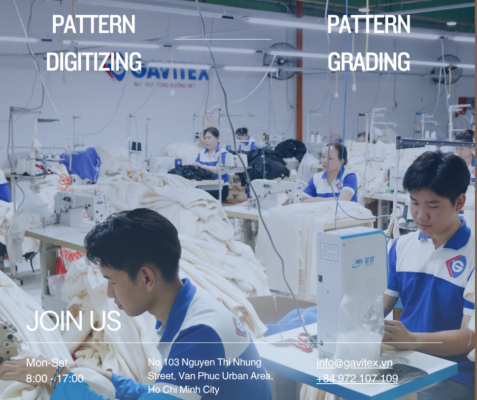
Contact Gavitex — Turn Economies of Scale into a Competitive Edge
Talk directly with a team that lives economies of scale every day
If you want to move beyond theory and see how economies of scale in manufacturing can reshape your apparel cost structure, talk to Gavitex. Whether you manage a fast-growing online brand, a retail chain, or corporate workwear programs, our team can help you organize styles, volumes and timelines in a way that protects margins while supporting quality and sustainability.
Call 0972107109 to discuss planning, sampling and production with the Gavitex team and see how we can implement economies of scale in manufacturing for your next season.
Explore more about how Gavitex combines sustainability and industrial strength:
Final pricing, minimums and lead times for Gavitex economies of scale in manufacturing programs will always depend on style complexity, compliance needs and volume commitments. Our team is ready to build a transparent, realistic plan tailored to your brand.