
Clothing production contract with a reliable Vietnam partner – Gavitex
When your brand invests in designs, fabrics and marketing, you need more than a handshake and a simple purchase order. A clear clothing production contract transforms your ideas into legally protected, scalable cooperation with your factory partner. It defines quality, delivery, prices, responsibilities and remedies – so your team can focus on growing the brand instead of fighting operational fires.
Based in Vietnam, Gavitex specialises in export-oriented garment manufacturing for international labels. We combine well-organised clothing production lines, transparent communication and robust contracts that protect both sides. Whether you are comparing clothing production companies in Asia or ready to formalise a long-term collaboration, a structured clothing production contract with Gavitex gives you clarity, predictable costs and peace of mind.
📚Table of contents
- 1. What is a clothing production contract?
- 2. Key features and value for fashion brands
- 3. Contract vs spot orders & agent model
- 4. Gavitex production capacity under contract
- 5. Legal strength & brand protection
- 6. Five reasons to contract with Gavitex
- 9. Frequently asked questions (FAQ)
- 10. Contact Gavitex / Get a quote
1. Understanding the clothing production contract
1.1 Definition and purpose
A clothing production contract is a written agreement between your brand and a factory that sets out exactly how products will be developed, manufactured and delivered. Unlike a simple purchase order, it describes the full relationship: roles, obligations, risk sharing and dispute resolution. In the context of custom clothing production, that level of clarity is essential, because one delayed or rejected shipment can damage both cash flow and reputation.
In practical terms, the contract becomes the “operation manual” for the partnership. It defines how your garment manufacturing projects move from design to bulk production; how changes are approved; what standards are used to evaluate quality; and how price adjustments are handled if fabric or labour markets change. For brands running multiple drops per year, a long-term clothing production contract with Gavitex replaces dozens of disconnected emails and spreadsheets with one coordinated framework.
1.2 Core features, characteristics and value
Main components typically included in a modern clothing production contract:
- Scope of clothing production lines and product categories covered (knits, wovens, uniforms, sportswear, kidswear, etc.).
- Target volumes, forecast sharing and flexibility ranges for increases or decreases.
- Pricing logic and adjustment mechanisms linked to fabric and accessory markets.
- Quality, testing and inspection procedures along the custom clothing production flow.
- Lead times, shipment terms (Incoterms) and delay handling.
- Payment methods, credit terms and security instruments where applicable.
The real value of a clothing production contract lies in risk management and predictability. Instead of renegotiating fundamental topics for every style, you agree the “rules of the game” once. Then each purchase order simply references the framework. That dramatically reduces email traffic, misunderstandings and hidden expectations. For Gavitex, it also means we can plan our clothing production lines more efficiently, allocate the right operators and prioritise your orders in a fair way.
From the brand side, a robust contract makes it easier to convince investors and board members that supply risk is under control. For example, you can point to clearly described quality checkpoints, escalation steps and remedies in case of late delivery. In competitive markets such as private label apparel, that assurance is worth a lot.
1.3 Why Gavitex approaches contracts as partnership tools
At Gavitex, we do not see a clothing production contract as a list of penalties, but as a tool to align incentives. Our contracts are written in clear language so both sides understand what success looks like: stable quality, fair pricing, on-time delivery and transparent communication. Because we run organised, assembly-line garment manufacturing, we can translate contract clauses directly into line procedures, from fabric inspection to inline quality control.
2. Clothing production contract vs other sourcing models
2.1 Contract vs simple spot purchase orders
Many emerging brands initially work with factories on a spot basis: they send tech packs, receive a quote, issue a purchase order and hope everything runs smoothly. This can work for very small, irregular orders. But as soon as your business scales, the limitations become obvious. Without a clothing production contract, expectations about quality levels, delivery, price updates or capacity are handled ad-hoc. One season you get top priority; the next season your orders are delayed because another client booked the lines earlier.
With a formal contract, Gavitex commits capacity, processes and specific service levels to your brand. You know how our clothing production lines will be allocated, what lead times we agree for bulk and repeats, and how we will handle urgent reorders. Instead of negotiating every basic term again and again, we can focus our discussions on style development, cost engineering and assortment planning.
2.2 Contract manufacturing vs buying through an agent or trader
Another alternative is buying from traders or agents who source from various clothing production companies. This may feel convenient at first, because the agent handles many details. However, you rarely know which factory is actually producing your garments, how stable their garment manufacturing systems are, or whether they will even be available for your next season.
Working directly with Gavitex under a clothing production contract gives you:
- Direct visibility of the factory, machinery and team producing your orders.
- Clear alignment of interests – we invest in long-term cooperation, not one-off margins.
- Better control over testing, audits and compliance than with anonymous sub-contractors.
For brands building serious private label apparel businesses, a direct, contract-based relationship creates more stability than broker-style sourcing. You know who stands behind your product when something goes wrong – and who deserves credit when everything goes right.
2.3 How the contract model supports growth
As volumes increase, a clothing production contract actually becomes a growth accelerator. The framework allows us to jointly plan capacity months ahead, aligning Gavitex assembly-line schedules with your drop calendar. When forecasting is integrated into the agreement, we can optimise yarn bookings, fabric greige reservations and trim lead times. That translates into better prices and more secure delivery windows for your custom clothing production.
3. Gavitex production capacity and process under contract
3.1 Production scale and assembly-line structure
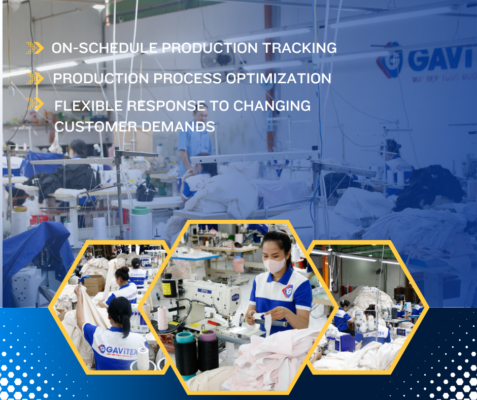
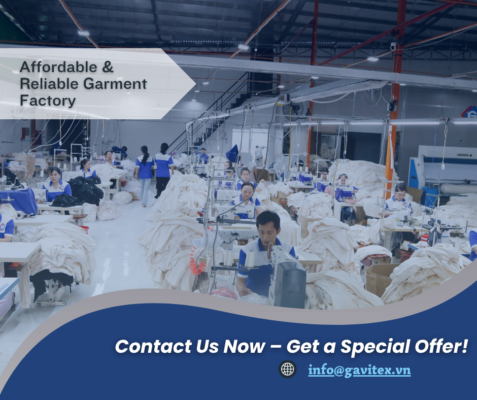
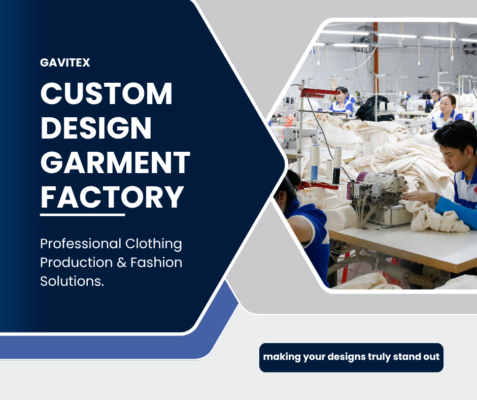
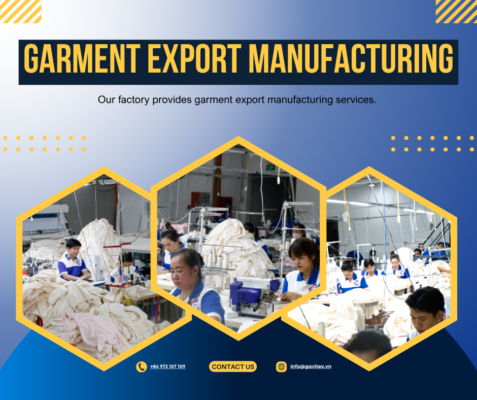
Gavitex operates organised clothing production lines for different product families: T-shirts, polos, hoodies, shirts, pants, uniforms and activewear. Lines are configured in assembly-line layouts where each operator focuses on specific operations. This increases productivity and consistency across large volumes. Under a clothing production contract, part of this capacity is reserved for your brand according to agreed forecasts and seasonality patterns.
Our planning team uses capacity loading tools to ensure that cutting, sewing and finishing sections are balanced. By linking these planning parameters to your contractual lead times, we can provide realistic, reliable calendars for each style. If your business grows and you wish to expand cooperation, the contract can define clear rules for adding extra lines or shifting styles between lines.
3.2 Technology and quality systems
To support long-term garment manufacturing partnerships, Gavitex continually invests in technology:
- Automatic spreading and cutting equipment for precise fabric utilisation.
- Special machines for knitwear, denim, sportswear and workwear.
- Digital pattern and grading tools for accurate custom clothing production.
- Inline quality checkpoints linked to your contractually agreed AQL levels.
These investments are made with multi-year collaboration in mind, not just short-term orders.
Because quality and testing requirements are described in the clothing production contract, our technicians can translate them into standard operating procedures on the line. For example, if your brand needs specific seam strength or pilling standards, those become explicit checkpoints, not informal “nice-to-have” targets.
3.3 Process transparency and communication
Communication is part of capacity. A technically strong factory is not enough if you never know what is happening. Gavitex assigns a dedicated merchandising and technical team to each contracted client. You receive regular updates about fabric status, cutting progress, sewing output and inspection results. This reporting rhythm is written into the clothing production contract, so both sides are accountable.
For more complex private label apparel projects, we can also hold pre-production meetings online or onsite. In these sessions we review construction risks, embellishment steps and packaging instructions to make sure our lines are set up correctly before bulk.
4. Legal structure and brand protection inside the contract
4.1 Contract wording and commercial clauses
A strong clothing production contract is clear but not intimidating. Gavitex works with straightforward language describing scope, quality standards, payment terms, delivery conditions, liability and force majeure. We are familiar with international trade concepts and can align the contract with your corporate templates where needed.
Commercial clauses are designed to be fair and practical. For example, price review mechanisms can be linked to raw material indices or specific events such as currency swings, instead of arbitrary requests. Delivery windows can include grace periods and clearly defined air-freight sharing rules if urgent recovery is needed. By turning these sensitive topics into written principles, the clothing production contract reduces friction during peak seasons.
4.2 NDA, confidentiality and intellectual property protection
Fashion relies on uniqueness. Gavitex therefore integrates non-disclosure and confidentiality obligations into the clothing production contract. Your designs, patterns, fit blocks, grading rules, prints and brand concepts are treated as confidential information that may not be shared with other parties.
Only teams directly involved in your orders have access to your documentation, and digital files are stored in controlled systems. This is essential for brands building strong private label apparel identities, capsule collections or signature silhouettes that differentiate them from competitors.
The contract can also cover photo usage and marketing references. Some clients prefer that their logo or products are never used in factory marketing; others are happy to be mentioned as reference. Whatever your preference, we put it in writing so there is no confusion later.
4.3 Sample handling, labelling and brand integrity
Samples show the world what your brand stands for. Within the framework of the clothing production contract, Gavitex can define strict rules about sample circulation, storage and destruction. Development and fit samples are separated from bulk production; wrong or outdated samples are destroyed or archived based on your guidelines, not resold on local markets.
Labelling and packaging are equally sensitive. The contract can specify how branded cartons, woven labels and packaging materials are stored and accounted for, so that no unauthorised product appears on the market. Combined with our disciplined garment manufacturing practices, this protects your brand even in complex multi-style programs.
5. Five reasons to choose Gavitex for your clothing production contract
5.1 Partnership mindset, not short-term trading
Gavitex positions itself as a long-term partner rather than a price-only supplier. When we sign a clothing production contract, we commit to learning your brand’s fit philosophy, quality expectations and go-to-market rhythm. Our teams are trained to think beyond the next order and look at your multi-season roadmap.
5.2 Strong technical base in garment manufacturing
Our technicians, pattern teams and line supervisors are experienced in handling a wide range of products: basics, streetwear, corporate wear and more. That technical depth allows us to translate contract clauses into real actions: correct stitches, appropriate seam constructions, suitable machines and predictable outputs. For brands that are looking for a capable OEM clothing manufacturer, this combination of contract discipline and technical strength is a rare asset.
5.3 Cost efficiency with transparent breakdowns
The Gavitex location in Vietnam, assembly-line organisation and efficient fabric utilisation create real cost advantages. Typically, we can offer pricing under a clothing production contract that is around 35–45% lower than many traditional sourcing options of similar quality. The important point is transparency: we are open about how fabric, labour, overhead and margins contribute to the final price, so your team can make informed decisions.
5.4 Flexible support from design to delivery
Some clients come with detailed technical packs and ready graded patterns; others are still shaping their collections. Gavitex can step in wherever you need help, from early custom clothing production ideas to final packing layouts. Thanks to clear responsibilities in the clothing production contract, you always know which tasks are handled by your internal team and which are handled by Gavitex.
5.5 Reliable timelines and proactive communication
Finally, brands choose Gavitex because we respect time. Our planning tools, line management and experienced team allow us to provide realistic lead times and stick to them. When an external factor affects the schedule – for example, fabric shipment delays – we escalate early and propose solutions. This reliability, anchored in the clothing production contract, protects your launch calendar and your reputation with retailers or end customers.
Ready to formalise a stable, long-term partnership with your factory?
Let Gavitex draft a clothing production contract tailored to your brand’s needs, volumes and product strategy.
Hotline: 0972107109 (also +84 972107109).
8. Frequently asked questions about the clothing production contract
1. What information do I need to start a clothing production contract with Gavitex?
To start a clothing production contract, you do not need to have everything perfect, but the more clarity you share, the better. Ideally, your team can provide a list of expected product categories, target volumes, key markets and quality expectations. If you already have tech packs, examples of existing styles or previous orders from other factories, these are very helpful references. We will also ask about preferred Incoterms, payment terms and lead time expectations, so we can design a framework that realistically fits your business model. From there, Gavitex can guide you through the remaining details, including how to integrate forecasts, sample procedures and testing requirements into the contract.
2. How is a clothing production contract different from a normal purchase order?
A normal purchase order is usually linked to one specific style, quantity and delivery date. It says what you are buying, but not much about the broader
relationship. A clothing production contract, on the other hand, describes the overall cooperation between your brand and Gavitex.
It sets rules for quality standards, testing methods, forecast sharing, price adjustments, liability and dispute resolution. Individual purchase orders
then sit under this framework and refer to it. In this way, you avoid renegotiating basic terms every season and reduce the risk of misunderstandings.
The contract gives both sides a shared reference when new products, higher volumes or unforeseen events appear.
3. Can a clothing production contract cover multiple brands or only one label?
In many groups, one company manages several labels or channels. Your clothing production contract with Gavitex can be designed to cover one
brand or multiple brands, as long as ownership and responsibility are clear. For groups with several labels, it is often efficient to sign a master
agreement that defines general clauses, and then add annexes for each brand with its own quality levels, labelling rules and design sensitivities.
This avoids duplicate paperwork and still respects each label’s identity. Our legal and commercial teams will work with you to design a structure
that matches your corporate organisation while keeping daily operations simple for your merchandising and sourcing teams.
4. How does Gavitex handle quality issues under the contract?
Even with strong systems, occasional quality problems can appear in garment manufacturing. The difference under a
clothing production contract is that we already have an agreed process to manage them. The contract defines inspection levels, claim reporting
timelines and corrective action steps. For example, it can specify when rework is expected, when discounts are appropriate, and how shared root-cause
analysis should be conducted. Because these principles are defined before the season starts, discussions remain focused and solution-oriented, instead of
emotional and improvised. Our goal is to use every issue as a learning opportunity that makes future production even more stable.
5. How long does it take to negotiate and sign a clothing production contract?
Timelines depend on your internal approval process, but Gavitex keeps the structure as efficient as possible.
If your legal department has an existing template, we can review it and suggest adjustments based on our operational reality in
clothing production lines. If you prefer to start from our template, we will walk you through each section in a joint meeting and adapt it
to your needs. For many clients, a first version can be agreed within a few weeks, followed by refinements after the first one or two seasons of
cooperation. The important point is not to wait for a “perfect” document before starting; instead, we recommend beginning with a pragmatic
clothing production contract that covers the essentials, then evolving it together as the partnership grows.
9. Contact Gavitex – turn your clothing production contract into reality
9.1 Start a structured collaboration in Vietnam
If you are ready to move from occasional orders to a stable, scalable partnership, a well-designed clothing production contract with Gavitex is a powerful next step. You gain visibility on capacity, quality and costs; we gain visibility on your growth plans. Together we shape a roadmap that aligns assembly-line garment manufacturing in Vietnam with your brand’s ambitions in your home market.
9.2 Next steps – how to get your proposal
Share your product overview, key markets, approximate volumes and any specific service expectations. Our team will review your brief, make suggestions on contract structure, and prepare an initial costing and lead time indication. From there, we refine details until the contract reflects how both sides want to work together. Whether you represent a new private label apparel concept or an established retailer looking for a reliable OEM clothing manufacturer, we will meet you at your current stage and support your growth.
Let Gavitex be the stable manufacturing backbone behind your brand.
Call our hotline now: 0972107109 (also +84 972107109 on international calls).