

Seamless Underwear Manufacturing Process for Private Label Brands
Seamless underwear is knitted largely in one piece on circular machines, giving smooth, invisible comfort [...]
Aug
French Terry vs Fleece for Hoodie Manufacturing
French terry and fleece are the two fabrics most hoodies are made from, and the [...]
Aug
Sports Bra Manufacturing Checklist: Support, Fabric, and Construction
A sports bra must deliver real support, comfort and moisture management across a wide range [...]
Aug
Vietnam Export-Quality Garment Factory: Sourcing High-Quality, Ethical Apparel From Vietnam
Gavitex supports export-quality garment manufacturing in Vietnam for international apparel brands, covering sampling, fabric coordination, [...]
Feb
Vietnam Garment Production Factories: Sourcing, Manufacturers, Ethical Apparel & Compliance Guide
Gavitex provides garment production support in Vietnam for international apparel brands, covering sampling, fabric sourcing, [...]
Feb
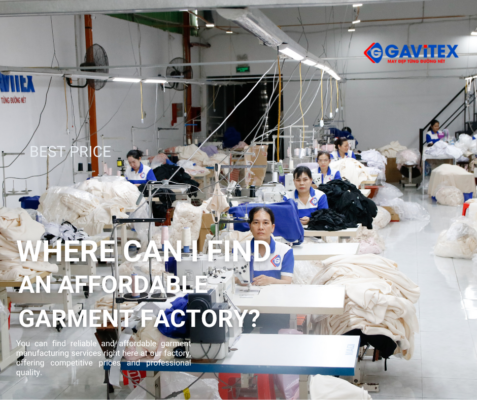
Vietnam Clothing Manufacturing For Export: Sourcing, Quality, And Sustainable Apparel
Unlocking the potential of Vietnam clothing manufacturing for export is critical for businesses seeking cost-effective [...]
Feb
Largest Garment Factory In Vietnam: Top Producer, Capacity, And Workforce Insights
The quest to pinpoint the largest garment factory in Vietnam is crucial for businesses seeking [...]
Feb
Garment Factories In Vietnam: Sourcing, Manufacturers, & Ethical Apparel Production
Understanding the landscape of garment factories in Vietnam is crucial for businesses seeking efficient and [...]
Feb
CMT Garment Factory in Vietnam for Cut, Make and Trim Production
A few years ago my brand was growing fast, but our supply chain was fragile. Each season I worked with different small workshops, and every delay or quality issue hit my reputation with buyers. Things finally changed when I decided to consolidate production with a professional CMT garment factory in Vietnam – Gavitex. Instead of chasing dozens of emails, I now plug my collections into one disciplined system of garment manufacturing. In this article, I want to share my experience, explain how a strong partner like Gavitex works, and show why this model fits many international labels and retailers.
☰ Table of contents
- My story: from scattered workshops to one CMT garment factory
- Features and value of a modern CMT garment factory
- Comparing a CMT garment factory with full–package OEM models
- Production capacity, technology and processes at Gavitex
- Legal certainty and brand protection when working with Gavitex
- Five reasons to choose Gavitex as your CMT garment factory
- Market insights and colorful demand chart
- Sample pricing table for CMT services
- FAQ: practical questions about sourcing from a CMT garment factory
- Get a quote and contact Gavitex
How I found the right CMT garment factory for my brand
The pressure of unreliable clothing production lines
In the beginning I worked with several small units spread across different regions. One handled knit tops, another made joggers, and a third focused on light jackets. None of them was a true CMT garment factory with industrial engineering and planning. There were no synchronized clothing production lines, only loosely managed groups of operators. Shipments slipped, rework rates were high, and my team spent weeks fixing issues instead of creating new collections. I realised that if I wanted to build a serious brand, I needed a structured partner, not just a collection of workshops.
First visit to Gavitex – a different kind of partner
When I visited Gavitex for the first time, the difference was obvious. This was a real CMT garment factory, not just a sewing room. Fabric rolls were clearly labeled with style, color and lot numbers. Cutting tables were organized, and the lines followed a clean flow from cutting to sewing to finishing. I met the technical team who explained how they balance operations, measure efficiency and control quality. They also took time to understand my collection structure, price points and customer expectations – exactly what I would expect from an experienced OEM clothing manufacturer, but with the flexibility of CMT.
From first trial order to a long–term CMT partnership
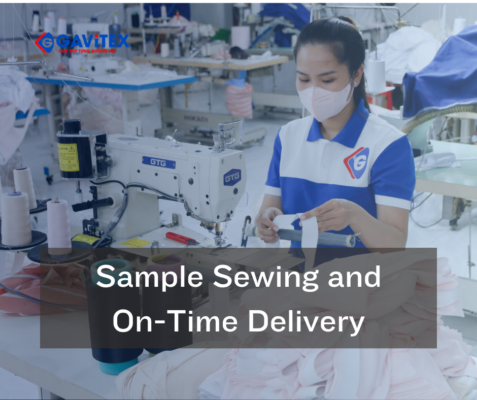
We started with a modest trial order: basic T–shirts, a few fleece styles and some seasonal polos. The team at Gavitex, as a dedicated CMT garment factory, organised sampling quickly, gave transparent feedback on construction, and kept me updated at every step. When the first containers arrived, my buyers noticed the improvement immediately: cleaner seams, consistent measurements, and cartons packed exactly as specified. That trial built enough confidence for me to move more styles into this factory, and over several seasons Gavitex became the main engine behind my custom clothing production strategy.
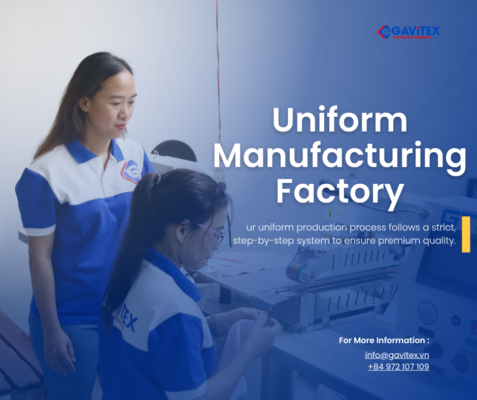
Key features and value of a modern CMT garment factory
From Cutting–Making–Trimming to integrated garment manufacturing
Traditionally, a CMT garment factory is responsible for Cutting, Making and Trimming only. The buyer supplies fabrics and accessories while the factory converts them into finished garments. Gavitex takes this concept further. They invest in pre–production planning, sample optimisation and marker efficiency to make sure every meter of fabric is used wisely. Their garment manufacturing process starts with understanding your tech packs, then breaking them down into detailed operation steps. This structured approach reduces errors, stabilises quality and gives buyers real visibility over how their garments are made.
A strong foundation for private label apparel
Many of Gavitex’s customers are private label apparel brands and retailers. These clients want to control fabric choice, design and branding while relying on a specialist CMT garment factory for labour–intensive operations. Because Gavitex works with detailed documentation and robust line control, they can handle a wide mix of styles while maintaining standards. For my own brand, this meant I could experiment with new fabrics and silhouettes, confident that the factory would manage patterns, cutting and sewing with the same discipline used for big retail programs.
Supporting truly custom clothing production
Beyond basics, a flexible CMT garment factory like Gavitex can also support smaller, more experimental runs. For capsule drops and online–first launches, they created modular cells inside their clothing production lines, which could adjust quickly to shorter series and frequent style changes. This kind of adaptive custom clothing production allowed me to test new ideas without overwhelming the factory’s planning department. Instead of treating small orders as a nuisance, Gavitex integrated them into a broader production strategy, so my brand could innovate and scale using the same partner.
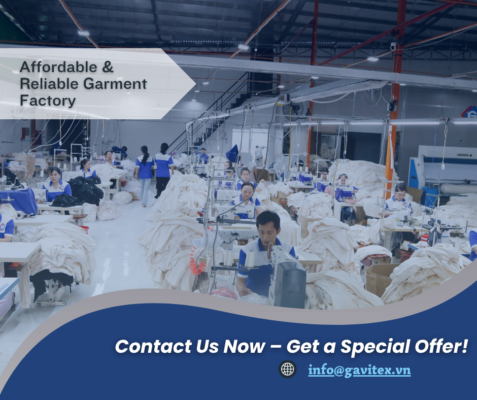
How a CMT garment factory compares to full–package OEM models
Cost structure and transparency
In a full–package setup, an OEM clothing manufacturer typically combines fabrics, trims and labour into a single FOB price. With a CMT garment factory, the processing cost is transparent, while fabrics and functions such as printing or embroidery can be sourced separately. When I analysed both options, I found that direct mill relationships plus Gavitex’s efficient garment manufacturing often resulted in total savings. Marker optimisation, reduced rework and better planning allowed us to invest more in fabric quality without pushing retail prices beyond our target.
Flexibility and risk distribution in your supply chain
Another important difference is how risk is shared. In a pure OEM model, the supplier carries more responsibility for materials, but the buyer has less flexibility. When working with a CMT garment factory, the brand owns fabrics and trims and can move them between styles or even factories if needed. For complex collections, this flexibility is extremely valuable. Gavitex helped us reroute excess fabric from slower programs into new products, adjusting clothing production lines to match updated forecasts. The result was less waste and a more dynamic response to market demand.
When to choose CMT and when to choose full package
For new or very small brands without sourcing experience, a full service OEM clothing manufacturer can be a convenient starting point. But once your team understands fabric sourcing and forecasting, working with a CMT garment factory gives far more control. You can keep strategic relationships with mills while using Gavitex as the central engine of production. To explore this in more depth, I found it helpful to read Gavitex’s guide as a CMT clothing manufacturer Vietnam, then compare it with their page dedicated to CMT garment factory services. Together these resources give a clear overview of different sourcing paths.
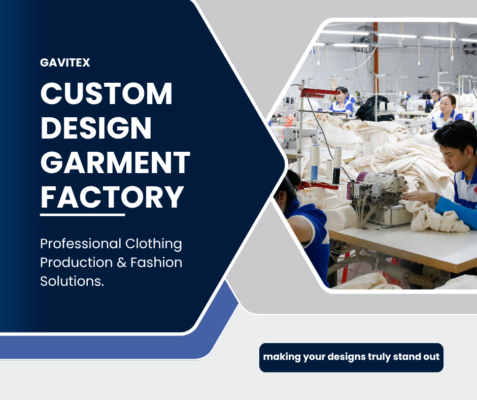
Production capacity and technology at Gavitex – a focused CMT garment factory
Engineered clothing production lines
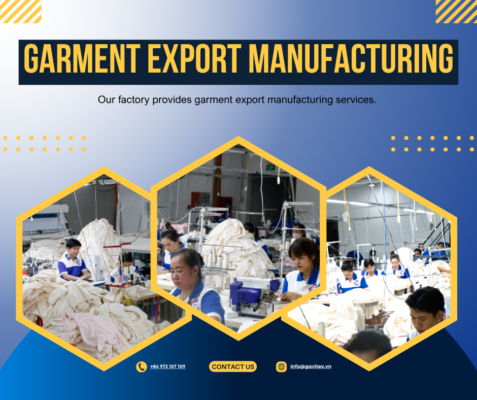
What impressed me most at Gavitex was how each line is engineered. This is not an improvisational workshop; it is a serious CMT garment factory where every station has defined operations, standard times and training plans. The industrial engineering team studies each style before bulk production and designs the line accordingly. Bottlenecks are identified early, and operators rotate to keep productivity stable. This level of structure ensures that garment manufacturing is not dependent on one or two highly skilled individuals but on a balanced system that can scale.
CAD, markers and cutting room discipline
Because the buyer provides fabrics, efficient cutting is crucial in a CMT garment factory. Gavitex uses CAD tools to create markers that maximise fabric yield while respecting grain lines and print placement. Spreading, checking and cutting follow clear procedures, and any deviation is recorded. This is where the factory saves a lot of value for clients: by reducing fabric waste, the total cost per garment drops, and you gain extra margin or pricing power. For brands that handle large volumes of private label apparel, these savings add up quickly across seasons.
Technology supporting custom clothing production
Gavitex combines standard sewing machines with specialised equipment for performance wear and detailed construction. This allows the CMT garment factory to handle a wide spectrum of custom clothing production, from simple tees to more technical activewear. As a client, I appreciate that they do not overpromise on categories they cannot support; instead, they focus on areas where they have the right machines and know–how. This honesty protects both the brand and the factory, and it is one of the reasons I trust them as my long–term production hub.
Legal clarity and brand protection when working with a CMT garment factory
Contracts that define responsibilities
When you cooperate with an overseas partner, clear contracts become just as important as quality. As a professional CMT garment factory, Gavitex signs detailed agreements covering responsibilities for materials, production, quality control and documentation. These contracts specify how measurement tolerances are handled, what inspection levels apply and how disputes will be resolved. For international brands, this framework removes ambiguity and enables both sides to focus on execution. It also makes internal reporting easier, because you can explain clearly how risk and responsibility are shared.
Non–disclosure agreements and protection of designs
Many brands hesitate to send their newest collections to a factory they barely know. Gavitex addresses this concern by signing non–disclosure agreements and implementing practical safeguards in the sample room and pattern department. As a trusted CMT garment factory, they restrict access to sensitive files, limit the circulation of experimental samples and train staff on confidentiality. For my own brand, these measures allowed us to share designs earlier, which in turn gave the factory more time to prepare clothing production lines and avoid last–minute stress when bulk orders were confirmed.
Compliance, documentation and reliable partners
Exporting to multiple markets means dealing with many compliance rules. A seasoned CMT garment factory like Gavitex supports correct labeling, composition declarations and country of origin marking. Documentation is kept organised and accessible for audits or retailer requests. For logistics and local support, they sometimes cooperate with external partners such as specialised sourcing platforms. This combination of internal discipline and external expertise gives international buyers the confidence that their garment manufacturing setup is both efficient and compliant.
Five reasons to choose Gavitex as your CMT garment factory
1. Strategic mindset, not just production
Gavitex stands out because they think beyond today’s purchase order. When I first discussed working with this CMT garment factory, they asked about my multi–year roadmap: planned categories, target markets and potential volumes. Rather than simply quoting prices, they helped me structure a phased approach to garment manufacturing, starting with core items and gradually adding more complex products. This strategic mindset turned them from a vendor into a development partner who understands where my brand wants to be in three to five years.
2. Competitive pricing built on efficiency
Gavitex does not chase the lowest cost at any price; instead, they focus on efficient, repeatable processes. Because this CMT garment factory invests in training, industrial engineering and quality control, they can keep rework low and productivity high. That allows them to offer processing rates that are normally 35–45% below many comparable suppliers for similar categories. For my brand, this meant we could offer sharper retail prices while still maintaining healthy margins – a powerful advantage in a crowded marketplace.
3. Reliable quality culture
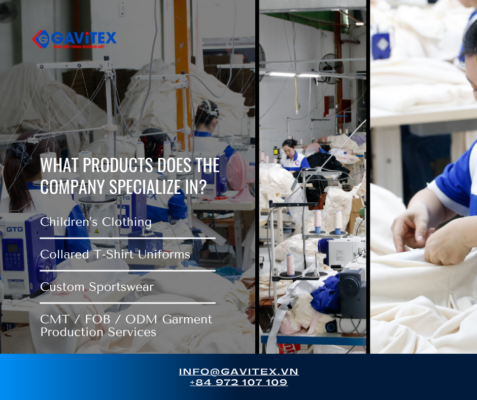
Quality at Gavitex is treated as a continuous process rather than a single inspection at the end. Inline checks, self–inspection by operators and final audits all support each other. When I walk through this CMT garment factory, I see measurement tools at the lines, defect boards that are updated daily, and supervisors coaching operators. Over time, this culture has significantly reduced returns and complaints. Buyers now associate my brand with consistent fit and feel, which is exactly the reputation we aim for.
4. Flexibility for different customer sizes
Gavitex works with both large retail programs and smaller private label apparel brands. They design capacity so that no client becomes hostage to one huge order or a single season. As a flexible CMT garment factory, they can dedicate lines to large, stable programs while grouping smaller styles intelligently to reach efficient batch sizes. This approach helped my brand grow from modest volumes to substantial, rolling programs without ever needing to change partners.
5. Transparent communication and long–term trust
Finally, what keeps me loyal to Gavitex is their transparency. When capacity is tight, they inform me early. When I face sudden changes in demand, they analyse options with me instead of simply saying yes or no. Having a trusted CMT garment factory that communicates honestly makes planning easier and reduces stress for my team. We discuss forecasts, potential risks and improvement ideas regularly, building a partnership that is far stronger than a transactional buyer–seller relationship.
Market insights and colorful chart for CMT garment factory demand
Why more brands are choosing the CMT model
In recent years, many international brands have rebalanced their sourcing portfolios. Instead of relying only on all–inclusive packages, they now combine full–service suppliers with dedicated CMT garment factory partners. This hybrid approach gives buyers more control over fabrics, trims and lead times, while still benefiting from high–efficiency clothing production lines. Vietnam, with its skilled workforce and strong manufacturing ecosystem, has become one of the preferred locations for such partnerships, and Gavitex is well placed within this landscape.
Illustrative column chart: demand for CMT capacity
The simple visual below shows an illustrative trend of interest in CMT services among brands I interact with. Each bar represents a relative demand level per year, highlighting the growing importance of a reliable CMT garment factory in modern sourcing strategies.
Sample pricing – how a CMT garment factory like Gavitex benchmarks
General view on market levels
Actual processing charges vary by style, quantity and construction, but it is still useful to compare typical ranges. Based on my sourcing experience, the reference levels below reflect how a well–organised CMT garment factory such as Gavitex can provide competitive rates while maintaining quality. Their focus on lean garment manufacturing allows savings of around 35–45% compared with many alternatives in similar categories.
Colorful reference table for CMT charges
| Garment category | Typical market CMT price | Gavitex price as CMT garment factory | Estimated saving |
|---|---|---|---|
| Basic knit T–shirt | 0.90 – 1.10 USD / pc | 0.55 – 0.65 USD / pc | ≈ 40 – 45% lower |
| Fleece hoodie / sweatshirt | 1.80 – 2.10 USD / pc | 1.10 – 1.30 USD / pc | ≈ 35 – 40% lower |
| Sports leggings / activewear bottom | 1.70 – 1.90 USD / pc | 0.95 – 1.15 USD / pc | ≈ 40 – 45% lower |
| Casual woven shirt | 1.50 – 1.80 USD / pc | 0.90 – 1.10 USD / pc | ≈ 35 – 40% lower |
These figures are examples meant to illustrate how a well–run CMT garment factory such as Gavitex can turn process excellence into competitive unit costs without compromising quality or social standards.
FAQ – common questions about working with a CMT garment factory
Below are some of the questions other sourcing managers and brand owners often ask me about partnering with a professional CMT garment factory like Gavitex. Click each topic to reveal the answer.
1. What information should I prepare before contacting a CMT garment factory?
Before you approach a CMT garment factory, prepare clear documentation. At minimum, you should have tech packs with measurements, fabric details, construction notes, artwork placement and packing requirements. If you are new to garment manufacturing, the Gavitex team can help refine these documents, but the more detail you provide, the more accurate costing and scheduling will be. You should also have a view on expected volumes, size breakdowns and target ex–factory prices. With this information, the factory can design appropriate clothing production lines, estimate manpower and propose realistic lead times that support your sales calendar.
2. Can a CMT garment factory support both large retailers and smaller private label apparel brands?
Yes. A well–organised CMT garment factory like Gavitex is designed to work with different customer sizes. Large retailers often place substantial, recurring orders for core programs, which can occupy dedicated lines. At the same time, smaller private label apparel brands may start with modest volumes or more experimental styles. Gavitex manages this mix by combining similar products to reach efficient batch sizes and by planning capacity across seasons. For buyers, this means you can grow volumes over time without changing partners, while still receiving professional service even if you are not yet at the scale of a major multinational.
3. How does quality control work when the buyer supplies fabrics and trims?
In a CMT garment factory model, the buyer typically owns the materials, so clear procedures are essential. At Gavitex, all fabrics and trims pass through incoming inspection where shade, width and defects are checked according to agreed standards. During cutting, markers are verified and spreading is monitored to avoid tension issues. Inline quality control on the sewing floor focuses on critical points such as seam strength, measurements and label placement. Final audits follow recognised sampling plans. If a problem appears to be material related, the team informs the buyer quickly so that corrective action can be taken with mills, protecting the integrity of the overall garment manufacturing process.
4. Is a CMT garment factory suitable for custom clothing production and smaller runs?
A flexible CMT garment factory can be an excellent match for custom clothing production and smaller volumes, provided the planning is realistic. Gavitex uses modular approaches in some lines, creating cells that can switch styles more quickly and handle shorter runs. This setup is ideal for limited collections, online capsules or market tests. While there are still minimums for fabric efficiency and line stability, the focus is on designing solutions that allow brands to experiment without committing to enormous quantities. As a result, you can test new fits, fabrics or colorways, then scale successful styles into larger programs once demand is proven.
5. What lead times should I expect when working with a CMT garment factory like Gavitex?
Lead times depend on several factors: garment complexity, sample iterations, fabric readiness and shipping method. Typically, once tech packs are approved, a CMT garment factory will produce first samples, then size sets and a pre–production sample. After all approvals and once fabrics and trims arrive at the factory, bulk lead time might range from eight to twelve weeks, depending on volume and seasonality. For repeat styles with established patterns and materials, this window can be shorter. Gavitex provides a clear critical path so both sides know which milestones must be achieved to meet shipment dates, making planning easier for your merchandising and sales teams.
Partner with Gavitex – your trusted CMT garment factory
From concept to cartons with one dependable team
Working with a professional CMT garment factory like Gavitex has completely changed how I think about sourcing. Instead of spreading production across multiple small units, I now rely on a single partner with strong lines, clear processes and a genuine interest in my brand’s success. Whether you manage large retail programs or specialised private label apparel, Gavitex can help you design a mix of styles and volumes that fits both your budget and your long–term plans for garment manufacturing.
Share your project and get a tailored proposal
If you are considering a change or simply want to benchmark your current setup, start by sharing a few representative styles, target quantities and timing. The Gavitex team will review feasibility, suggest improvements and provide a clear proposal. You can learn more about their services on their dedicated pages as a CMT clothing manufacturer Vietnam and as a specialised CMT garment factory. Together with external support networks like regional sourcing platforms, they can build a robust and flexible supply chain around your brand.
Call for consultation & Get a quick quote
Hotline: 0972107109