Your trusted garment export process partner for global fashion brands
Gavitex supports international brands with a transparent, end-to-end garment export process – from design, sourcing, and production to inspection and on-time delivery to your port.
Hotline & quick consulting: 0972107109
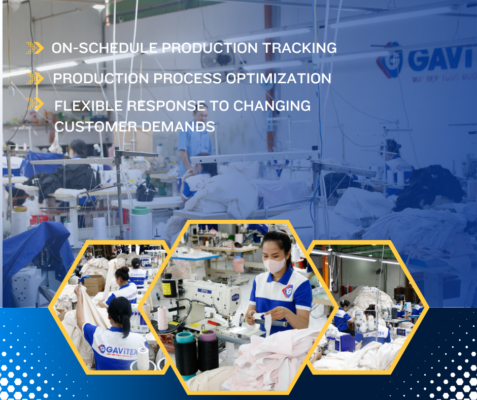
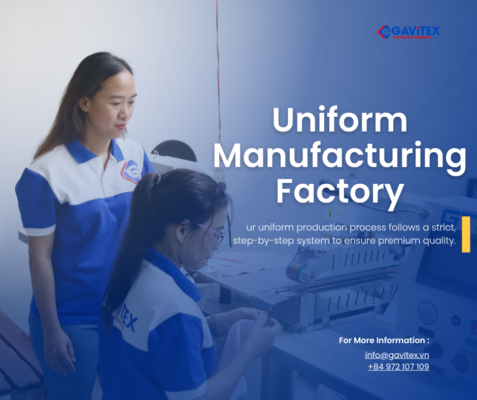
Production and logistics teams at Gavitex coordinating each step of the garment export process.
1. What a modern garment export process looks like
From tech pack to loading at port
For international brands, the garment export process is more than moving cartons from factory to port. It is a structured flow of activities that connects design, garment manufacturing, quality control, documentation, and logistics into one synchronized experience. At Gavitex, we design this flow so that buying offices, retailers, and online brands always know what is happening with their orders at each stage.
It usually starts with your design files or tech packs. Our merchandising and technical teams review measurements, fabric specifications, construction details, trims, colorways, labeling, and packing requirements. Based on that, we propose the optimal combination of clothing production lines, material options, and production lead time. When needed, our pattern room develops samples until your fitting team signs off.
Once samples are approved, the industrial engineering team balances the lines so that each operator on the floor has a realistic and efficient workload. This is where the real garment export process begins: bulk fabric is inspected, relaxed, and cut; panels move through stitching, inline inspection, and finishing; and then garments are pressed, metal-detected when required, and packed according to your carton assortment plan.
Before any goods leave the factory, we coordinate a structured quality protocol that can include internal audits, buyer inspections, and third-party testing. In parallel, our export team prepares the commercial invoice, packing list, certificate of origin, and other country-specific documents. The result is a complete garment export process that connects your purchase orders to Incoterms, forwarders, and vessel schedules without unnecessary delays.
For brands working with private labels or omni-channel retail, this level of control is essential. You want a partner who combines the agility of custom clothing production with the discipline of a large OEM clothing manufacturer. Gavitex was built around exactly this need.
2. Garment export process vs purely domestic production – what is different?
Why working with an export-oriented partner matters
Many brands begin with local workshops that focus on simple domestic deliveries. While this can work for small volumes, it often fails once you start shipping across borders. A structured garment export process adds layers of compliance, documentation, and capacity planning that typical domestic makers are not set up to manage.
In a purely domestic model, the manufacturer may focus on unit price and basic garment manufacturing steps only. There is minimal involvement in freight booking, customs requirements, or origin rules. In contrast, an export partner like Gavitex handles the full picture: harmonized tariff codes, packaging regulations, carton markings, and forwarder coordination, all mapped onto your clothing production lines schedule.
Another key difference lies in transparency. Domestic production is often managed with limited milestones and manual updates. A modern garment export process is milestone-driven: sample approval, pre-production meeting, inline and final inspection, documentation release, and handover to forwarder. Each milestone is documented and traceable so that your planning team can book launches and campaigns with confidence.
When you work with Gavitex as a fashion partner, you also gain the flexibility of a true private label apparel specialist. We handle branded labels, hangtags, polybag warnings, multi-language care labels, and carton markings exactly as your brand book requires. Instead of acting as a simple maker, we become a full-solution partner integrating custom clothing production with export logistics. This is where the value of an export-focused factory clearly exceeds that of a purely domestic supplier.
For brands that already operate global e-commerce or wholesale channels, this difference shows up in fewer delays, fewer document corrections, and a more reliable landed cost calculation. That is why upgrading from a domestic-only system to a professional garment export process is often a turning point in scaling the business.
3. Gavitex capabilities for a reliable garment export process
Production scale, technology, and structured workflow
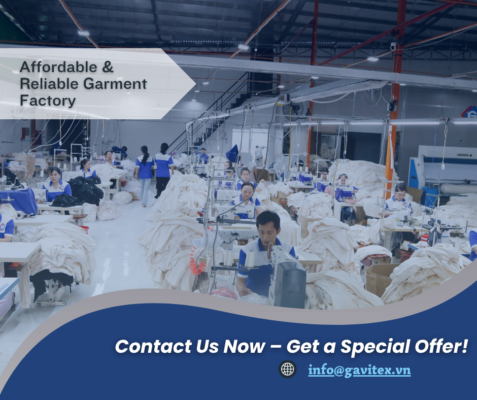
Gavitex operates as a dedicated export-oriented facility, integrating design support, garment manufacturing, finishing, and logistics into one coordinated system. Our clothing production lines are organized by product category – from jersey basics to woven shirts, outerwear, and performance wear – so that every line is tuned to the operations needed for each style.
We work both as an OEM clothing manufacturer and as a partner for private label apparel. That means we can take your existing tech packs and execute them precisely, or collaborate with your team to adjust construction, fabric weights, and trims for better fit, durability, or cost. For new brands, we offer pattern development and grading to build a scalable size matrix.
On the floor, the garment export process is supported by a clear routing map: fabric inspection, spreading, cutting, bundling, stitching, inline quality checks, thread trimming, finishing, and packing. Supervisors monitor line performance in real time, while quality controllers apply AQL standards at multiple stages. This structured approach ensures that the goods entering the export stage already meet agreed quality levels.
Beyond production, our export team is experienced with different Incoterms and shipping modes. Whether your orders ship FOB, CIF, or other arrangements, we coordinate with forwarders and shipping lines to align the production calendar with vessel schedules. Combined with a disciplined garment export process, this reduces last-minute rush and demurrage risk.
If you want to explore more technical information on cutting and sewing execution, you can also review our detailed section on
garment cutting and sewing, where we explain how line balancing and fabric handling influence export readiness.
4. Legal compliance and brand protection along the garment export process
Contracts, NDAs, and secure label handling
Exporting apparel is not only about moving cartons – it is about protecting your intellectual property and ensuring full legal compliance in both the manufacturing and logistics stages. At Gavitex, every garment export process begins with clear documentation: manufacturing contracts that define responsibilities, delivery terms, quality standards, penalties, and payment milestones.
For brands who share proprietary designs, custom fabrics, or exclusive trim combinations, we sign non-disclosure agreements (NDAs) that cover not only our internal teams but also nominated sub-suppliers when needed. Patterns, digital files, and physical samples are stored in controlled areas. Any reference to your collections is removed from visible zones on the production floor to maintain confidentiality.
Label and packaging management is handled with the same discipline. As a partner for private label apparel, Gavitex sets up counting and reconciliation systems for woven labels, heat-transfer logos, and branded packaging. This ensures that all brand assets received are used exclusively for your orders and not mixed with other clients’ goods.
In terms of legal compliance, our garment export process integrates the requirements of destination markets: fiber content regulations, care label languages, safety standards, and documentation for customs clearance. We collaborate with accredited laboratories when product testing is required and keep certificates on file for audit purposes.
These measures give international buyers the confidence that their brand is protected at each step – from sampling and custom clothing production to final export documentation and after-shipment support.
5. Five reasons Gavitex is a strong partner for your garment export process
From cost optimization to dependable lead times
- Integrated design-to-export support. We connect sampling, garment manufacturing, quality control, and logistics in one team. This eliminates gaps that often appear when brands work with separate makers, agents, and forwarders.
- Optimized production lines. Our clothing production lines are engineered for different product categories, improving efficiency and maintaining consistent quality across large orders and repeat programs.
- Flexible order quantities. As a nimble OEM clothing manufacturer, we support both new brands and established retailers. Test orders and capsule collections can be grown into large-scale programs using the same stable garment export process.
- Competitive pricing. Vietnam’s cost structure, combined with our lean management and smart custom clothing production methods, allows us to offer attractive FOB prices without cutting corners on compliance or quality.
- Transparent communication. You receive clear milestone updates – from fabric approval to vessel booking – so that your merchandising, finance, and logistics teams always know where each order stands.
For brands that need ongoing collections, we can also connect you with supporting services such as branding and packaging via partners like
garment manufacturing support at GOCY, creating a stronger ecosystem around your garment export process.
All of these advantages are backed by a dedicated account management structure. You will have a single main contact at Gavitex plus a backup team that understands your products and calendar, reducing the time you spend repeating instructions.
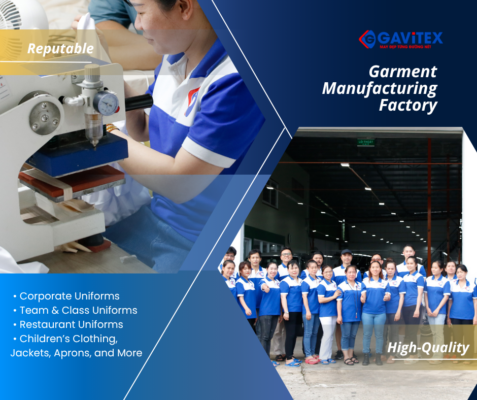
8. Frequently asked questions about the garment export process
Click each question to reveal the detailed answer.
1. What information do you need to start the garment export process for a new style?
To start the garment export process smoothly, we ask for complete technical information and commercial expectations. This usually includes a tech pack with measurements, graded size chart, fabric specifications, construction notes, and trim details. We also need your target FOB price range, expected volume per style and color, and preferred delivery window. If you have reference samples, sending these accelerates pattern development and helps our team match your fit and workmanship preferences. At the same time, we clarify labeling, packing, and carton marking requirements so that the export documentation connects correctly with what is printed on cartons and hangtags. Once these elements are defined, we prepare a quotation and a production schedule that integrates all steps of the garment export process.
2. How long does sampling and bulk production usually take?
Lead times depend on fabric type, trim complexity, and the season, but we can share general guidelines. For many styles, first prototype samples are ready within 7–10 days after receiving complete information. Fit revisions, if required, may add one or two more rounds of sampling. Once samples are approved and the garment export process moves into bulk production, typical lead time is 45–75 days from fabric approval to ex-factory, depending on order volume and fabric sourcing. For repeat styles using existing patterns and fabrics, timelines are shorter because the technical foundation is already in place. Throughout the process, our team shares milestone updates so your merchandising and logistics teams can plan launches and deliveries with confidence.
3. Can Gavitex support both basic and more technical products under one garment export process?
Yes. Gavitex is structured to support a wide range of product categories within one integrated garment export process. Our lines handle basics such as T-shirts, polos, and fleece, as well as more technical items like sportswear, workwear, or multi-panel outerwear. We adjust line layouts, machine types, and operator training to match each construction. This flexibility allows brands to consolidate multiple categories at a single partner instead of working with separate suppliers for different lines. It also simplifies coordination of labels, packaging, and documentation, since all goods share the same export management team, quality standards, and communication channels.
4. How does Gavitex ensure quality control before shipment?
Quality control is embedded into every stage of our garment export process. We begin with fabric inspection to catch shade variations, weaving defects, or weight inconsistencies. During cutting and stitching, inline quality controllers monitor operations, check critical points such as seams, necklines, and pocket placements, and record defects to prevent recurrence. Before finishing, we conduct measurement checks and visual inspections on statistically significant samples. A final inspection is then carried out according to agreed AQL levels or buyer-specific protocols. If third-party inspections are required, we coordinate scheduling so that goods clear checks before the vessel cut-off. The goal is that cartons leaving the factory already meet your quality expectations so you can release them quickly once they reach the destination.
5. What kind of support can we expect with documentation and logistics?
Our export team manages documentation as an integral part of the garment export process. We prepare commercial invoices, packing lists, and certificates of origin according to the requirements of your market and the trade agreements in place. When necessary, we coordinate testing reports and compliance certificates to attach to shipping documents. We work with your nominated forwarder or propose reliable partners, aligning production completion dates with vessel or flight schedules to avoid unnecessary storage costs. If you need guidance on Incoterms or on selecting the best shipping mode for your program, our team will walk you through the options so you can make informed decisions that balance speed and cost.
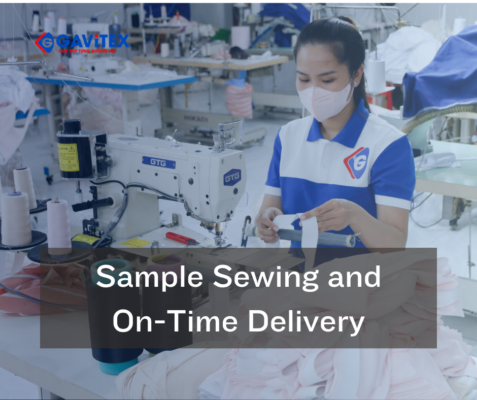
Partner with Gavitex for a smooth garment export process
Whether you are a growing online brand, a wholesaler, or a multi-store retailer, Gavitex can design a tailored garment export process that matches your calendar, quality expectations, and budget. Share your tech packs and forecast, and our team will propose the most efficient route from concept to shipment.
Hotline: 0972107109
Call for consultation & Get a quick quote
Learn more about how we manage production steps in our dedicated section on
garment export process and paired services such as
garment cutting and sewing.