Cut and Sew vs Full Package: Which Model Fits Your Brand?
For apparel businesses, choosing between cut and sew vs full package is more than a technical decision. It affects cost, lead time, control, and how confidently you can scale. This guide explains both models in practical B2B language so brands, retailers, and fashion labels can build reliable garment manufacturing programs with Gavitex in Vietnam.
Need fast guidance? Share your current production plan and we’ll help you decide how cut and sew vs full package applies to your situation.
1. Overview: what cut & sew and full package really mean
Cut & sew: you manage materials, the factory manages production
In everyday sourcing language, cut & sew is a model where the buyer typically supplies key materials—often fabric, sometimes trims—and the factory focuses on cutting, sewing, finishing, and packing. Within the broader debate of cut and sew vs full package, cut & sew gives you stronger control over fabric choice, mills, and sometimes color standards. This can be powerful if your identity relies on a specific fabric or if your organization already has strong sourcing capability. However, with control comes responsibility: you handle procurement, incoming quality, and the risk of late or defective materials.
Full package: one partner handles sourcing, production, and packing
Full package manufacturing is a more integrated service. The factory or its supply network takes care of fabric sourcing, trims, accessories, sampling, bulk production, and packing based on your approvals. For many brands building private label apparel, this model reduces complexity: fewer vendors to coordinate, and one accountable partner. You still control the result through tech packs, samples, and testing, but the operational engine is centralised. When you compare cut and sew vs full package, full package is often the mode that allows brand teams to focus on product, sales, and marketing instead of logistics.
Where Gavitex sits between the two models
Gavitex works as a flexible OEM clothing manufacturer in Vietnam: some clients choose pure cut & sew, others run full package, and many use a hybrid in-between. The priority is clarity—defining who provides fabric, trims, packaging, and who is responsible for testing, approvals, and timing. When these responsibilities are clearly mapped at the start, the discussion of cut and sew vs full package becomes a strategic choice instead of a confusing negotiation.
Tip for buyers: When you brief any factory, write down which items you will supply (fabric, trims, packaging) and which you expect them to handle. This simple step prevents many delays in cut and sew vs full package projects.
If you are exploring cut & sew in Vietnam, review cut and sew Vietnam to see how Gavitex structures lines and approvals for international buyers.
2. Features, characteristics, and value of the models
Key features of cut & sew for apparel brands
With cut & sew, you typically select and purchase the fabric, sometimes from a long-term mill partner. This allows you to lock in special yarns, weaves, and finishes that define your brand. For example, a premium basics label may rely on a particular cotton blend; a performance line may have a proprietary moisture-management finish. In the context of cut and sew vs full package, cut & sew is attractive when these inputs are already under control. It can also help align multiple factories around the same fabric base, consolidating volume and improving mill pricing. However, you must be prepared to manage rolling forecasts, safety stock, and quality checks so the fabric arriving at the factory truly supports the quality level you need.
Key features of full package programs
Full package programs are often built around a clear tech pack and a structured approval flow—swatches, lab dips, fit samples, and pre-production samples. Once the brand approves, the factory coordinates sourcing, production, testing, and packing in an integrated way. For buyers comparing cut and sew vs full package, this model is attractive when internal teams are small or when the company is entering a new product category. The brand still signs off on every crucial decision, but doesn’t have to manage dozens of parallel conversations with mills, trim suppliers, printers, and logistics partners.
Business value: risk, flexibility, and scalability
From a business perspective, both models can work—but the value is different. Cut & sew helps brands that already have a sourcing engine reduce direct unit cost and maintain fabric continuity across seasons. Full package helps brands reduce invisible costs: coordination time, miscommunication, missed lead times, and write-offs from mismanaged materials. The most important lesson in cut and sew vs full package is that “cheaper” on paper is not always cheaper in real life. The right model is the one that protects your selling window, supports realistic minimums, and keeps supply consistent enough for your customers to trust your sizing and product feel.
How this affects your daily work
- Cut & sew gives sourcing teams more negotiation power with mills but requires tighter planning.
- Full package lets merchandising and brand teams spend more time on assortment and storytelling.
- Both models depend on reliable clothing production lines that can execute your spec consistently.
For many Gavitex customers, the best answer is a phased approach: starting full package, then gradually shifting selected categories to cut & sew once demand and fabric choices are stable.
3. Direct comparison: cut and sew vs full package vs CMT
Introducing CMT as a contrasting model
To make cut and sew vs full package easier to understand, it helps to add a third model: CMT (Cut, Make, Trim). In a strict CMT setup, the buyer supplies fabric, trims, patterns, and sometimes even packing materials. The factory’s main task is labor—cutting and sewing according to your instructions. This model offers maximum control but very high operational responsibility. It is popular with large organizations that have deep sourcing, testing, and logistics teams. Smaller brands often struggle with the number of moving parts required to run CMT efficiently.
How the three models compare in practice
Imagine you are launching a collection of branded basics. Under full package, Gavitex would help you choose suitable fabrics, trims, and packaging, present samples and lab dips, then deliver ready-to-ship garments. Under cut & sew, you might secure fabric from your preferred mill and send it to Gavitex; the factory would handle cutting, sewing, QC, and packing based on your spec. Under CMT, your team would also provide trims, perhaps labels and polybags, while the factory mainly provides labor. Lining up cut and sew vs full package with CMT in this way shows a spectrum: from one-stop service to maximum buyer control.
Choosing the right model for your growth stage
For early-stage or rapidly scaling brands, full package often removes the biggest operational bottlenecks: sourcing coordination and shipping of raw materials. As brands grow, many choose cut & sew for core fabrics where they have strong mill relationships, and sometimes CMT for specialized products where they want tight control. The smartest approach to cut and sew vs full package is to treat it as a portfolio decision: some categories may remain full package, some may shift to cut & sew, depending on your team, product risk, and margin targets.
Simple spectrum
Full package → Hybrid → Cut & sew → CMT. Moving to the right increases control but also increases workload and risk that your team must manage.
6. Gavitex capabilities: scale, technology, and workflow
Production capacity designed for stable bulk output
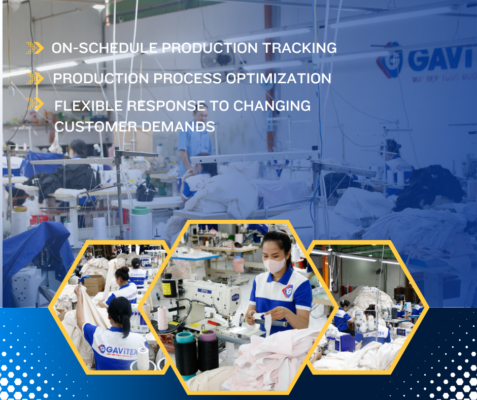
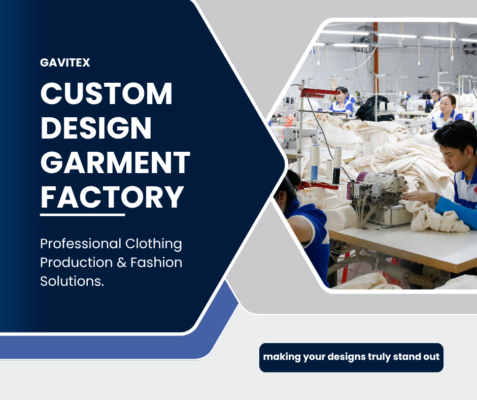
Gavitex builds its lines around stability. Whether programs run as cut & sew or full package, every garment passes through structured checkpoints: cutting accuracy checks, bundle control, inline stitching inspection, and final audits. This discipline turns custom clothing production from a “best effort” exercise into a predictable process. For buyers weighing cut and sew vs full package, this reliability often matters more than the theoretical difference between models, because it directly impacts on-time delivery and return rates.
Technology and systems behind the scenes
Pattern development, grading, marker efficiency, and line balancing are invisible to end customers but central to cost and quality. Gavitex uses practical tools and experience to keep these elements under control so that clothing production lines stay efficient and adaptable. For full package programs, material planning and incoming checks are integrated into the same workflow. For cut & sew, there is additional focus on receiving, checking, and storing buyer-supplied materials. This dual capability makes Gavitex a versatile OEM clothing manufacturer for brands at different stages.
Support for branding, labeling, and retail-ready packing
Modern collections are more than fabric and seams; they are finished experiences. Gavitex supports woven labels, printed main labels, care labels, hangtags, size stickers, polybags, and carton marking, whether programs run as cut & sew or full package. For private label apparel, these details are critical. Coordinating all of them through a single partner helps make cut and sew vs full package a practical question instead of a source of chaos: the same team that sews your garments also ensures they are packed according to your distribution plan.
What to expect when working with Gavitex
- Structured sampling: prototype, fit, size set, and pre-production samples.
- Clear communication around line planning and realistic lead times.
- QC processes aligned with your brand’s tolerance and expectations.
- Documentation for repeat orders, so styles can be reproduced consistently.
These elements give you confidence regardless of whether you are leaning toward cut and sew vs full package for a given style.
For a deeper breakdown of the two models, you can also explore cut and sew vs full package on the Gavitex site.
7. Legal structure: contracts, NDA, and brand protection
Contracts that reflect the chosen model
Legal clarity is one of the strongest risk reducers in cut and sew vs full package projects. For cut & sew, contracts should specify who is responsible for sourcing fabric and trims, how incoming materials are checked, and what happens if materials fail tests or arrive late. For full package, contracts must describe material selection, substitution policy, testing requirements, and how approvals are recorded. In both cases, agreements should cover tolerances, shipment terms, dispute procedures, and how rejected lots are managed. Clear documentation makes production smoother for both buyer and factory.
Confidentiality and safe handling of brand assets
Tech packs, grading files, artwork, labels, and packaging layouts are valuable assets. A structured NDA (non-disclosure agreement) sets expectations for how this information is used and who can access it. Operationally, a factory should maintain version control, control access to sensitive files, and keep customer-specific materials clearly separated. This matters equally in cut and sew vs full package configurations, because in both models the factory has visibility into your product logic and visual identity.
Brand protection during daily production work
Real brand protection also requires discipline on the production floor: controlled access to branded labels and hangtags, strict separation of different clients’ trims and fabrics, and clear rules for handling samples. Gavitex emphasizes operational separation and documentation so that no matter which side of cut and sew vs full package you are on, your brand is respected. This is especially important for private label apparel programs that run across multiple regions and seasons.
Questions to ask any factory
- How are my tech packs and patterns stored and backed up?
- Who has access to my artwork, labels, and packaging designs?
- What controls exist to separate different customers’ materials?
- What is the process if something goes wrong with a bulk shipment?
Good answers to these questions are just as important as the numbers you see in a cut and sew vs full package quote.
8. Five reasons brands choose Gavitex
1) Honest guidance about cut and sew vs full package
Gavitex works with brands at different stages and understands that there is no single “correct” model. Instead of pushing either cut & sew or full package, the team looks at your internal structure, experience level, and market timeline. Sometimes the right answer is a hybrid approach. This transparency helps you make decisions that actually work instead of chasing the lowest headline price.
2) Reliable, repeatable quality
For both sides of cut and sew vs full package, what ultimately matters is how the garments perform in your market. Gavitex focuses on consistent fit, stitching quality, and finishing so that each repeat order is aligned with the original approved sample. That protects your brand reputation and reduces returns.
3) Cost optimization by system, not shortcuts
Instead of cutting corners, Gavitex looks at line balancing, fabric utilization, and planning accuracy to reduce waste. Better planning allows garment manufacturing to run more efficiently, which translates into competitive pricing. This is how Gavitex can target prices that are typically 35%–45% below many benchmarks while maintaining solid workmanship.
4) Strong support for brand-building details
Labels, hangtags, packaging, and presentation all matter. Gavitex supports detailed requirements for private label apparel, including folding standards and warehouse-ready carton marking. Whether a program is set up as cut & sew or full package, the brand experience is treated as part of the product, not an afterthought.
5) Long-term mindset and clear communication
Long-term manufacturing relationships thrive on clarity. Gavitex aims for transparent discussion around capacity, lead times, and risks so that you can plan launches more confidently. For brands building structured sourcing portfolios, this trust makes it easier to adjust the mix of cut and sew vs full package over time without changing factory partners.
Extra resource: If you are developing or scaling private label apparel programs, you may also find insights and tools from private label apparel resources that many brand teams use when planning ranges and sourcing.
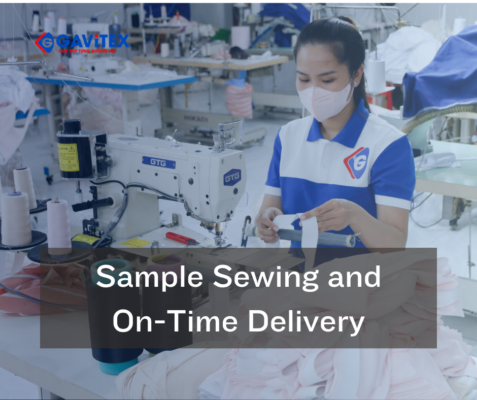
9. Contact Gavitex / Get a quote
What information helps us advise you quickly?
To recommend the best setup in cut and sew vs full package, Gavitex will ask for key details: product types, approximate quantities by size and color, preferred or target fabrics, required certifications (if any), and your target launch window. If you already have fabrics in stock, sharing yardage and width helps us evaluate whether cut & sew or a hybrid model makes more sense. If you prefer full package, your fabric and trim preferences guide our sourcing proposals.
Next step: align a realistic roadmap
A roadmap usually starts with a small but clear set of styles, followed by fit and PP samples, then a controlled bulk plan. Once this first cycle is complete, you can confidently adjust the mix of cut & sew and full package for your next seasons. The goal is to build a supply chain that supports your brand’s growth instead of restricting it.
Let’s build your next production run together
For a clear plan, realistic timelines, and practical advice on cut and sew vs full package, connect with Gavitex today. Hotline: 0972107109.