Scale smarter with end-to-end garment production at Gavitex Vietnam
Gavitex offers true end-to-end garment production for brands and retailers – connecting design, material sourcing,
garment manufacturing, quality and logistics into one transparent flow.
Call for consultation & Get a quick quote
Hotline / WhatsApp / Zalo: 0972107109
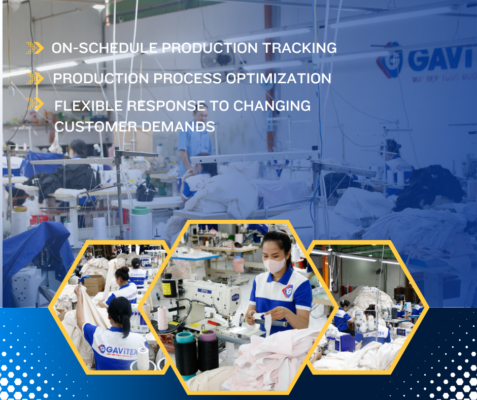
improve predictability and build long-term value – from first sketch to final carton.
1. What end-to-end garment production really means today
1.1 A single accountable flow instead of fragmented vendors
In simple terms, end-to-end garment production means placing one partner in charge of every step – from technical design,
material sourcing and sampling to bulk garment manufacturing, finishing and logistics coordination. Instead of juggling separate
design studios, fabric agents, factories and freight forwarders, brands work with one coordinated team that understands the full journey of each
style.
For buyers, this model cuts noise in daily communication, reduces handover errors and increases overall speed. For factories, it creates
responsibility for results, not just for isolated operations.
1.2 How end-to-end garment production works at Gavitex
At Gavitex, end-to-end garment production begins with a structured briefing stage. Brands share design ideas, target prices,
sustainability expectations and calendar constraints. From there, the team guides the project through fabric development, pattern work,
costings, fit rounds and pre-production planning before loading the lines.
The company’s clothing production lines are engineered to support both basics and more fashion-driven ranges. Industrial
engineers, merchandisers and quality specialists collaborate in one system, which shortens decision loops and strengthens control.
1.3 Gavitex as a strategic partner in Vietnam
As a Vietnam-based OEM clothing manufacturer, Gavitex focuses on export programs for international brands and retailers. The
factory combines competitive labor advantages with disciplined processes and long-term thinking. Through
end-to-end fashion production services and a dedicated
end-to-end garment production offering, Gavitex helps clients
achieve better control over cost, timelines and product consistency.
For brands, this means they can focus more on building collections and selling, while Gavitex manages the technical and operational complexity in
the background.
2. Core features and value of structured end-to-end garment production
2.1 Clear ownership and fewer handover issues
The first major advantage of end-to-end garment production is clarity. When one partner is responsible from concept to carton,
there is no confusion about who should solve a problem. If a cost, fit or color issue appears, the same team that built the plan is accountable
for fixing it.
This reduces the common “blame game” between design studios, agents and factories. Production becomes a shared project instead of a chain of
disconnected tasks.
2.2 Better alignment between design, cost and manufacturing
With end-to-end garment production, Gavitex can advise early on how design decisions will affect cost, lead time and line
efficiency. Small changes in pattern construction, stitch types or trims can often unlock major savings. Because the same team controls
garment manufacturing, these suggestions are based on real shop-floor experience.
This is particularly helpful for private label apparel programs, where margins are tight and consistency across many styles and
seasons is critical. Brands can design with confidence, knowing that proposed looks already reflect manufacturing realities.
2.3 Faster decisions and more predictable timelines
Fewer actors in the chain means fewer emails and calls. With end-to-end garment production, development, sampling and bulk
planning are coordinated by one project team. Calendar changes, quantity updates or design tweaks are evaluated within that team instead of being
passed through multiple companies.
As a result, lead times become more predictable, even when markets are volatile. Buyers gain a clearer view of when items will be ready, which
helps with launch planning and inventory control.
reducing risk while increasing speed and control.
3. end-to-end garment production vs cut-make-trim only
3.1 What a classic CMT model looks like
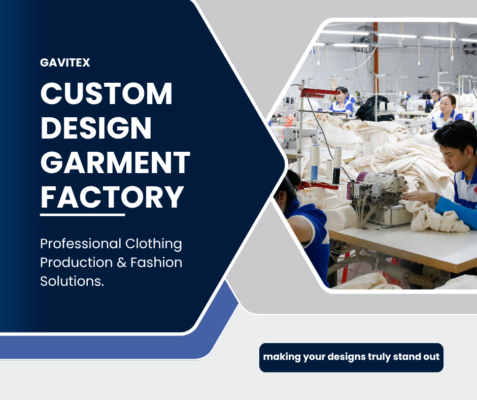
In a traditional cut-make-trim (CMT) arrangement, the buyer handles design, fabric and trim sourcing, while the factory is responsible mainly
for cutting, sewing and basic finishing. This model can work for experienced sourcing teams, but it leaves many handovers and blind spots in the
process.
If a fabric is delayed or does not match the required shade, or if a design detail is hard to sew, the factory has limited ability to influence
upstream decisions. Production lines may sit idle while partners exchange emails trying to solve problems.
3.2 How end-to-end garment production changes the picture
Under end-to-end garment production, Gavitex manages both upstream and downstream stages. The team supports material selection,
ensures that lead times and minimums match the buyer’s calendar and capacity, and checks technical feasibility before styles reach the lines.
Because custom clothing production is planned together with sourcing, many hurdles are solved on paper – not when thousands of
garments are already in progress. This reduces surprises and supports smoother execution.
3.3 Key differences summarized
| Aspect | CMT-only model | Gavitex end-to-end garment production |
|---|---|---|
| Responsibility | Split between many partners. | Single accountable partner from design to delivery. |
| Coordination | Multiple handovers, slower decisions. | Integrated planning and communication. |
| Risk management | Issues often discovered late. | Earlier checks and preventive actions. |
| Scalability | Harder to scale across regions. | Structured system for multi-market programs. |
For many companies, moving to end-to-end garment production is less about changing suppliers and more about changing how they
collaborate with them. Gavitex provides a framework where this collaboration becomes practical and measurable.
4. Gavitex capacity, technology and processes for end-to-end garment production
4.1 Production scale and product focus
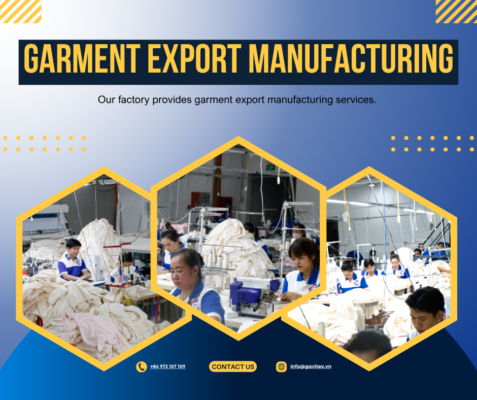
Gavitex operates dedicated clothing production lines for knitwear and light woven items such as T-shirts, polos, sweatshirts,
hoodies, joggers, shorts and casual shirts. Capacity is planned for both core programs and special projects, ensuring that
end-to-end garment production remains stable even during peak seasons.
The factory can flex volumes to support new launches for private label apparel and established brands, balancing efficiency and
responsiveness.
4.2 Technology backing the process
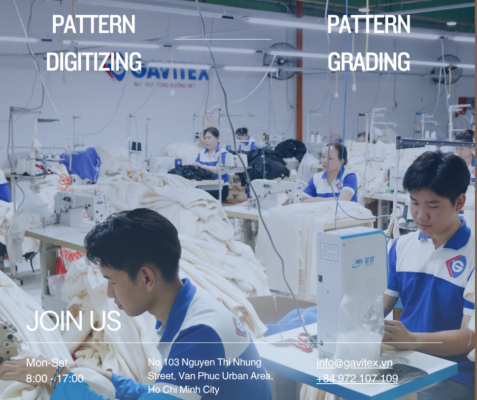
CAD systems handle pattern making, grading and marker planning, increasing fabric efficiency and consistency. Industrial engineers set line
layouts for different style families, tracking efficiency and quality metrics. This foundation supports reliable
garment manufacturing and makes it possible to coordinate multiple stages in one system.
The end-to-end garment production flow connects development, sampling, bulk planning and logistics in a shared digital
environment, so that information does not get lost between teams.
4.3 Typical process steps in end-to-end projects
While every project is unique, most end-to-end collaborations with Gavitex follow these steps:
- Brief and feasibility: Brand shares ideas, target markets and budgets. Gavitex clarifies technical and timing feasibility.
- Material and trim strategy: Fabric and trim options are evaluated for price, performance and sourcing risk, often combining
stock-supported items and long-term mill programs. - Development and sampling: Patterns, prototypes and size sets are created. Feedback from design and buying teams feeds back into
the engineering of custom clothing production. - Pre-production and bulk: Lines are prepared, pilots are run where needed, and bulk orders are tracked against the shared
calendar. - Finishing and logistics: Packing and documentation are prepared, and shipment options are coordinated based on the brand’s
logistics strategy.
For some complex programs, Gavitex may coordinate with external partners such as specialized mills or service providers like
garment manufacturing solution platforms, while remaining the main contact for the brand.
5. Legal, compliance and brand protection in end-to-end garment production
5.1 Contracts that reflect the full value chain
In end-to-end garment production, contracts must cover more than simple cut-and-sew obligations. Agreements with Gavitex define
responsibilities across development, sourcing, garment manufacturing, testing, quality and documentation. This clarity gives both
sides a stable framework for long-term cooperation.
Clear commercial terms are combined with clauses that define how changes are handled, how delays are escalated and how information is shared.
Brands gain a partner that is legally aligned with their expectations instead of just an anonymous factory.
5.2 NDAs and confidential handling of product and brand information
Working under an end-to-end garment production model means Gavitex has access to designs, fit blocks, material strategies and
pricing structures. Non-disclosure agreements set boundaries for how this information is stored and used. Only staff who work directly on a given
account receive access to its sensitive data.
Samples, artwork and tech packs are not shown to other clients. This protects the uniqueness of each brand’s
private label apparel and mainline collections.
5.3 Managing over-runs, labels and eco-claims
Because Gavitex handles sourcing and production, it also plays a key role in managing labels, branding components and claims. Branded labels and
packing materials are issued only for approved orders and quantities. Over-runs and seconds are treated according to the brand’s defined policy,
avoiding uncontrolled sales in local markets.
When products involve specific environmental or performance claims, Gavitex supports the brand with process descriptions and test reports
related to the end-to-end garment production flow. This documentation helps marketing and compliance teams communicate
confidently.
platform for innovation instead of a source of risk.
6. Five reasons to choose Gavitex for end-to-end garment production
6.1 Deep factory know-how with a service mindset
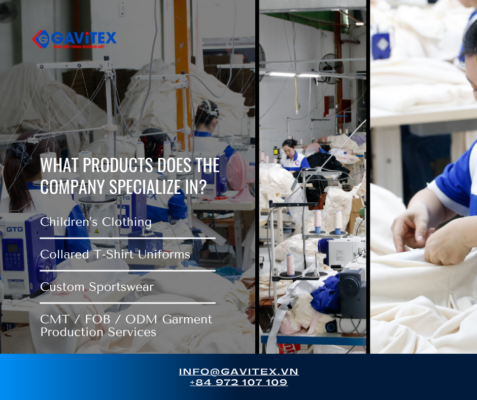
Gavitex is not a trading company. It is a factory with real technical expertise in garment manufacturing, pattern engineering and
line balancing. Building end-to-end garment production on top of this expertise means clients talk to people who understand how
ideas translate into minutes, fabric consumption and quality levels.
6.2 Competitive cost through integrated planning
Integrated projects do not have to be more expensive. By eliminating unnecessary intermediaries, improving line efficiency and using smart fabric
strategies, Gavitex often offers end-to-end garment production at total cost that is 35–45% lower than multi-step sourcing routes
with several markups.
The company works closely with brands to choose construction and finishing options that maintain perceived value while simplifying
custom clothing production on the floor.
6.3 Transparent communication and clear reporting
Each account receives a dedicated team for merchandising, technical support and production control. Capacity plans, risk logs and shipment
updates are shared regularly. Because Gavitex owns the full end-to-end garment production flow, it can provide realistic answers
instead of passing messages between vendors.
6.4 Flexibility for basics and innovation
Brands want reliable basics and standout pieces. Gavitex designs its clothing production lines and sourcing strategies to support
both. Basic items run in highly efficient flows, while special projects – such as new fabrics or technical details – are engineered with extra
care. This flexibility helps clients refresh assortments while protecting core volume.
6.5 Long-term partnership orientation
end-to-end garment production delivers maximum value when both sides invest in a long-term vision. Gavitex management takes
time to understand each partner’s brand plan, store formats, online channels and regional needs. This insight guides future capacity investments
and continuous improvement, turning the cooperation into a strategic alliance rather than short-term order chasing.
Discuss your next collection with Gavitex
Share your target styles, markets and timelines, and the Gavitex team will map out a tailored
end-to-end garment production flow that fits your reality.
9. Frequently asked questions about end-to-end garment production with Gavitex
1. What information do we need to start an end-to-end garment production project?
clear view of your brand positioning, target customers and launch timeline. Typical inputs include design sketches or reference
garments, estimated volumes, target price brackets and priority markets. It is also useful to share your sustainability expectations and
any specific testing or compliance rules that must be followed. With this information, Gavitex can propose suitable fabrics and trims,
outline the development calendar and estimate costs across the integrated flow. As cooperation continues, details such as grading,
packing, labeling and logistics options are refined, always within the same end-to-end garment production framework.
2. Is end-to-end garment production always more expensive than CMT?
In reality, total cost depends on how many intermediaries are involved and how efficiently the supply chain is organized. When Gavitex
manages sourcing, development and garment manufacturing in one system, it removes extra margins and avoids costly
mistakes, such as fabric mismatches or repeated sampling. The result is often a total landed cost that is similar to or lower than a
fragmented setup, especially when the comparison includes the hidden cost of delays and quality issues. In addition, integrated projects
make it easier to optimize designs so that they fit both your price targets and your brand standards.
3. What minimum order quantities apply for end-to-end garment production?
decoration complexity. Because Gavitex manages sourcing and production together, it can sometimes combine demand across different
programs or seasons to reach practical minimums. Knit basics, such as T-shirts and fleece items, usually have more flexible thresholds,
while complex garments with many components require higher volumes. Instead of enforcing a single MOQ policy, Gavitex evaluates each
style individually and recommends options that balance cost, risk and flexibility. Over time, as orders become more stable and lines are
optimized, it is often possible to refine MOQs further and secure even better cost levels for your key items.
4. Can Gavitex use our nominated mills and still manage end-to-end garment production?
end-to-end garment production plan. In this setup, fabric and sometimes trims are sourced from your chosen suppliers,
while Gavitex coordinates development, sampling and bulk garment manufacturing in Vietnam. Shared calendars and regular
updates ensure that fabric deliveries, line loading and shipment planning stay synchronized. This approach lets you keep the benefits of
long-term mill relationships, while gaining a single accountable partner for cutting, sewing, finishing and packing. It is especially
helpful when managing regional collections that must use the same fabrics across multiple countries.
5. How does Gavitex protect our brand and technical knowledge in integrated projects?
internal access controls so that only authorized teams work with your tech packs, grading, artwork and cost structures. Samples and
development pieces are not shared outside the project team, and over-runs or seconds are managed according to your policies. The factory
also provides clear documentation on processes used in end-to-end garment production, helping you demonstrate due
diligence to retail partners and regulatory bodies. When needed, additional measures such as unique label codes, special packing
instructions or dedicated lines can be implemented, giving you extra assurance that your ranges remain exclusive and your stories remain
credible.
10. Contact Gavitex – your partner for end-to-end garment production in Vietnam

If your company is ready to move from fragmented sourcing to a streamlined model, end-to-end garment production with Gavitex is
a strong option. As a specialized OEM clothing manufacturer in Vietnam, the company combines technical competence, disciplined
project management and transparent communication.
You can explore Gavitex’s integrated solutions on its
end-to-end fashion production overview and detailed
end-to-end garment production service page, then share your next
project brief. Together, you can create programs that deliver consistent quality, realistic lead times and competitive costs across multiple
regions.
Take the next step toward integrated production
- Share your collection roadmap, target markets and preferred launch dates.
- Receive a clear proposal for end-to-end garment production with realistic calendars and pricing.
- Build a long-term collaboration that supports profitable growth across channels.
Hotline: 0972107109 (WhatsApp / Zalo available)