Garment Factory in Vietnam – Production Capacity | Gavitex
If you are sourcing apparel for international markets, choosing a Garment Factory in Vietnam is a strategic decision—because the factory becomes part of your brand’s delivery promise.
Gavitex operates an in-house Garment Factory in Vietnam built for export buyers: stable production lines, structured quality control, and buyer-friendly reporting that helps you scale with confidence.
This page is written for B2B buyers who want clarity.
You’ll see what a professional Garment Factory in Vietnam looks like in real operations—facility, capacity planning, QC workflow, lead time control, and brand protection—plus how Gavitex supports OEM/ODM and private label programs.
Contents
- What a Garment Factory in Vietnam means for global buyers
- Factory & facilities (in-house production)
- Production capacity, MOQ, lead time
- Quality control that export buyers trust
- Who this factory is a fit for
- Comparison: factory-direct vs trading / agent model
- Legal safeguards & brand protection (NDA/IP)
- 5 reasons to choose Gavitex
- Market chart & sourcing signals
- Pricing guidance & quote table
- FAQ (expand to read)
- Contact Gavitex / Get a quote
What a Garment Factory in Vietnam means for global buyers
A sourcing decision that impacts your brand delivery
The phrase Garment Factory in Vietnam usually signals an operational need, not a casual search.
You are likely a brand, retailer, importer, or sourcing team that must ship on time and protect product consistency.
A professional Garment Factory in Vietnam is expected to provide repeatable output across size runs, color lots, and reorder cycles.
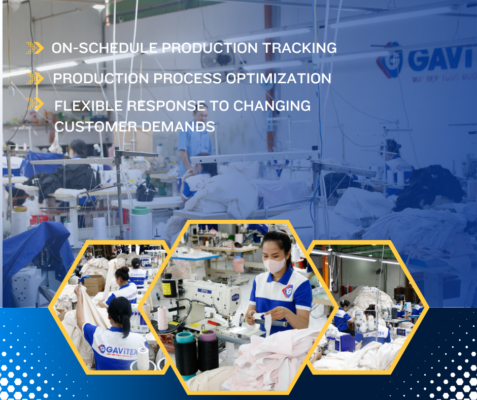
That means the factory must manage more than sewing: pre-production alignment, materials readiness, cutting accuracy, line balancing, in-line inspection, finishing control, packing standards, and export documentation routines.
Why “in-house” matters in real manufacturing
Many buyers prefer an in-house model because it improves accountability.
An in-house Garment Factory in Vietnam can communicate directly about production constraints, respond quickly to issues, and document quality outcomes.
When the factory controls its own production lines, your approval process becomes smoother: sampling decisions translate more reliably into bulk output.
This is the core benefit behind in-house garment production—the factory has fewer handoffs, fewer surprises, and clearer ownership.
If you have ever experienced “sample looks great but bulk is different,” you already know why a disciplined Garment Factory in Vietnam is valuable.
What export buyers expect from a Vietnam facility
Export markets expect measurable standards.
A strong Garment Factory in Vietnam should talk in practical terms: measurement tolerance, shrinkage risk, fabric lot management, and defect prevention.
It should also support buyer routines such as pre-production samples, size set approvals, and inspection checkpoints.
For B2B teams, visibility matters.
A factory that shares production updates, QC reports, and corrective actions helps you manage risk—and that is why buyers shortlist a reliable Garment Factory in Vietnam rather than switching suppliers every season.
- In-house production lines with clear capacity planning
- Quality control system (in-line + final inspection)
- Clear lead time logic and production scheduling updates
- Brand protection (NDA, secure sample handling)
- Export packing and documentation readiness
Gavitex was built around these expectations.
As an export-focused Garment Factory in Vietnam, we support OEM/ODM and private label programs with structured workflows.
If your goal is repeatable quality and on-time shipments, start with a factory that treats manufacturing as a system—not a one-time job.
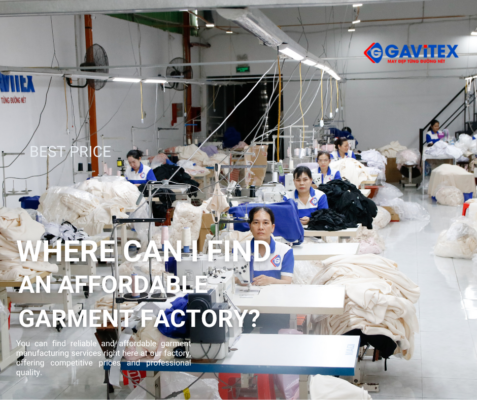
Factory & facilities: in-house production you can verify
Facility essentials of a professional Garment Factory in Vietnam
A serious buyer evaluates facilities because facilities reveal discipline.
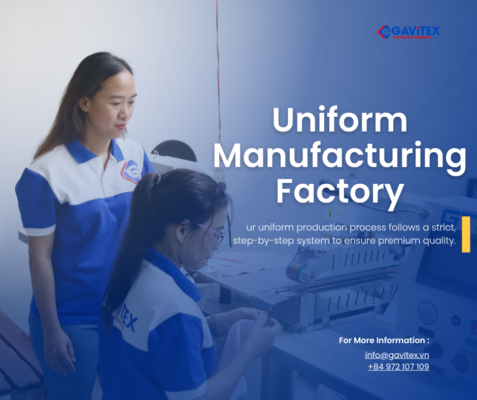
At Gavitex, the in-house model is designed to support export programs through defined workstations, controlled workflow, and consistent handoffs between cutting, sewing, finishing, and packing.
When you visit or request documentation from a Garment Factory in Vietnam, you should see organized production lines, clear storage practices, and quality checkpoints that match the factory’s promises.
This is how in-house garment production becomes reliable at scale.
- Vietnam-based facility with export-ready workflow
- Structured sewing lines and finishing stations
- Cutting accuracy routines and fabric handling control
- Dedicated QC checkpoints across the process
- Packing and carton standards aligned to buyer needs
- Factory network: garment factories
- Export context: garment exporter
- Sourcing support: clothing production partner
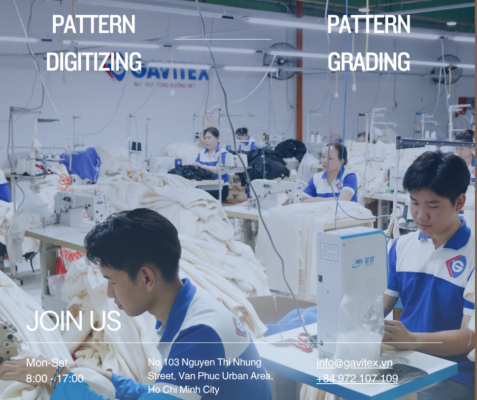
Skilled workforce and production discipline
A Garment Factory in Vietnam is only as strong as its people and process.
Skilled operators reduce defects, and line supervisors protect lead time.
Gavitex emphasizes training, clear workmanship standards, and stable line routines to maintain quality under scale.
For buyers, the key question is not “Can you make this style?” but “Can you repeat it consistently?”
A mature Garment Factory in Vietnam answers that with documented quality outcomes and measurable process controls.
- Tech pack or reference photos (front/back/close-ups)
- Fabric spec (composition, GSM, finishing) and size range
- Target quantity per color/size and target ship date
- Branding: labels, tags, print/embroidery, packaging requirements
- Inspection preference and any compliance notes
Production capacity, MOQ, and lead time planning
Capacity is not a number—it’s a planning method
Many suppliers talk about capacity, but export buyers need a plan.
A professional Garment Factory in Vietnam explains capacity through line allocation, materials readiness, and production sequencing.
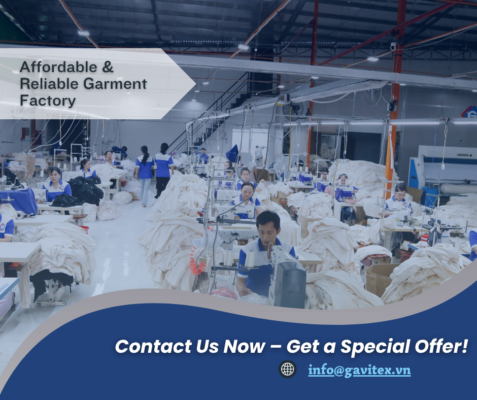
At Gavitex, we use assembly-line discipline to protect throughput: cutting schedules match sewing lines, and finishing capacity is planned against shipment deadlines.
This approach keeps a Garment Factory in Vietnam stable even when product mixes change across seasons.
Product categories and scalable programs
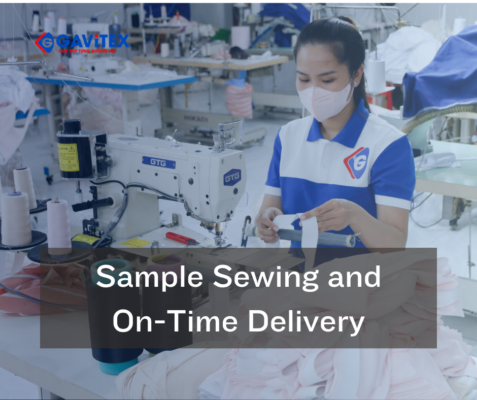
Gavitex supports programs such as T-shirts, polos, hoodies, sweatshirts, joggers, activewear basics, uniforms, and private label essentials.
For many buyers, the best use of a Garment Factory in Vietnam is repeat-order basics—because repeatability reduces approval friction.
To support scaling, we align production with approved references, controlled trims, and clear workmanship standards.
This is how a Garment Factory in Vietnam protects consistency across colorways and size runs.
MOQ flexibility with export discipline
Buyers often need both flexibility and stability.
A Garment Factory in Vietnam should be able to support pilot runs or sampling phases without losing bulk discipline.
Gavitex supports flexible MOQ depending on product type, fabric availability, and production calendar.
What matters is not only the MOQ number, but how the factory protects quality at low volume.
We apply the same measurement control and QC checkpoints so even smaller orders match export expectations.
Lead time stability and communication routines
Lead time stability is a top priority for international buyers.
A serious Garment Factory in Vietnam communicates lead time assumptions clearly: fabric approval timing, cutting start date, sewing throughput, finishing windows, and packing schedule.
If any risk appears—fabric delay, trim change, workmanship issue—the factory should escalate early.
Gavitex uses structured updates so you can manage launches and shipments with confidence.
For export programs, this is the difference between a supplier and a true Garment Factory in Vietnam partner.
- Monthly capacity planning: based on style complexity and fabric readiness
- Lead time planning: sample → pre-production → bulk → finishing → packing
- Output stability: protected by line balancing and in-line QC
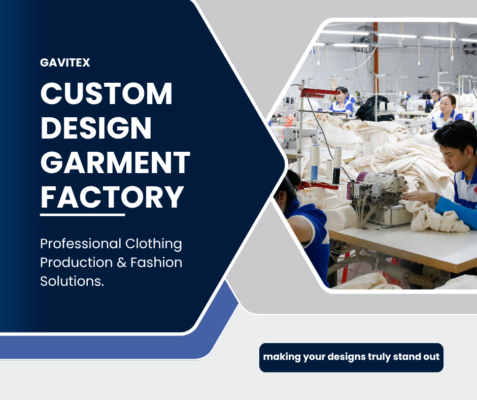
Quality control that export buyers read carefully
In-house QC team and multi-step inspection
Quality is where a Garment Factory in Vietnam either earns trust or loses the buyer.
Export buyers typically require stable workmanship, consistent measurements, and controlled finishing.
Gavitex uses an in-house QC approach designed for prevention: issues should be found early, not during final packing.
A strong Garment Factory in Vietnam uses checkpoints across the workflow—fabric checks, cutting checks, in-line sewing checks, finishing inspection, and final verification.
This layered method reduces rework, protects timelines, and lowers total manufacturing risk for international shipments.
Measurement control, shrinkage risk, and consistency
For brands, measurement accuracy is not optional.
A professional Garment Factory in Vietnam defines measurement tolerances, confirms size specs, and checks output routinely.
Shrinkage behavior depends on fabric composition, finishing, and wash conditions—so it must be addressed during sampling and pre-production.
Gavitex focuses on measurement control in the sampling stage so bulk output stays aligned.
When you shortlist a Garment Factory in Vietnam, ask how they document measurement checks and how they handle corrections.
Clear reporting is a sign of maturity.
Export quality standards and buyer confidence
Export programs also require consistent packaging, labeling, and carton standards.
A reliable Garment Factory in Vietnam will align folding, polybag standards, barcodes, and carton marking to your requirements.
Gavitex supports export-ready packing routines, and we coordinate QC with packing steps so the final shipment is consistent.
For buyers, this reduces delays at warehouses and distribution centers.
That’s why a disciplined Garment Factory in Vietnam wins repeat orders.
- Fabric and trim verification before cutting
- In-line checks to prevent defect accumulation
- Measurement audits on critical sizes
- Finishing and appearance checks (stitching, labels, print placement)
- Packing and carton verification before shipping
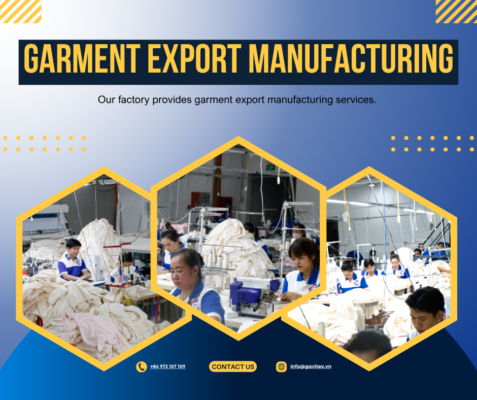
Who a Garment Factory in Vietnam is a strong fit for
Global brands and retailers
If you manage seasonal launches, you need a Garment Factory in Vietnam that protects timelines.
Brands and retailers benefit most when the factory provides clear production scheduling, stable QC outcomes, and export packing discipline.
Gavitex supports these needs through factory-direct communication and structured updates.
Importers and distributors
Importers need consistency that reduces returns.
A stable Garment Factory in Vietnam can produce repeat-order basics with controlled measurements and consistent workmanship.
This reduces risk at distribution centers and supports predictable replenishment.
Private label owners and OEM/ODM buyers
Private label programs require brand protection, clear approvals, and repeatable output.
Gavitex operates as a Garment Factory in Vietnam that supports OEM/ODM collaboration while maintaining confidentiality.
If your program includes custom labels, packaging, or multiple SKUs, you benefit from a factory with strong component segregation and documented QC routines.
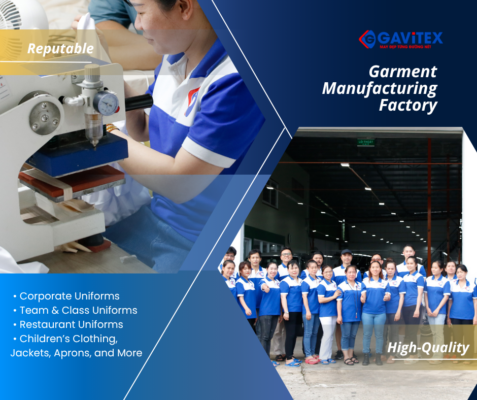
Comparison: factory-direct Garment Factory in Vietnam vs trading / agent sourcing
Why trading layers exist (and when they help)
Many buyers consider a trading company or sourcing agent because it can simplify discovery.
Agents may coordinate across multiple suppliers, compare options quickly, and support buyers who lack local networks.
In early-stage sourcing, that can be helpful.
However, as orders scale and timelines become stricter, buyers often shift toward a factory-direct Garment Factory in Vietnam because the operational advantages become more valuable than convenience.
The key difference: speed of correction and accountability
In real production, problems are solved through speed.
When you work with a factory-direct Garment Factory in Vietnam, you can communicate directly about workmanship, measurements, fabric behavior, and finishing details.
If a print placement needs adjustment or a seam strength issue appears, the factory can correct quickly.
In an agent model, communication flows through an extra layer.
Even when the agent is helpful, this can slow decisions and increase the risk of misunderstanding.
For export buyers, that delay can turn into missed shipment windows.
That is why experienced teams often prefer a reliable Garment Factory in Vietnam that documents actions and owns outcomes.
Why repeat-order programs benefit from factory-direct Vietnam
Repeat orders create process memory.
A stable Garment Factory in Vietnam can store approved patterns, maintain trims consistency, and repeat QC routines across seasons.
That reduces approval effort for each new PO.
Over time, a factory-direct relationship becomes a manufacturing asset: it protects your product identity and improves speed.
For private label and core basics, the value of a consistent Garment Factory in Vietnam is more than unit price—it is operational stability.
- Use an agent when you need fast supplier discovery and are still validating a product program.
- Use factory-direct when you want faster corrections, clearer accountability, and long-term repeatability.
- Choose Gavitex if you want an in-house Garment Factory in Vietnam designed for export quality and buyer-friendly reporting.
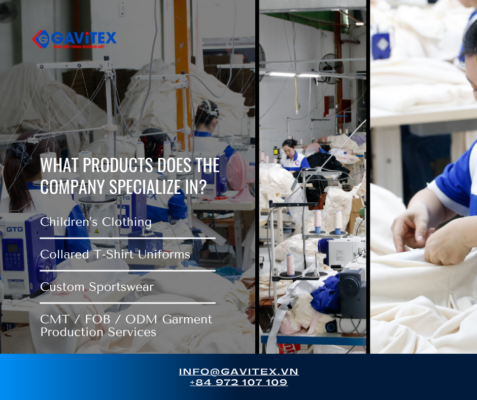
Legal safeguards & brand protection in a Garment Factory in Vietnam
Contracts that define scope, deliverables, and accountability
In international apparel sourcing, legal clarity is operational safety.
A professional Garment Factory in Vietnam should define deliverables clearly: approved samples, measurement tolerances, fabric specs, workmanship expectations, labeling and packaging rules, inspection points, and shipment conditions.
Clear scope reduces friction when changes occur.
For buyers, this is not about complexity—it is about preventing misunderstandings that cost time and money.
Gavitex supports structured agreements that align production milestones with buyer expectations, especially for export schedules.
NDA and confidentiality before you share sensitive files
Many brands hesitate to share tech packs, label artwork, or unique design details unless confidentiality is protected.
A responsible Garment Factory in Vietnam should be ready to sign an NDA early.
At Gavitex, NDAs can be signed before detailed specs are exchanged.
This protects your product identity and builds trust from the first conversation.
In practice, confidentiality must be supported by internal handling—controlled access to sensitive files, clear ownership for sample rooms, and documented approvals.
A Garment Factory in Vietnam that can explain these controls usually has stronger operational discipline overall.
Sample security, pattern control, and brand asset protection
Brand assets include patterns, measurement standards, label placement details, and packaging rules.
In well-managed in-house garment production, these assets are not casually shared.
A serious Garment Factory in Vietnam uses access control to ensure only authorized staff handle sensitive materials.
Sample pieces should be tracked, and client files should not be mixed across programs.
This is particularly important for private label brands who rely on unique product identity.
When you shortlist a Garment Factory in Vietnam, ask how they prevent trims and labels from being mixed across POs.
- NDA before detailed files are shared
- Controlled access to tech packs and sample room assets
- Component segregation (labels, trims, packaging per PO)
- Documented approvals and QC reports
- Clear handling of changes and corrective actions
A long-term partnership with a Garment Factory in Vietnam should feel safe.
If your brand needs strong confidentiality and structured legal safeguards, communicate it early—Gavitex will align internal handling and documentation so your assets are protected while production stays fast.
Five reasons to choose Gavitex as your Garment Factory in Vietnam
1) In-house production lines designed for repeatability
Repeatability protects your customer experience.
Gavitex runs in-house production lines with defined checkpoints.
This structure helps a Garment Factory in Vietnam maintain stable output across colorways, sizes, and reorder cycles.
For private label programs, repeatability is often the reason buyers choose a factory-direct Garment Factory in Vietnam instead of switching suppliers.
2) Sampling workflow that matches bulk reality
Sampling should be a blueprint, not a marketing piece.
Gavitex aligns sampling approvals with bulk execution using measurement standards, fabric checks, and workmanship guidelines.
This reduces drift between sample and bulk—one of the most costly problems in export apparel.
A Garment Factory in Vietnam that treats sampling seriously protects both your timeline and your brand reputation.
3) Cost optimization through process, not shortcuts
The best cost savings come from reduced rework and stable throughput.
Gavitex focuses on line balancing, clear workmanship rules, and early defect prevention.
As a disciplined Garment Factory in Vietnam, we help buyers reduce total manufacturing cost while protecting quality.
This approach is especially valuable for long-term programs and core basics.
4) Predictable lead time with proactive communication
Production timelines depend on early alignment.
Gavitex provides structured updates so global teams can manage launches with fewer surprises.
If a risk appears, escalation happens early—because a reliable Garment Factory in Vietnam protects your ship date, not excuses it.
5) Brand safety through NDA, access control, and segregation
Brand safety is part of the production system.
Gavitex supports NDA-based collaboration, controlled handling of sensitive files, and segregation of trims and packaging by PO.
For export buyers, these safeguards reduce risk and build trust.
It is one reason many teams shortlist Gavitex as a long-term Garment Factory in Vietnam partner.
If you are comparing a Garment Factory in Vietnam for OEM/ODM or private label production, send your specs and timeline.
We will reply with a clear production plan and quote.
Market signals and a visual sourcing snapshot
Why buyers keep shortlisting a Garment Factory in Vietnam
In global sourcing, demand often follows reliability.
Buyers choose a Garment Factory in Vietnam when they want a balance of production capability and export workflow.
The practical drivers are familiar: stable manufacturing capacity, improving quality consistency, and a strong ecosystem for fabrics, trims, and shipping coordination.
For brands, the decision is not simply “Vietnam or elsewhere.”
It is “which Garment Factory in Vietnam can deliver repeat orders with controlled risk?”
Illustrative demand chart for common export categories
Below is an illustrative chart used for sourcing conversations.
It helps buyers understand which categories are frequently requested from a Garment Factory in Vietnam and how that impacts capacity planning.
That is why many buyers shortlist Gavitex for stable export programs.
Pricing guidance and a buyer-friendly quote table
How to interpret pricing from a Garment Factory in Vietnam
Pricing depends on fabric, construction complexity, branding details, and volume.
A quote becomes accurate only when the scope is clear: fabric spec, size range, trims, printing/embroidery, packaging rules, and inspection requirements.
The table below provides an indicative reference and positions Gavitex competitively.
For an accurate quote from a Garment Factory in Vietnam, send your specs and target ship date.
| Product | Typical Market Range (USD) | Gavitex Target (35–45% lower) | Notes for B2B buyers |
|---|---|---|---|
| Basic T-shirt (knit) | $2.80 – $4.20 | $1.65 – $2.65 | Strong for repeat orders; measurement control matters. |
| Polo shirt | $4.20 – $6.80 | $2.55 – $4.05 | Collar/placket alignment needs stable workmanship. |
| Hoodie (fleece) | $8.50 – $13.50 | $5.10 – $8.35 | Confirm GSM, shrinkage, and reinforcement stitching. |
| Joggers / Sweatpants | $7.20 – $11.80 | $4.15 – $7.20 | Elastic/drawcord quality affects return rates. |
| Activewear set (top + bottom) | $10.50 – $17.50 | $6.25 – $10.95 | Focus on seam stretch, recovery, and fabric performance. |
| Uniform program (per piece) | $6.80 – $12.00 | $4.10 – $7.45 | Consistency across batches and labels is the priority. |
Note: Prices are indicative and depend on fabric, trims, complexity, and volume.
For a tailored quote from a Garment Factory in Vietnam, share your tech pack and target timeline.
FAQ about working with a Garment Factory in Vietnam
What information should I send to get an accurate quote?
Add branding requirements such as labels, hangtags, embroidery or printing, and packaging standards.
Finally, include your target ship date and any inspection expectations.
When the scope is clear, a factory can estimate material needs, allocate production lines, and provide a realistic lead time.
If a Garment Factory in Vietnam asks detailed questions about tolerances, shrinkage, or finishing, that is a positive sign—because it indicates the factory is planning for export outcomes rather than guessing.
How do you maintain consistent quality across repeat orders?
A reliable Garment Factory in Vietnam protects repeatability by aligning bulk production with approved samples, defining workmanship rules, and controlling trims and labels.
Measurement checks should be routine, not occasional.
If fabric lots change, a professional factory will review shrinkage behavior and confirm finishing stability.
The goal is to reduce variation between batches so your customers experience the same fit and finish.
At Gavitex, repeatability is supported by in-house QC checkpoints and production line discipline, which is why many buyers use our Garment Factory in Vietnam for core basics and private label programs.
What lead time should I expect for export orders?
A mature Garment Factory in Vietnam breaks the timeline into stages: sampling, pre-production checks, bulk manufacturing, finishing, packing, and shipment preparation.
The most common delays are caused by late fabric confirmation, trim changes, or last-minute design adjustments.
For smoother timelines, finalize fabric and branding early and avoid changes once bulk starts.
Gavitex communicates lead time assumptions clearly and uses structured updates, so buyers know what is happening inside the Garment Factory in Vietnam at each stage.
How do you protect my designs and brand assets?
A responsible Garment Factory in Vietnam restricts access to tech packs, patterns, and sample room materials.
Trims and labels should be separated by PO to prevent mixing.
Documentation also matters—approval records and QC reports make accountability clearer.
If your program includes unique label artwork or packaging standards, share that early so the factory can align handling and storage.
Gavitex supports NDA-based cooperation and controlled sample handling so your brand identity stays protected while production remains efficient inside our Garment Factory in Vietnam.
Why choose Gavitex over other Vietnam factories?
That means structured production lines, prevention-based QC checkpoints, transparent communication, and brand protection routines.
For B2B teams, the goal is stable outcomes: consistent measurements, reliable timelines, and fewer surprises.
Gavitex supports OEM/ODM and private label manufacturing with documented processes, component segregation, and buyer-friendly reporting.
If you need a long-term factory partner, not a one-time supplier, Gavitex is built to support repeat orders and scaling.
Contact Gavitex / Get a quote
If you are comparing a Garment Factory in Vietnam, send your product specs and timeline.
We will respond with a clear production approach, lead time plan, and quote.
For immediate consultation, call the hotline below.
Share product type, fabric spec, quantity per color, branding needs, and target ship date.