Build stronger brands by applying the best clothing manufacturing standards with Gavitex
Why the best clothing manufacturing standards matter more than ever
From “good enough” to globally competitive
Many brands still work with factories that deliver “acceptable” quality but offer little visibility about how garments are actually produced. In a world of instant reviews and social media, that is not enough. Today, buyers, retailers, and end consumers all expect products to be beautiful on the outside and responsible on the inside. The best clothing manufacturing standards turn that expectation into daily reality: clear processes, documented inspections, transparent sourcing, and thoughtful working conditions. Brands that embrace this mindset gain more than just fewer complaints — they build lasting trust.
How standards protect fit, safety, and reputation
The best clothing manufacturing standards touch every part of the journey: fabric testing, needle control, pattern consistency, inline inspection, and final audits. They prevent shrinking that surprises customers after the first wash, seam bursts that appear on social feeds, or safety issues that can damage a label in a single season. For any company serious about garment manufacturing, standards are not a piece of paper on the wall; they are a series of habits and checkpoints repeated every day on the factory floor.
Gavitex as a partner in raising your bar
Gavitex positions itself as more than a supplier. For brands that want to implement the best clothing manufacturing standards, Gavitex acts as a technical and process partner. The company aligns its clothing production lines with your requirements on AQL levels, quality documentation, and compliance audits. Its team translates high-level policies into concrete instructions for operators and supervisors. Instead of simply asking if a process exists, you can see how it works, who owns it, and how it is improved over time.
Gavitex – a factory built around the best clothing manufacturing standards
A culture shaped by brand expectations
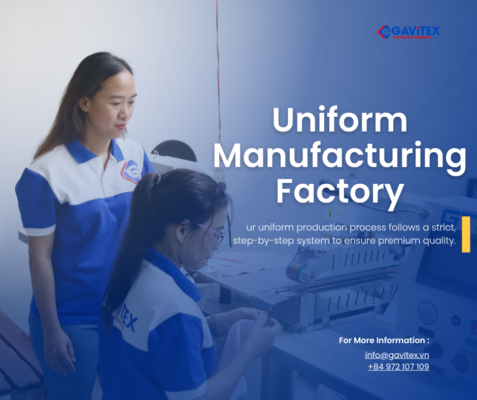
Gavitex is a Vietnam-based apparel producer focused on long-term partnerships with fashion brands, retailers, and uniform buyers around the world. Instead of chasing only the lowest price, the company invests in systems that bring the best clothing manufacturing standards into daily work. English-speaking merchandisers, pattern technicians, and line leaders cooperate closely so your requirements are understood, applied, and verified, not just acknowledged in emails.
Combining flexibility with disciplined processes
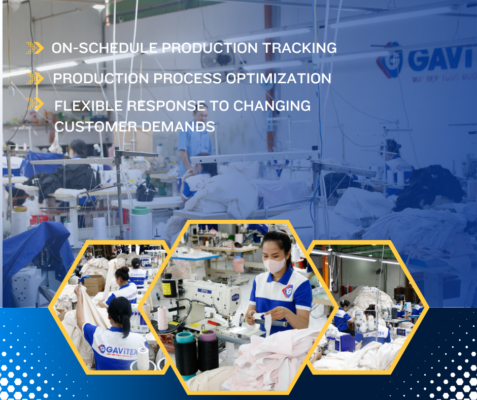
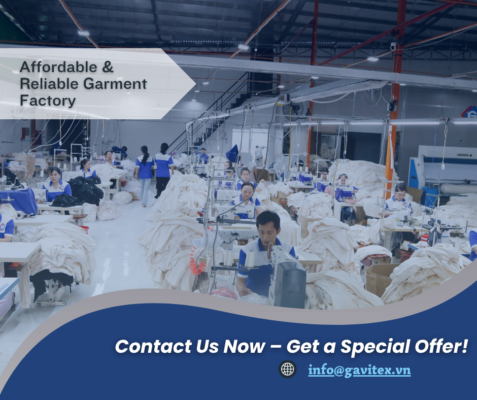
Many factories claim flexibility, but few can combine it with real control. Gavitex structures its clothing production lines to handle both simple basics and more complex fashion styles while maintaining robust checkpoints. Lean methods, clear work instructions, and documented inline inspections keep quality stable even when product mixes change. For brands searching for a reliable OEM clothing manufacturer, this mix of adaptability and discipline is a key reason to trust Gavitex with high-visibility collections.
Part of a wider ecosystem of trusted partners
Gavitex does not work in isolation. The company connects your collections with related services such as bespoke garment production and specialist suppliers for materials, packaging, or lifestyle products. Through partnerships with businesses like Gocy, Gavitex helps brands build a coherent product ecosystem while keeping the best clothing manufacturing standards at the center of every decision.
What defines the best clothing manufacturing standards in practice?
Technical consistency from fabric to finished garment
At the core of the best clothing manufacturing standards is technical consistency. Fabrics are tested before bulk cutting to check shrinkage, color fastness, and hand feel. Patterns are confirmed through size sets so that fit remains consistent across sizes and seasons. During production, inline audits verify crucial points such as seam strength, stitching density, labeling accuracy, and pressing quality. For brands that rely on predictable garment manufacturing, these steps convert design intent into tangible reliability on the rack.
Respect for people, environment, and safety
Modern standards go beyond measurements and AQL charts. They address worker welfare, environmental impact, and safety practices. In factories aligned with the best clothing manufacturing standards, operators receive proper training and protective equipment; buildings and machines follow safety guidelines; and waste handling, chemical use, and water consumption are monitored carefully. Brands can then communicate honestly with their customers about how their garments are made, not just where.
Traceability and transparent documentation
The best clothing manufacturing standards make it possible to trace a garment’s journey back through the supply chain. Fabric batches, trims, and production lots are identified clearly, so that any issue can be isolated quickly. Gavitex uses this traceability not only for risk management but also as a management tool: linking line performance, defect patterns, and delivery reliability. Combined with the flexibility of custom clothing production programs, this transparency helps brands fine-tune their ranges without losing control.
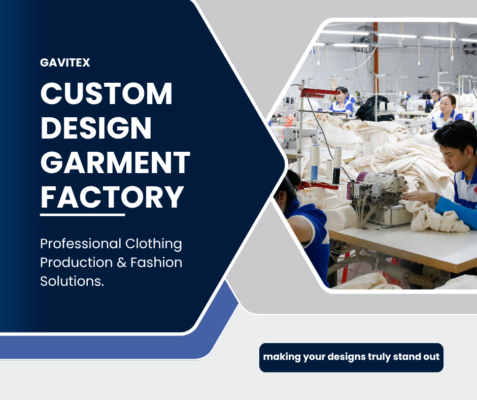
Best clothing manufacturing standards vs. basic compliance factories
Ticking boxes vs. building real assurance
Many suppliers present a standard list of certificates or audit reports. On paper they look similar, but day-to-day reality can be very different. Basic compliance factories often aim to “pass audits” with minimum change. In contrast, factories that strive for the best clothing manufacturing standards treat guidelines as a starting point. Processes are updated, operators are trained, and managers are evaluated against quality and safety metrics, not only output. For brands, this means fewer surprises, fewer returns, and far fewer reputational risks.
Short-term unit cost vs. total cost of ownership
A factory with weak controls might offer an attractive price on a spreadsheet. But hidden costs appear later: rework, air shipments, markdowns, and customer complaints. When you work with a partner dedicated to the best clothing manufacturing standards, the unit price may sometimes be slightly higher than the most basic alternative, but total cost is often lower. Fewer defects, accurate deliveries, and stable fit protect margins and free up internal resources. Gavitex helps clients calculate this bigger picture, combining strong garment manufacturing foundations with smart financial thinking.
Passive communication vs. proactive guidance
Basic suppliers are reactive: they follow instructions but do not challenge unrealistic specifications or risky timelines. Factories operating under the best clothing manufacturing standards behave differently. They review tech packs for feasibility, flag potential issues with fabrics or trims, and suggest improvements based on their experience as an OEM clothing manufacturer. Gavitex, for example, will warn you if a certain seam construction is weak for heavy fabrics or if a measurement tolerance is too tight for a specific material. This proactive support can save both time and reputation.
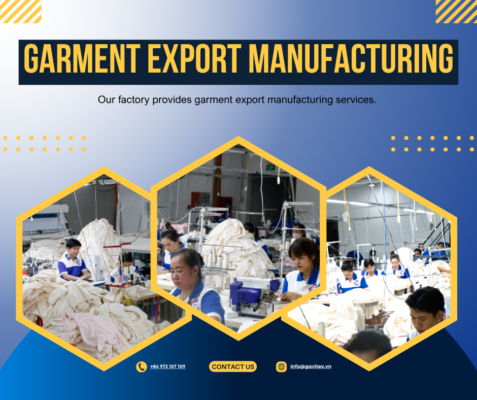
Gavitex capabilities built around the best clothing manufacturing standards
Versatile product range supported by tuned lines
Gavitex operates multiple lines for wovens and knits, handling shirts, blouses, dresses, trousers, skirts, uniforms, and light outerwear. Each new program is analyzed to decide how best to configure clothing production lines and allocate skill levels. For more complex items, mini-lines with higher inspection frequency are established. For simpler pieces, leaner configurations are used without compromising the best clothing manufacturing standards on needle control, labeling accuracy, and packing.
Sampling studio and continuous improvement loop
A dedicated sampling studio allows teams to test patterns, constructions, and trims before bulk production. Fit sessions, wear trials, and washing tests generate feedback that feeds into updated patterns and instructions. This loop transforms the best clothing manufacturing standards from static rules into a living system that improves with each season. As a result, brands using Gavitex for custom clothing production can refine their shapes and quality over time while keeping overall processes stable.
Integrated project management and clear communication
Every significant program is handled as a project with defined steps: risk assessment, fabric booking, sampling, approvals, pre-production meetings, bulk production, and shipment. Checklists, photos, and reports provide evidence that the best clothing manufacturing standards are being applied at each stage. English-speaking contact points ensure that questions about garment manufacturing details are addressed quickly, and that decisions are recorded, not lost across long email chains.
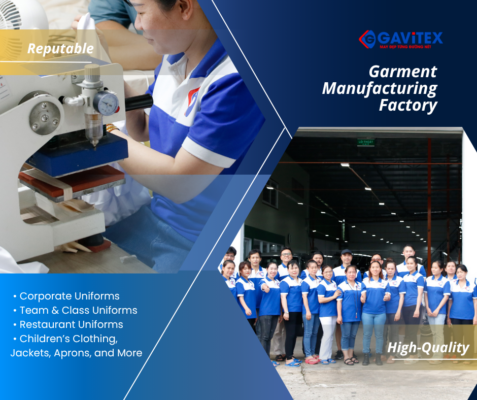
Legal, contractual, and brand protection within the best clothing manufacturing standards
Contracts and NDAs that reflect your brand stakes
Protecting designs, logos, and technical information is fundamental, especially when collections are developed early or involve unique concepts. Gavitex works with clear commercial contracts and non-disclosure agreements that support the best clothing manufacturing standards. These documents define what information is confidential, how patterns and artwork may be used, and which parties have access. The aim is to turn trust into a structured framework, giving brands confidence to share what they need without unnecessary risk.
Physical and digital control of assets
Legal language alone is not enough. The best clothing manufacturing standards rely on daily habits around sample handling, pattern storage, and branded components. At Gavitex, digital patterns are stored in controlled systems; physical samples are labeled, archived, and tracked; and branded items like labels and packaging are stored separately with issuance records. This reduces the chance of mix-ups, unauthorized use, or leaks of sensitive designs, which is especially important for high-profile private label apparel programs.
Compliance, testing, and documentation for global markets
Different markets require different tests and documents, from fiber content and flammability to restricted substance lists. Gavitex supports brands in structuring these requirements within the best clothing manufacturing standards so that testing is planned, results are reviewed, and documents are archived properly. This helps buyers and legal teams feel secure when expanding into new regions. When combined with a dedicated page like best clothing manufacturing standards at Gavitex, this documentation also demonstrates to stakeholders that quality and compliance are non-negotiable.
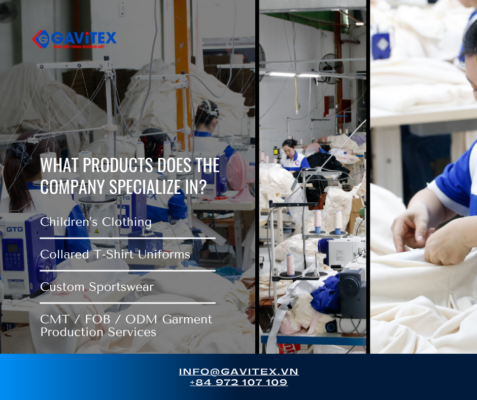
Five reasons to choose Gavitex for the best clothing manufacturing standards
1. Deep understanding of fashion and retail realities
Gavitex serves brands that sell through wholesalers, their own stores, and online channels. The team understands sell-through pressure, markdowns, and the importance of first impressions in store and on screen. That knowledge shapes how the best clothing manufacturing standards are applied in practice, from measurement tolerances to packing requirements. Instead of generic “factory rules,” you get quality systems tuned to real commercial needs.
2. Strong technical base for diverse product types
With experience across shirts, dresses, uniforms, and more lifestyle-oriented pieces, Gavitex knows how the best clothing manufacturing standards translate into stitching, pressing, and finishing. The company combines modern machinery with skilled operators who understand not just how to sew, but why certain details matter. This makes Gavitex a reliable partner for brands that need both everyday essentials and more sophisticated custom clothing production lines.
3. Competitive cost structure with 35–45% savings potential
By operating efficiently in Vietnam and applying lean planning across clothing production lines, Gavitex can often provide cost savings of 35–45% versus high-cost regions at similar quality levels. When paired with the best clothing manufacturing standards, these savings do not come at the expense of quality or compliance. Instead, they free up budget for design, marketing, and building stronger customer relationships.
4. Integrated services from idea to shipped cartons
Gavitex connects design interpretation, technical development, sampling, bulk production, finishing, and logistics into a single chain of responsibility. This integration ensures that the best clothing manufacturing standards are present not only during sewing but also in labeling, packing, and documentation. For brands managing complex collections or rapid drops, having one partner who owns the journey is a powerful advantage.
5. Access to a broader product and service ecosystem
Through its network of partner companies, Gavitex helps brands expand into related categories and services without compromising quality. Whether you are adding accessories, home items, or lifestyle products, you can still anchor your supply chain in the best clothing manufacturing standards. Together with factories like Gavitex and lifestyle partners such as Gocy, your brand can develop a complete universe of products that feel consistent, responsible, and commercially strong.
Market view and chart: adoption of the best clothing manufacturing standards
Why leading brands raise their expectations
Over the last decade, consumers have become more aware of how garments are made. Investigative reports, certification logos, and social media conversations all highlight the importance of responsible production. As a result, leading brands increasingly demand the best clothing manufacturing standards from their suppliers: clear audits, environmental metrics, safe working conditions, and robust product quality. Suppliers who cannot keep up gradually lose access to premium buyers, while factories like Gavitex become preferred partners.
Colorful chart – how different clients prioritize standards
The simplified chart below illustrates how various client segments typically prioritize and adopt the best clothing manufacturing standards in their sourcing strategy with Gavitex.
| Client segment | Focus on best standards | Main goals |
|---|---|---|
| Global fashion brands | High (80–100%) | Protect reputation, secure consistent garment manufacturing, and meet market-specific regulations. |
| Retail chains | Medium–high (60–85%) | Stable fit and quality for core ranges, ethical sourcing for private label apparel. |
| Emerging designers | Medium (50–70%) | Show responsibility to their community while building distinct products through custom clothing production. |
| Corporate and uniform buyers | High (70–95%) | Ensure safety, durability, and ethical sourcing for staff garments worldwide. |
Pricing and cost benefits when applying the best clothing manufacturing standards with Gavitex
Why strong standards do not have to mean higher total cost
Many buyers fear that insisting on the best clothing manufacturing standards automatically raises prices. In reality, the opposite is often true. Factories that manage quality and processes well experience fewer defects, less rework, and more stable lead times. These efficiencies translate into savings that can offset or even surpass any initial cost differences. With careful planning, Gavitex often achieves total garment costs 35–45% lower than those from high-cost regions, while delivering stronger quality and compliance.
Illustrative pricing table – 35–45% savings compared to traditional hubs
The table below gives indicative FOB ranges for typical categories under the best clothing manufacturing standards at Gavitex. Exact figures depend on fabrics, trims, construction details, and volumes.
| Category | Typical market FOB | Indicative Gavitex FOB | Approx. saving |
|---|---|---|---|
| Fashion shirts & blouses | 8.0 – 10.0 USD | 4.8 – 6.5 USD | ≈ 35–40% |
| Trousers & skirts | 12.0 – 16.0 USD | 7.0 – 9.5 USD | ≈ 40–45% |
| Dresses & coordinated sets | 18.0 – 24.0 USD | 11.0 – 15.0 USD | ≈ 35–40% |
| Light jackets & outerwear | 25.0 – 32.0 USD | 14.0 – 19.0 USD | ≈ 40–45% |
Request a tailored proposal from Gavitex
To receive a concrete quotation aligned with the best clothing manufacturing standards, share tech packs or sketches, expected quantities, target prices, and delivery windows with the Gavitex team. They will analyze constructions, suggest material options, and propose realistic timing. You can learn more via the dedicated page for bespoke garment production or explore how Gavitex structures its own best clothing manufacturing standards to support long-term partnerships.
FAQ about applying the best clothing manufacturing standards with Gavitex
Key questions from sourcing, quality, and brand teams
The questions below summarize what most brands and retailers want to know before committing to a factory that claims to follow the best clothing manufacturing standards. They can help you benchmark your current suppliers and define what you expect from future partners.
1. How do we know a factory really follows the best standards, not just paper certificates?
Certificates are a useful starting point, but they do not tell the whole story. To judge whether a plant truly follows the best clothing manufacturing standards, you need to look at daily practices: how defects are tracked and solved, whether workers are trained regularly, and how clean and organized the shop floor is. During visits or video tours, pay attention to clear work instructions, safety signage, and how supervisors interact with operators. Ask for examples of improvement actions after audits, not just the reports themselves. Gavitex encourages clients to review real production lines, sample rooms, and inspection processes. The company shares documentation, photos, and data that show how standards are applied over time, helping brands move from “trust us” to evidence-based assurance.
2. Will insisting on the best clothing manufacturing standards slow down our lead times?
Implementing the best clothing manufacturing standards may add some checkpoints, such as inline inspections or extra sample reviews, but these steps usually prevent larger delays later. Catching a pattern issue or fabric defect early is far faster and cheaper than reworking or remaking finished garments. In practice, factories that manage standards well tend to have more predictable lead times because they face fewer crises. Gavitex plans milestones into project timelines so you can see when reviews will happen and how they fit your launch calendar. With good communication, quality controls become part of the rhythm, not an obstacle, and your garment manufacturing flow stabilizes rather than slows down.
3. Can the best standards work for both basic and fashion-forward styles?
Yes. The best clothing manufacturing standards are designed to support all product categories, but they are applied differently depending on complexity. For basics, standards focus on fit consistency, fabric stability, and efficient line setups. For more complex pieces, they also cover pattern engineering, construction methods, and higher inspection frequencies. At Gavitex, both types of products can run side by side: basics through lean, standardized clothing production lines, and fashion items through more customized flows. Because both streams share the same global framework, quality and compliance remain aligned, making it easier for your brand to maintain a coherent reputation across all price tiers and style groups.
4. How do the best clothing manufacturing standards support our sustainability goals?
Sustainability is not just about fabric choice; it is also about how garments are produced and how long they last. The best clothing manufacturing standards reduce waste by preventing defects, improving cutting efficiency, and extending product life. When garments fit well and maintain their shape and color, customers keep them longer, which lowers environmental impact per wear. At factory level, standards influence energy use, water management, chemical handling, and waste segregation. Gavitex can work with your sustainability team to define practical targets that fit your brand strategy, from basic improvements to more advanced programs. This way, your sourcing decisions support both commercial performance and environmental responsibility.
5. What information should we prepare before asking Gavitex for a quotation?
To receive a meaningful proposal built around the best clothing manufacturing standards, it helps to prepare sketches or tech packs, approximate target prices, planned volumes, and preferred delivery dates. Notes on where the garments will be sold, what quality level you expect, and any specific test requirements are also valuable. With this information, Gavitex can estimate fabric consumption, labor content, and compliance steps, then suggest suitable materials and production options. Even if your documents are not yet complete, the team can guide you through missing details and help structure your collection for efficient garment manufacturing. The clearer your brief, the more precisely Gavitex can support your brand’s growth.
Start implementing the best clothing manufacturing standards with Gavitex
Talk directly with people who own the factory and the process
If you are reviewing your supplier base, planning a new collection, or preparing to launch a brand, this is the right time to align with a partner that lives the best clothing manufacturing standards every day. Share your goals, constraints, and timelines, and the Gavitex team will suggest practical steps to upgrade quality, compliance, and cost structures without overcomplicating your operations.
Take the next step today
Visit the dedicated pages on best clothing manufacturing standards at Gavitex and bespoke garment production to see how technical capabilities and standards fit together. For a faster response, call the hotline or send your tech packs so the team can prepare a tailored proposal.
Hotline / WhatsApp: 0972107109 (international: +84 972107109)