
Mastering the clothing manufacturing process with Gavitex
For modern fashion brands, product success is no longer decided only by design. What happens behind the scenes – the way your
clothing manufacturing process is designed, managed and improved – can make the difference between on-time launches and costly delays.
When a collection moves smoothly from sketch to shipment, your team can focus on creativity and customers instead of firefighting.
Gavitex, a trusted Vietnam-based specialist in garment manufacturing, helps brands turn a complex
clothing manufacturing process into a disciplined, transparent flow. With experienced engineers, efficient
clothing production lines and a partnership mindset, Gavitex supports everything from custom clothing production for new labels to
large-scale private label apparel programs for established retailers.
Want a clearer, more predictable clothing manufacturing process?
Talk to Gavitex about optimizing your clothing manufacturing process from development to delivery.
1. What is the clothing manufacturing process and why does it matter?
In simple terms, the clothing manufacturing process is the structured journey that takes a design from concept to finished garment.
When this journey is clear and disciplined, brands gain reliability, cost control and quality consistency across seasons.
1.1 Key stages of a professional clothing manufacturing process
Although each brand is unique, a robust clothing manufacturing process usually follows a similar skeleton:
- Pre-production – tech pack review, pattern making, grading and sample development.
- Planning – fabric and trim readiness, line allocation and capacity planning on the clothing production lines.
- Cutting – marker optimization, spreading, cutting and bundling.
- Sewing – assembly on the line with clear operation bulletins and in-line quality checks.
- Finishing – pressing, trimming, final inspection and packing.
- Logistics preparation – documentation, labeling by destination and shipment coordination.
Gavitex brings structure to each of these steps so the clothing manufacturing process feels predictable rather than chaotic.
1.2 Business value of mastering the clothing manufacturing process
When your clothing manufacturing process is clearly defined, you gain more than operational efficiency. You can launch assortments with
confidence, negotiate better terms and build a reputation for reliability with retailers and consumers. Delays, rework and quality disputes
become exceptions instead of regular headaches.
For private label apparel programs, a stable clothing manufacturing process means your basics look and fit the same across
seasons and regions. For custom clothing production or fast experiments, it means new ideas can be tested and scaled without damaging
your core offer. In both cases, brands move from reactive firefighting to proactive planning.
1.3 How Gavitex approaches the clothing manufacturing process
As an experienced OEM clothing manufacturer, Gavitex treats the clothing manufacturing process as a living system. Engineers,
planners and line leaders constantly gather data and feedback: operation times, defect rates, material usage, shipment performance. This
information is used to refine each stage, from cutting through to packing.
Gavitex also connects the clothing manufacturing process with broader cooperation models like
clothing manufacturing partnership frameworks and modular
offerings. Brands can decide how deeply they want Gavitex involved in planning, sourcing and logistics – all anchored in a disciplined process.
2. Clothing manufacturing process vs shortcut production models
Not all production models are equal. Understanding how a structured clothing manufacturing process compares with shortcut or
informal approaches helps brands choose wisely.
2.1 Shortcut model: fast fashion rush and informal workshops
In some parts of the industry, production still happens in a rushed, loosely controlled way. Small workshops or fragmented subcontracting
networks may skip steps in the clothing manufacturing process, jumping straight from rough sample to bulk production with minimal planning.
This shortcut approach often appears attractive: low quotes, flexible promises and seemingly fast lead times.
However, the risks are significant. Without proper planning on the clothing production lines, material checks and in-line QA, brands may
face high rejection rates, inconsistent sizing and missed deliveries. For complex garment manufacturing categories – such as sportswear or
tailored pieces – these shortcuts can quickly damage brand reputation and relationships with retailers.
2.2 Structured process model: discipline and scalability
By contrast, a professional clothing manufacturing process emphasizes planning, repeatability and control. At Gavitex, each style
passes through defined gates: technical review, sample approval, pilot run if needed, then bulk production with clear instructions at every
workstation. The aim is not bureaucracy, but consistency.
This structured approach makes it easier to scale from a few hundred pieces to tens of thousands without losing control. For
custom clothing production – for example, uniforms or corporate wear – a disciplined clothing manufacturing process ensures that
every re-order matches the original expectations, even years later.
2.3 Why serious brands choose the structured clothing manufacturing process
While shortcut models may still attract some opportunistic buyers, serious brands increasingly prefer partners with a transparent,
documented clothing manufacturing process. The total cost of ownership – including rework, claims and emergency air shipments – is usually
much lower when the process is under control.
Gavitex helps brands transition from fragile, ad-hoc sourcing to structured cooperation. Starting with one category, the team maps your
existing clothing manufacturing process, identifies gaps and implements improvements that can later be rolled out across other lines
and suppliers.
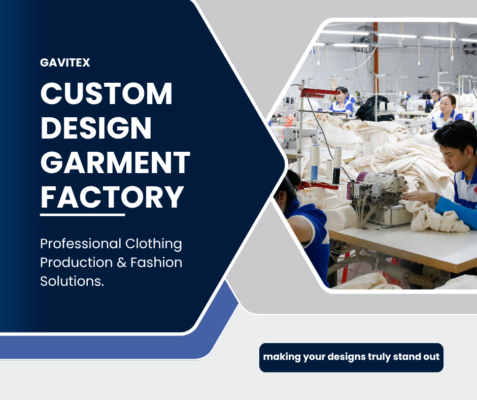
3. Gavitex capabilities along the clothing manufacturing process
A clear clothing manufacturing process only works if the factory has the skills, equipment and discipline to execute it.
Gavitex backs every flowchart with real-world capability.
3.1 Development and pre-production excellence
The clothing manufacturing process starts long before fabric reaches the cutting room. Gavitex offers strong development support:
pattern making, grading, size set samples and fit refinement. Technical teams review tech packs, flag inconsistencies and suggest
improvements that save time or improve performance.
This pre-production strength is especially valuable for private label apparel and new brand launches. It ensures that styles are
production-ready before large investments are made, reducing risk and speeding up the critical path.
3.2 Production scale, technology and data
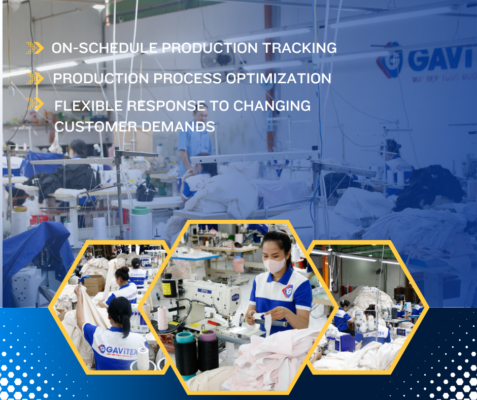
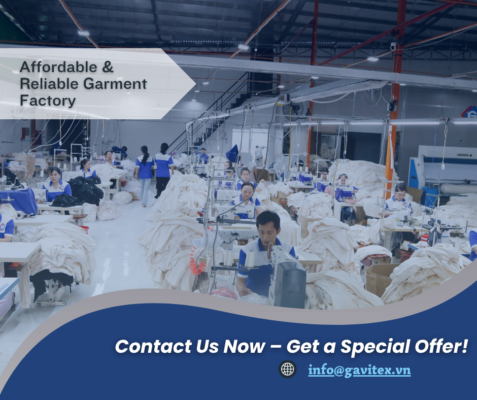
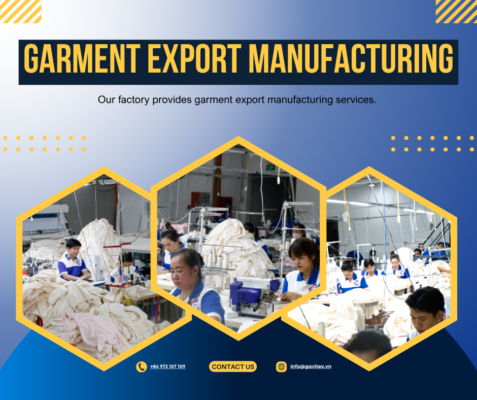
On the production floor, Gavitex operates efficient clothing production lines configured for both basic and more complex styles.
Digital pattern systems, marker optimization and real-time tracking support a stable clothing manufacturing process. Output and quality
data from each order is captured and used to refine future runs.
Gavitex also cooperates with specialized partners such as garment manufacturing hubs in Vietnam for printing,
embroidery and washing. These external services are fully integrated into the overall clothing manufacturing process, so brands benefit from
a unified, end-to-end solution.
3.3 Finishing, packing and logistics preparation
A strong clothing manufacturing process ends with garments that are truly store-ready. Gavitex pays close attention to finishing:
pressing, appearance checks, measurements and packaging all have defined standards. Packing lists, carton markings and documentation are
aligned with the requirements of each destination.
For custom clothing production such as uniforms, garments may need specific folding, labeling or set packing. These requirements
are built into the clothing manufacturing process from the start, avoiding last-minute confusion and saving precious time before delivery.
4. Legal structure and brand protection in the clothing manufacturing process
Opening your clothing manufacturing process to a partner means sharing designs, tech packs and commercial plans.
A solid legal framework and confidentiality rules are essential.
4.1 Agreements that reflect the real process
Gavitex builds each cooperation on written agreements that match the actual clothing manufacturing process. These documents define
responsibilities for development, sampling, bulk garment manufacturing, QA and logistics preparation. They can also reference
broader cooperation models such as a clothing manufacturing partnership
or modular offerings, ensuring that expectations are aligned from day one.
By connecting contracts directly to the process, Gavitex avoids vague promises and creates clarity for both sides.
4.2 Confidentiality, NDAs and sample control
Because the clothing manufacturing process often includes upcoming collections, unannounced collaborations and unique fits,
confidentiality is key. Gavitex signs non-disclosure agreements covering designs, measurement charts, grading rules, cost structures
and long-term plans.
Physical samples and prototypes are controlled under internal rules. For sensitive private label apparel ranges or high-profile
launches, access to styles can be limited to selected teams and secure areas. These measures give brands confidence that their
custom clothing production ideas remain safe.
4.3 Compliance, labeling and channel protection
A compliant clothing manufacturing process also ensures that garments meet regulations in their destination markets. Gavitex works
with brands to implement correct labeling, testing and documentation standards from the beginning of the process.
Agreements can include rules on over-runs, seconds and cancelled orders, reducing the risk of unwanted stock appearing in unauthorized
channels. Combined with consistent garment manufacturing practices, these safeguards protect both brand equity and consumer trust.
5. Five reasons to choose Gavitex for your clothing manufacturing process
Many factories talk about process; fewer live it every day. Here are five reasons brands trust Gavitex to run a reliable
clothing manufacturing process.
5.1 End-to-end visibility and communication
Gavitex shares a clear view of the clothing manufacturing process with clients: from material arrival to packing.
Regular updates, milestone tracking and open communication make it easy for sourcing managers and merchandisers to stay informed
without micro-managing every step.
5.2 Proven experience across categories
The Gavitex team has experience in basics, shirts, dresses, light outerwear, uniforms and performance products. This diversity
is reflected in their approach to the clothing manufacturing process: best practices from one category can inform improvements in others.
For brands managing complex portfolios of private label apparel, this cross-category experience is a major advantage.
5.3 Competitive cost through process efficiency
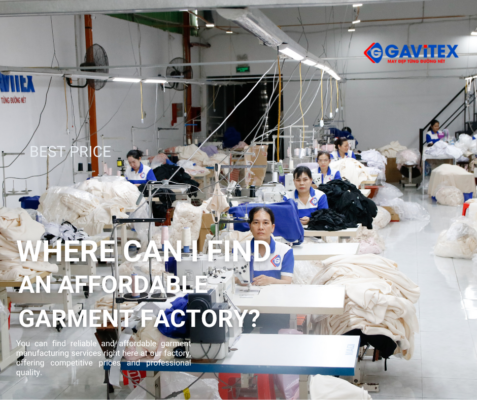
Rather than relying solely on low labor costs, Gavitex focuses on process efficiency: balanced lines, reduced rework and optimized
fabric usage. A well-managed clothing manufacturing process often reduces total cost more than small differences in CM rate alone.
Brands benefit from attractive pricing without sacrificing quality or reliability.
5.4 Quality culture, not just inspections
In a robust clothing manufacturing process, quality is built in, not just checked at the end. Gavitex trains operators and line leaders
to understand product expectations, not just follow instructions. In-line checks, standardized work instructions and final inspection
all support a culture where quality is everyone’s responsibility.
5.5 Partnership mindset for long-term improvement
Finally, Gavitex sees the clothing manufacturing process as a shared asset. The company invests in long-term cooperation, helps brands
analyze performance and suggests improvements for future seasons. Coupled with structured frameworks like a
clothing manufacturing process roadmap
or a broader partnership model, this mindset turns the factory from a cost center into a growth partner.
6. Market insights: how brands manage the clothing manufacturing process
Around the world, brands are moving from informal production to structured, data-driven management of the
clothing manufacturing process. Large players often invest in internal industrial engineering teams, while small and mid-size labels
increasingly rely on partners like Gavitex to bring that discipline without heavy fixed costs.
The illustrative chart below shows how different brand segments typically use structured process management versus ad-hoc approaches.
6.1 Illustrative chart: adoption of structured clothing manufacturing process
Heavy use of structured clothing manufacturing process control
Mix of structured process and legacy methods
Growing focus on data-driven process management
Often rely on informal garment manufacturing setups
Values are illustrative, highlighting how structured control of the clothing manufacturing process becomes more common as scale and complexity grow.
Working with Gavitex, brands of any size can access process excellence normally associated with the largest players, while keeping
their organizations lean and agile.
7. Indicative pricing along the clothing manufacturing process
A controlled clothing manufacturing process is not only about quality – it is also a powerful lever for cost efficiency.
Thanks to location and process discipline, Gavitex often delivers total cost levels 35–45% below many high-cost regions.
The table below shows indicative price ranges for different program types, considering the complete
clothing manufacturing process from cutting to finishing. Actual prices depend on style complexity, volumes and service mix.
7.1 Example CM + process package ranges (per piece, ex-factory)
| Program type | Typical market range (USD) | Gavitex process range (USD) | Approx. saving |
|---|---|---|---|
| Basic T-shirts & polos | 1.90 – 2.60 | 1.05 – 1.55 | ≈ 40–45% lower |
| Casual shirts and blouses | 3.10 – 4.10 | 1.95 – 2.60 | ≈ 35–40% lower |
| Fashion fleece and hoodies | 3.80 – 5.10 | 2.30 – 3.20 | ≈ 35–40% lower |
| Performance sportswear | 5.30 – 7.70 | 3.15 – 4.50 | ≈ 40–45% lower |
| Uniform / workwear sets | 7.20 – 9.90 | 4.30 – 6.10 | ≈ 35–40% lower |
Figures are indicative. Your final clothing manufacturing process agreement with Gavitex will be tailored to your categories, volumes and service requirements.
Many brands start with a pilot project to benchmark cost and performance, then expand cooperation as they see how a disciplined
clothing manufacturing process supports margins and reliability.
8. FAQ about the clothing manufacturing process with Gavitex
1. What information should I prepare before discussing my clothing manufacturing process with Gavitex?
Before you approach Gavitex, it helps to assemble a simple overview of your ranges, markets and timelines. You do not need
a perfect system, but basic information about styles, expected volumes and launch dates will make the conversation more productive.
Sharing existing tech packs, fit comments and past production challenges gives Gavitex insight into your current
clothing manufacturing process, including where things go wrong or take too long. If you manage several product
categories or run private label apparel programs with other suppliers, examples of successful and problematic styles
are extremely helpful. This context allows Gavitex to quickly identify easy wins, suggest realistic improvements and propose a
roadmap that fits your capabilities and budget.
2. How long does it take to set up a stable clothing manufacturing process with Gavitex?
Timing depends on scope, but most brands see improvements within the first season of cooperation. When you first map your
clothing manufacturing process with Gavitex, there is usually a discovery phase where both sides review tech packs,
planning methods and historical issues. Next comes a pilot phase, often focused on one category or a small group of styles,
produced on specific clothing production lines. During this period, communication routines, quality checkpoints and
documentation are refined. Once performance stabilizes and both teams trust the setup, the process can be expanded to more products
and higher volumes. Structural gains – such as reduced lead times, fewer defects and lower hidden cost – typically become very
visible after one to two full seasons.
3. Can smaller brands benefit from a structured clothing manufacturing process?
Absolutely. A structured clothing manufacturing process may sound like something only global players can afford, but it is
often even more valuable for smaller labels. When resources are limited, every delay, quality issue or unexpected cost hurts more.
By working with Gavitex, emerging brands can access the same process discipline used by large garment manufacturing programs
without building big internal teams. Gavitex can design a lean setup with realistic minimums, clear responsibilities and easy-to-follow
routines. This allows founders and small teams to focus on product and marketing, trusting that the technical side of
custom clothing production is in safe hands and will scale smoothly as the business grows.
4. How does the clothing manufacturing process relate to clothing manufacturing partnership models?
The clothing manufacturing process is the operational backbone, while a
clothing manufacturing partnership is the long-term
cooperation framework around it. You can think of the process as the “how” and the partnership as the “who and for how long”.
A partnership model defines shared goals, communication rules, capacity commitments and continuous improvement mechanisms.
The process defines how styles actually move from tech pack to shipment within the factory. When you combine a stable partnership
with a disciplined clothing manufacturing process, you get both reliability and flexibility: a partner who understands
your brand deeply and a factory floor that can deliver what was promised, season after season.
5. How does Gavitex protect my designs and commercial data during the clothing manufacturing process?
Design and data security are embedded in every Gavitex clothing manufacturing process. The company signs
non-disclosure agreements that cover tech packs, measurement tables, grading rules, cost breakdowns and long-term plans.
Access to these materials is restricted to authorized staff working directly on your account. Physical samples and prototypes
are stored and handled carefully, with internal rules that prevent unauthorized photography or sharing. For sensitive
private label apparel or high-profile projects, Gavitex can establish dedicated areas on the production floor with limited
access. Together with stable garment manufacturing and compliance practices, this approach keeps your intellectual
property safe while still allowing close collaboration and continuous improvement.
9. Contact Gavitex – optimize your clothing manufacturing process
If you are ready to bring more clarity, control and reliability to your clothing manufacturing process, Gavitex is ready to help.
Whether you run a focused online label, a regional retail chain or a multi-brand portfolio, the team can align your design calendar,
financial goals and garment manufacturing capabilities into one coherent system.
From development and planning to sewing, finishing and packing, Gavitex treats each step of the
clothing manufacturing process as a chance to create value rather than risk. Combined with flexible cooperation models and strong
brand protection, this approach turns your supply chain from a stress factor into a competitive advantage.
For direct consultation and a tailored proposal, call 0972107109 or use the quick call button below:
Call for consultation & Get a quick quote
With the right partner and a disciplined clothing manufacturing process, your collections can travel from sketch to store with
confidence, efficiency and healthy margins.