
How professional Clothing production for brands unlocks growth
For modern fashion labels, Clothing production for brands is not just about sewing garments; it is about building a stable engine
behind every collection, campaign and bestseller. When production runs smoothly, product drops land on time, margins are protected,
and the design team has room to innovate. When it breaks, teams fight fires, launch calendars slip and reputation suffers.
Vietnam-based Gavitex specializes in Clothing production for brands that need reliable partners rather than transactional vendors.
By combining industrial garment manufacturing, engineered clothing production lines and flexible cooperation models,
Gavitex supports both established retailers and fast-growing digital-native labels. Whether you require basic volume items or complex
custom clothing production, Gavitex can help structure a long-term roadmap instead of one-off orders.
Need a trusted partner for Clothing production for brands?
Speak directly with the Gavitex team and align your roadmap with industrial capacity.
1. What Clothing production for brands really means
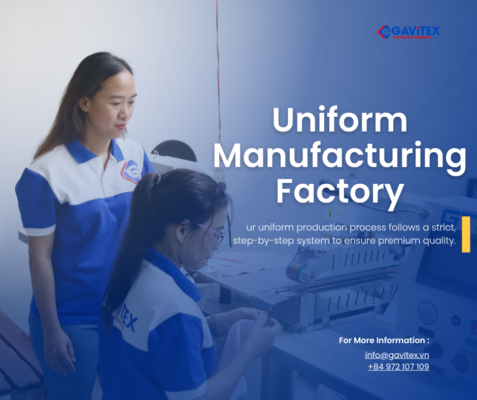
When Gavitex talks about Clothing production for brands, it refers to an integrated approach where industrial capacity,
engineering, quality and logistics are aligned with the brand’s strategy, price points and calendar – not just a factory that fills
a purchase order.
1.1 Core characteristics of Clothing production for brands
Effective Clothing production for brands brings a set of tangible features that go far beyond simple subcontracting. Among them:
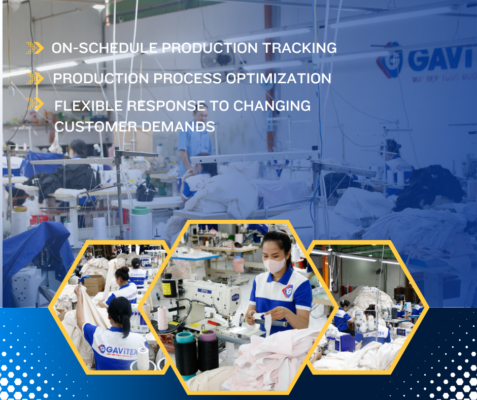
- End-to-end technical support – from pattern making and grading to pre-production sampling and size set approval.
- Engineered capacity – clothing production lines organized with clear operations, time studies and productivity tracking.
- Integrated planning – alignment between fabric arrivals, trims, machines and shipment deadlines for each program.
- Stable quality systems – in-line and final inspections, root-cause analysis and continuous improvement routines.
- Logistics readiness – export documentation, packing rules and consolidation tailored to the brand’s channels.
Gavitex organizes Clothing production for brands around these pillars, ensuring that both mass programs and smaller capsules
receive structured, predictable execution.
1.2 Strategic benefits for fashion brands
When Clothing production for brands is designed correctly, sourcing managers see concrete advantages: fewer late deliveries,
more consistent fit across regions, lower claim rates and reduced emergency air shipments. With a strong partner, teams can focus on
range building and channel strategies rather than constant firefighting.
Because Gavitex acts as a hybrid between an OEM clothing manufacturer and a technical advisor, brands can standardize blocks,
optimize fabric consumption and streamline replenishment of private label apparel. This turns the production function into a
lever for margin, not just a cost center.
1.3 How Gavitex positions itself in Clothing production for brands
Within the landscape of regional suppliers, Gavitex focuses on structured Clothing production for brands that need reliability across
seasons. From basics to more complex lifestyle and uniform ranges, Gavitex delivers industrial garment manufacturing standards,
while shaping the cooperation model around each brand’s specific needs.
For long-term programs Gavitex can also support contractual frameworks, including
clothing production contract structures that define volumes,
service levels and continuous improvement targets. This is the level of partnership that many international buyers now expect from
serious Clothing production for brands.
2. Clothing production for brands vs buying generic wholesale stock
Many young labels begin by buying ready-made wholesale stock. It is simple and fast, but it rarely supports differentiation or
long-term growth. In contrast, structured Clothing production for brands is built around your own design language, fit and
channel strategy.
2.1 The wholesale, off-the-shelf model
With generic wholesale, brands select garments from catalogues, apply basic labeling and resell. It is an easy way to test demand,
but there are limits. As multiple retailers can access the same items, it becomes hard to build a unique identity. Sizing and fit
are defined by the wholesaler, not by your team, and replenishment of bestsellers is controlled by someone else’s inventory.
This model is the opposite of true Clothing production for brands. You are essentially curating someone else’s range rather than
building your own. It works for small experiments, but as soon as you want consistent custom clothing production with your own
blocks, it becomes restrictive.
2.2 The advantages of dedicated Clothing production for brands
When you switch to structured Clothing production for brands with a partner like Gavitex, you gain control. Blocks and grading rules
are tailored to your target customers. You decide which items deserve continuous replenishment and which ones remain seasonal.
Materials, trims and packaging are aligned with your positioning.
This is where engineered clothing production lines make a difference. Gavitex can dedicate lines or group families of products for
better efficiency, giving you both flexibility and scale. Instead of being one of many buyers of anonymous goods, you own the story,
the look and the fit that define your brand.
2.3 Why brands eventually outgrow wholesale-only sourcing
As volumes increase, relying exclusively on wholesale usually creates problems: limited size runs, irregular quality and competition
on identical products. That is why most successful labels eventually look for serious Clothing production for brands with partners
like Gavitex. The shift allows them to move from opportunistic deals to structured planning, from generic collections to coherent
ranges, and from unstable margins to predictable performance.
At that stage, many brands also connect with regional resources such as
garment manufacturing networks in Vietnam for broader category coverage, while Gavitex becomes the
anchor factory for key programs.
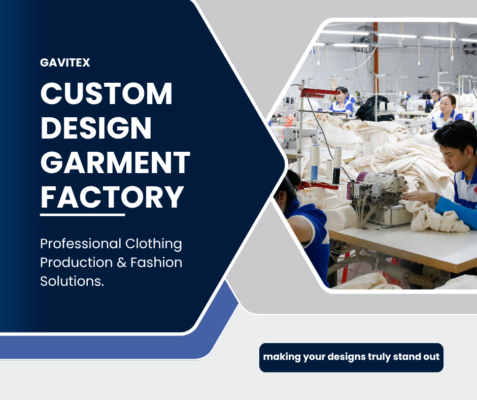
3. Gavitex capabilities for scalable Clothing production for brands
Effective Clothing production for brands depends on capacity, technology, people and process discipline.
Gavitex invests across all of these dimensions to support international customers long term.
3.1 Production scale and category range
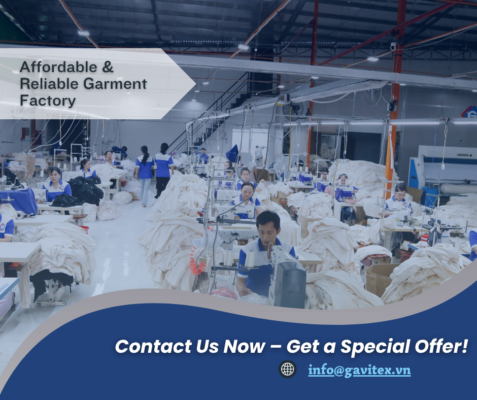
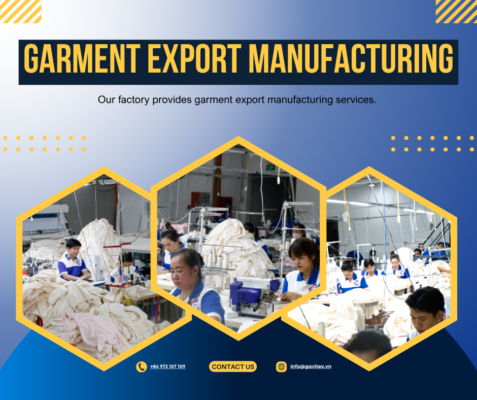
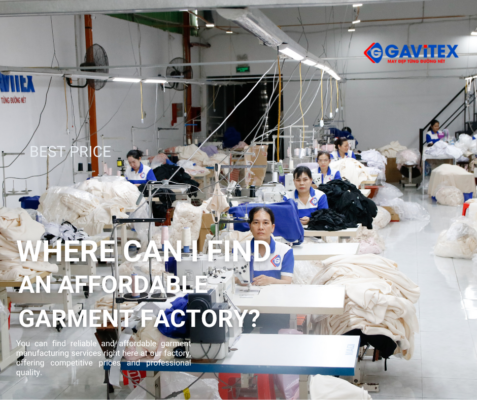
Gavitex operates multiple clothing production lines for knit and woven products, covering T-shirts, polos, shirts, dresses,
uniforms and selected performance categories. Lines are balanced with clear operations, and industrial engineers monitor efficiency
and bottlenecks on a daily basis.
This configuration makes Gavitex well-suited for high-volume Clothing production for brands that need core basics in large
quantities, while also running more complex custom clothing production styles in parallel. Capacity can be allocated to dedicated
customers or shared across programs depending on volume and seasonality.
3.2 Technology, data and continuous improvement
As a modern partner for Clothing production for brands, Gavitex uses digital pattern systems, marker optimization, time studies
and production data tracking. Results are reviewed in daily and weekly routines, and actions are agreed between industrial engineering,
production and quality teams.
Over time, these routines increase productivity, stabilize quality and reduce waste – benefits that directly influence the cost and
reliability of garment manufacturing. For long-running private label apparel programs, even small improvements in minutes
per piece or fabric yield can have a substantial impact on margins.
3.3 Project management and client communication
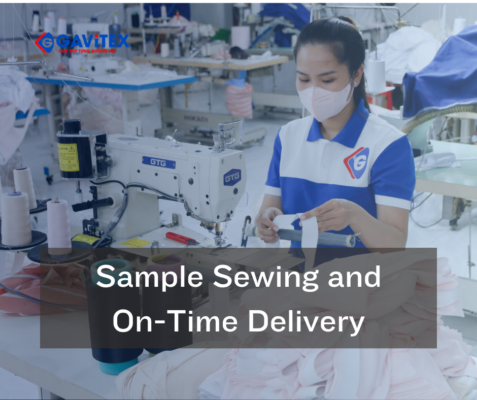
Gavitex treats communication as part of the product. For each brand, the company sets up a project team that coordinates sampling,
pilot runs, capacity planning and shipment tracking. Milestones are defined clearly, and any deviations from plan are reported early
with proposed corrective actions.
This disciplined approach to Clothing production for brands helps international customers manage internal stakeholders and sales
teams, because they can rely on transparent, timely updates instead of last-minute surprises.
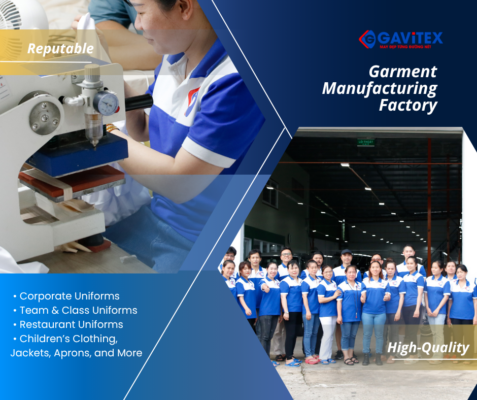
4. Legal structure and brand protection in Clothing production for brands
Serious Clothing production for brands cannot exist without robust legal frameworks and strong brand protection.
Gavitex combines clear agreements with strict internal controls to safeguard client interests.
4.1 Contracts aligned with brand strategies
For ongoing Clothing production for brands, Gavitex works with customers to develop agreements that go beyond unit price and
delivery dates. Contracts typically describe responsibilities across product development, material sourcing (when relevant), production,
quality assurance, compliance and logistics.
Clear service levels – such as on-time delivery, allowable defect rates and corrective action cycles – are part of the framework.
This helps both sides manage expectations and supports continuous improvement over time, instead of repeatedly renegotiating each order.
4.2 NDAs, confidentiality and sample handling
In Clothing production for brands, factories see future collections, margin structures and strategic plans long before they reach
the market. For that reason, Gavitex uses non-disclosure agreements that cover tech packs, patterns, grading, pricing and long-term
roadmaps. Access to sensitive information is limited to teams working directly on the account.
Physical samples, digital files and pre-production garments are handled according to documented procedures. For highly sensitive
custom clothing production – for example, collaborations or uniforms for high-visibility clients – Gavitex can use dedicated lines
or separated production zones to reduce risk even further.
4.3 Compliance, labeling and market protection
As part of its Clothing production for brands services, Gavitex helps ensure that products meet destination-market requirements:
correct fiber content labels, care instructions, safety standards and necessary testing. These aspects can be integrated into the
development and production calendar so they do not become last-minute obstacles.
Agreements also cover how over-runs, defective goods and returns are managed. This prevents uncontrolled resale that could damage
brand positioning. Combined with disciplined garment manufacturing processes and traceability, these measures protect the brand
while allowing production to scale.
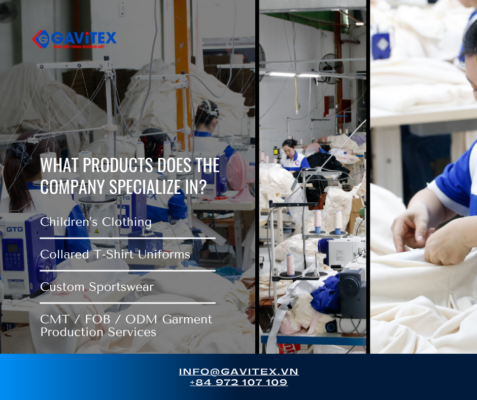
5. Five reasons to choose Gavitex for Clothing production for brands
Many facilities can stitch garments, but not all can act as a strategic partner for Clothing production for brands.
Here are five reasons sourcing teams shortlist Gavitex.
5.1 Multi-category experience with industrial discipline
Gavitex has experience in essentials, shirts, dresses, uniforms and selected performance categories. This breadth allows brands to
concentrate significant volume with one partner instead of fragmenting production across many smaller vendors. Industrial engineering,
rigorous clothing production lines and consistent quality routines ensure that growth does not compromise control.
5.2 Flexible cooperation models for different brand profiles
Whether you are an established retailer or a fast-growing online label, Gavitex can shape Clothing production for brands around your
profile. Cooperation can resemble a classic OEM clothing manufacturer model or take a more integrated form that includes planning,
development and advisory services. This flexibility is especially valuable when brands are transitioning from small wholesale-based
sourcing to full-scale Clothing production for brands.
5.3 Strong cost performance compared to many suppliers
Thanks to efficient garment manufacturing, good material utilization and disciplined planning, Gavitex frequently delivers total
landed costs 35–45% below comparable programs in higher-cost regions. Instead of chasing the lowest wage levels, Gavitex focuses on
productivity, quality and reduced emergency costs – a more sustainable approach to Clothing production for brands.
5.4 Transparency and proactive communication
Customers of Gavitex remark on the clarity of communication. From early risk flags to shipment confirmation, information is shared
transparently. For Clothing production for brands teams dealing with internal stakeholders and retail calendars, this transparency
is as valuable as price or quality.
5.5 Long-term partnership mindset
Finally, Gavitex approaches Clothing production for brands as a long-term partnership. Many clients started with limited test
programs and gradually expanded into multi-category, multi-season cooperation. This continuity allows both sides to invest in
tooling, skills and systems that a short-term vendor would not justify.
8. FAQ on Clothing production for brands
1. What should a brand prepare before starting Clothing production for brands with Gavitex?
Before engaging in Clothing production for brands with Gavitex, it helps to prepare a clear view of your range,
channels and priorities. At minimum, Gavitex will want to see reference samples, basic tech packs or sketches, measurement
charts, target prices and estimated volumes. If you already run private label apparel or branded programs, sharing
performance data – bestsellers, high-return styles, quality pain points – gives valuable insight into where your current
supply base works and where it struggles. You do not need everything perfect on day one: Gavitex can help refine
documentation and propose more industrial-friendly solutions. However, the clearer your brief, the faster the team can
structure a realistic plan for Clothing production for brands that fits your business model.
2. Can smaller or online-only labels access Clothing production for brands at Gavitex?
Yes. Clothing production for brands at Gavitex is not limited to large retailers. Many fast-growing e-commerce
labels and niche designers work with the company. The key is to structure cooperation in phases. Often this means starting
with a small number of core styles or a focused custom clothing production capsule, where quantities are realistic
and calendars are achievable. As sales stabilize, Gavitex can support the transition from limited runs to regular programs,
and eventually to broader category coverage. This step-by-step path allows smaller labels to benefit from the stability and
engineering of an OEM clothing manufacturer while staying flexible and protecting cash flow.
3. How long does it take to move from sampling to bulk production in Clothing production for brands?
Timelines for Clothing production for brands depend on product complexity, material choices and the quality of
initial information. In many cases, straightforward repeat styles can move from confirmed samples to bulk in a matter of weeks,
assuming fabrics are available. New developments that require pattern work, multiple fit reviews or special components will
naturally take longer. Gavitex typically proposes a calendar that includes development, approvals, raw material lead times and
line allocation. Once the first cycles are completed and blocks are stable, lead times usually shorten. Over time, brands
often shift key styles into a more continuous planning rhythm, which allows garment manufacturing and logistics to be
synchronized with retail seasons and online drops.
4. How does Gavitex protect my designs and confidential data in Clothing production for brands?
Protecting intellectual property is central to Clothing production for brands. Gavitex signs NDAs that cover tech
packs, patterns, grading, costing and strategic plans. Sensitive files are stored securely, and access is restricted to team
members directly involved with your account. Prototype garments and pre-production samples are managed under controlled
procedures, minimizing the risk of leakage. For high-profile capsules or uniforms, Gavitex can use dedicated spaces or
separated clothing production lines so that visibility is limited. Policies on over-runs and seconds are agreed in
writing, supporting brand protection in the market. Combined with traceability and disciplined processes, these measures
give brands confidence as they scale volumes with Gavitex.
5. How can we integrate sustainability goals into Clothing production for brands with Gavitex?
Many labels want Clothing production for brands to support their sustainability commitments. Gavitex works with
customers to align material choices, process options and planning with these goals. This can mean using more efficient fabric
layouts, exploring alternative fibers, optimizing batch sizes or planning production to avoid urgent air shipments. While not
every target can be achieved immediately, early discussion allows the Gavitex team to flag trade-offs and opportunities.
By combining industrial garment manufacturing discipline with realistic, stepwise changes, brands can make progress
without compromising quality, cost or on-time delivery.
9. Contact Gavitex – your partner for Clothing production for brands
If you are reviewing your sourcing strategy and looking for a more stable model of Clothing production for brands, Gavitex is
ready to discuss your roadmap. From core basics to specialized programs, the company combines capacity, engineering, quality and
communication in a way that supports long-term brand growth.
Gavitex can also coordinate with your other regional partners and align Clothing production for brands with your broader
multichannel plans. Cooperation frameworks can grow from first pilots to long-term agreements, including structured
Clothing production for brands programs tailored to each label.
For direct consultation and a tailored quote, call 0972107109 or use the quick call button below:
Call for consultation & Get a quick quote
With the right partner for Clothing production for brands, your collections can move from sketch to store with confidence,
consistency and healthy margins, season after season.
Đang suy nghĩ