Build trusted collections with ethical garment production at Gavitex
Global consumers are asking hard questions about who makes their clothes, under what conditions and with what environmental
impact. ethical garment production is how brands respond with confidence: clear standards, transparent
monitoring and a supply chain that respects people as much as product.
From fair wages and safe workplaces to responsible materials and traceable processes, Gavitex in Vietnam offers
ethical garment production that supports your brand values while staying competitive on cost, speed and quality.
Discover how an ethical garment production model can protect your reputation, stabilize sourcing and turn
responsibility into a real commercial advantage.
1. Understanding ethical garment production in today’s fashion industry
1.1 Core principles of ethical garment production
At its heart, ethical garment production means that the clothes your customers wear are made with respect for the
people and communities behind them. It brings together fair compensation, safe and healthy working conditions, realistic hours,
responsible purchasing practices and a commitment to minimizing negative environmental impact. Instead of treating factories as
anonymous cost centers, brands work with partners who care about long-term stability and dignity on the production floor.
In practical terms, ethical garment production touches every step of garment manufacturing, from
how workers are trained and protected to how clothing production lines are organized and managed. It requires
investment in systems, leadership and communication, not just a few posters on the wall. For brands, this approach is quickly
becoming a non-negotiable expectation from customers, investors and regulators.
1.2 How ethical garment production shapes brand perception
Scandals about unsafe factories, unpaid wages or hidden subcontracting can destroy the reputation of a fashion company overnight.
A serious commitment to ethical garment production helps brands protect themselves from this risk. When you can
explain your standards, show how they are implemented and prove that you act on issues, trust grows instead of eroding.
For private label apparel and licensed collections, the stakes are even higher: one incident can impact multiple
partners at once. By choosing factories that prioritize ethical garment production and building a robust
ethical fashion supply chain, you demonstrate that
your values are more than words in a sustainability report.
1.3 Gavitex as a partner for ethical garment production in Vietnam
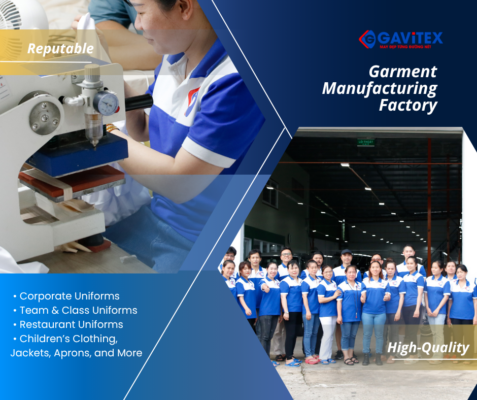
Gavitex is a Vietnam-based OEM clothing manufacturer focused on long-term partnerships with international brands.
Our approach to ethical garment production combines reliable clothing production lines and
transparent management practices with a genuine respect for workers and local communities. This foundation allows us to deliver
consistent quality while keeping your brand safe from the hidden risks that often sit behind low prices.
You can explore our dedicated service page at
ethical garment production to see how these principles
are translated into daily operations and documented processes for audit-ready collaborations.
2. Features, characteristics and value of ethical garment production
When done right, ethical garment production is not a marketing label. It is a disciplined way of running
garment manufacturing that makes your supply chain safer, more predictable and more resilient.
2.1 People-first production standards
One defining characteristic of ethical garment production is the priority given to people on the factory floor.
This includes clear contracts, social insurance, fair wages measured against local living standards, appropriate working hours and
access to safe facilities. Workers receive proper training in safety and quality, and they are encouraged to raise concerns without
fear of retaliation.
At Gavitex, front-line supervisors are trained not only to chase output but also to protect health and safety. This people-first
mindset makes clothing production lines more stable, reduces turnover and supports consistent quality for
custom clothing production programs.
2.2 Responsible materials and environmental care
ethical garment production also covers how materials are sourced and how waste is handled. Brands increasingly
look for recycled fibers, organic cotton, certified viscose and lower-impact dyeing options. Factories must be able to manage
these materials correctly, avoid contamination and document origins for transparency.
Gavitex works with selected textile partners and tracks material flows in line with your sustainability requirements. Our
garment manufacturing practices are designed to optimize marker efficiency, reduce offcuts and control energy and
water use where relevant. These steps help you back up your environmental promises with real data from production.
2.3 Tight link between ethical practices and product quality
Responsible practices and great products are not opposites; they reinforce each other. Where workers feel respected and schedules
are realistic, attention to detail increases, and defects drop. A solid framework for ethical garment production
gives space for quality systems to function properly instead of fighting constant emergencies.
As a result, brands that invest in ethical garment production often see fewer claims, more stable fit across
seasons and stronger long-term relationships with their customers. Ethical choices become a visible quality advantage on the rack,
not only a footnote on a label.
3. Market trends and colorful adoption chart for ethical garment production
3.1 Why the industry is moving toward ethical models
Over the last decade, fashion has gone through intense scrutiny. Campaigners, journalists and consumers have exposed unsafe
factories, unpaid overtime and environmentally damaging practices. This pressure is reshaping expectations: buyers increasingly
ask for proof of ethical garment production, not just declarations. At the same time, regulators and investors are
pushing for clearer documentation of human rights and environmental risk.
Brands that proactively embrace ethical garment production gain a strategic advantage. They can participate in
responsible sourcing programs, collaborate with retailers on private label apparel with strong values and tell
credible stories about how their clothes are made. Those who ignore the shift face growing reputational and legal risks.
3.2 Colorful bar chart – adoption of ethical garment production
The simplified bar chart below illustrates how different fashion segments are adopting ethical garment production.
While not exact data, it reflects patterns Gavitex sees in discussions with brands and sourcing organizations.
Indicative adoption of ethical garment production by segment
Outdoor &
sports brands
Premium &
designer labels
Mass-market
retailers
Emerging
brands
Price-only
players
Segments that rely on long-term trust move faster toward ethical garment production and transparent sourcing.
3.3 Vietnam and the role of responsible manufacturers
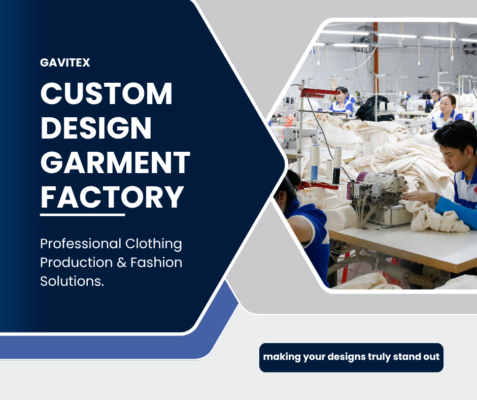
Vietnam is one of the world’s leading hubs for garment manufacturing, offering a skilled workforce and competitive
cost levels. Within this landscape, Gavitex is part of a growing group of factories that see ethical garment production
as the only sustainable path forward. Instead of chasing short-term orders at any cost, we focus on stable relationships and
continuous improvement.
For brands exploring Vietnam through sourcing communities such as garment manufacturing networks like GOCY, partnering with Gavitex means combining competitive
pricing with documented ethical practices and transparent communication.
4. ethical garment production vs. conventional low-cost manufacturing
4.1 How conventional cost-only manufacturing operates
In a conventional model, factories are chosen primarily for the lowest quoted price. Orders move quickly, but there is limited
visibility into actual working conditions, overtime levels or the environmental footprint of materials. Documentation may be
minimal, and last-minute subcontracting is common when capacity is tight. On paper, unit costs look attractive, yet risks are
silently accumulating.
This approach can lead to unstable clothing production lines, inconsistent quality and strained relationships
between buyers and producers. When problems become public—through accidents, investigations or social media—brands find themselves
without robust evidence that they took ethical garment production seriously.
4.2 How ethical garment production changes the equation
ethical garment production takes a fundamentally different view. Instead of treating labour and compliance as
costs to minimize, they are integrated as core requirements of the partnership. Brands and factories agree on standards,
monitoring routines and how to address issues when they arise. Prices are set with these expectations in mind, meaning they are
more realistic and sustainable over time.
For Gavitex, ethical garment production means that line planning, staffing levels and lead times are designed to
meet both quality and human expectations. Rather than hiding overtime or rushing orders through risky shortcuts, we have honest
conversations with buyers about what is feasible and how to align calendars with responsible production.
4.3 Business outcomes of choosing ethical garment production
Brands that make the switch from purely cost-driven sourcing to ethical garment production notice changes across
multiple dimensions. Compliance teams spend less time handling crises and more time improving systems. Designers and merchandisers
gain confidence that what they develop can be produced reliably. Customers respond positively to transparent stories about people
and processes.
While unit prices may not always be the very lowest on the market, total cost often drops once rework, delays and reputational risk
are considered. Over several seasons, ethical garment production becomes a competitive advantage rather than a
simple compliance box to tick.
5. Gavitex capabilities for ethical garment production in Vietnam
As a production-focused partner, Gavitex builds ethical garment production on strong industrial fundamentals:
trained people, smart layouts and reliable technology.
5.1 Production capacity and organized clothing lines
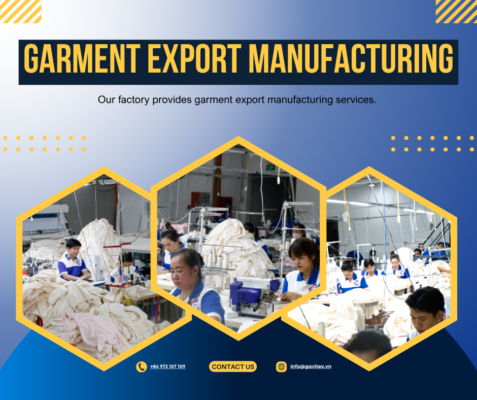
Gavitex operates structured units for both knit and woven categories, focused on stability and flexibility. Our
clothing production lines are set up to handle basics, fashion pieces and custom clothing production
projects with clear line balancing and visual management. Team leaders are trained to monitor productivity as well as worker
well-being, a key element of ethical garment production.
This setup allows us to adjust output, sequence and style mix without losing control of quality or working hours. For brands, it
translates into smoother deliveries and realistic options when calendars change or demand shifts unexpectedly.
5.2 Technology, quality systems and traceability
Gavitex uses digital tools for marker planning, pattern management and production tracking. These systems support
garment manufacturing efficiency while creating clear documentation for audits and customer reviews. Each step,
from fabric inspection to final packing, is connected to defined checkpoints that support ethical garment production
requirements.
We work with brands to integrate their own testing protocols, packaging standards and reporting formats. Whether your collection
is part of a private label apparel program or a stand-alone brand, you receive consistent, traceable information
that makes reporting on social and environmental topics more straightforward.
5.3 From sampling to bulk: one continuous ethical approach
A common challenge is that samples are produced under very different conditions from bulk orders. At Gavitex, the principles of
ethical garment production apply from the first proto sample onwards. The same care for health, safety and
realistic planning seen on bulk lines is already present in development rooms and pilot runs.
This continuity gives your teams more reliable information. If a style works well at the sample stage, it is far more likely to
run smoothly in production because both creativity and responsibility have been balanced from the start.
6. Legal framework, confidentiality and brand protection in ethical garment production
6.1 Contracts that reflect ethical priorities
A serious approach to ethical garment production must be reflected in contracts, not only in marketing statements.
Gavitex works with buyers to define clear expectations around hours, wages, safety standards, audit scopes and remediation
processes. These points are integrated into commercial agreements so that everyone understands their responsibilities from the
beginning.
This clarity protects both sides. Brands can demonstrate meaningful oversight of their garment manufacturing
partners, while Gavitex can plan investments and improvements with confidence, knowing that ethical standards are part of the
long-term relationship, not an optional extra.
6.2 Confidentiality, NDAs and protection of brand assets
Many collections involve unique designs, proprietary fits or commercial data that must be protected. As part of
ethical garment production, Gavitex signs non-disclosure agreements and applies internal rules to limit access to
sensitive information. Sample rooms, pattern files and digital storage are managed with clear access rights.
This approach allows brands to share detailed technical and commercial information safely, which in turn helps us deliver better
custom clothing production results. The same respect we show for workers is extended to your intellectual and
commercial property.
6.3 Protecting your reputation throughout the ethical fashion supply chain
In a connected world, your customers judge your brand based on the entire journey of a garment, not just the final look. By working
with Gavitex on ethical garment production, you secure a visible link in your
ethical fashion supply chain. You can explain
clearly how products are made, where they come from and which standards guide decisions at each stage.
This transparency reduces the chance of negative surprises and provides strong material for communication with customers,
retailers and internal stakeholders who care deeply about responsible sourcing.
7. Five reasons to choose Gavitex for ethical garment production
Selecting a factory is no longer only about price and capacity. Here are five concrete reasons brands rely on Gavitex for
ethical garment production in Vietnam.
7.1 Real factories, real implementation – not just policies
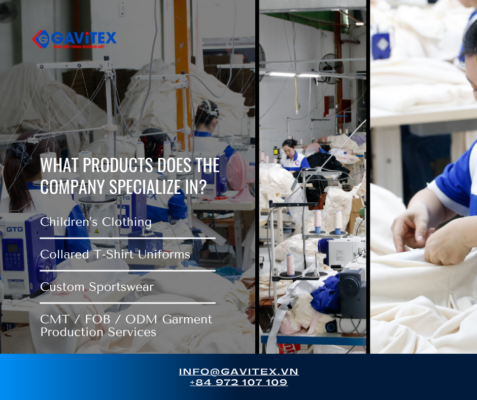
Gavitex operates active garment manufacturing lines every day. Our engagement with ethical garment production
is visible in line layouts, safety training, documentation and daily management routines. Buyers visiting our sites see that
principles are translated into concrete behaviour, not limited to a written code of conduct.
7.2 Integrated support for brands and private label apparel
We understand that multiple stakeholders rely on the same production base: brand teams, sourcing offices, retailers and
private label apparel partners. Gavitex coordinates requirements from these groups and integrates them into a
coherent ethical garment production framework. This reduces duplication of audits and makes it easier to maintain
consistent standards across programs.
7.3 Competitive costs through efficiency, not shortcuts
Responsible practices do not have to make products unaffordable. By investing in efficient layouts, training and technology,
Gavitex keeps costs competitive while respecting the principles of ethical garment production. Our experience
with custom clothing production allows us to optimize fabric usage, reduce rework and manage planning more
intelligently, which protects your margins without putting pressure on workers or safety.
7.4 Transparent communication and problem-solving
No supply chain is free of challenges. The difference lies in how problems are addressed. In our
ethical garment production model, issues are surfaced early and discussed honestly. Whether it is a fabric delay,
a style complication or a compliance question, your team receives clear information and options instead of last-minute surprises.
7.5 Long-term partnership mindset
Finally, Gavitex views each project as part of a long-term journey, not a one-time transaction. This perspective supports
investment in better workplaces, stronger systems and deeper understanding of your brand. Over time, our teams become an extension
of your own, bringing your vision of ethical garment production to life season after season.
Ready to align ethics and performance in your supply chain?
Share your next collection or sourcing project with Gavitex and see how ethical garment production can support
both your brand values and commercial goals.
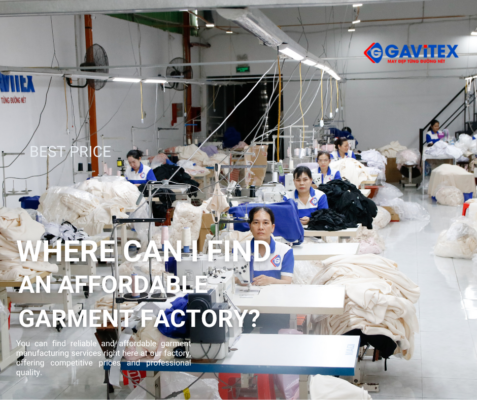
8. Reference pricing for ethical garment production support
8.1 Example packages compared to typical market levels
The table below illustrates how Gavitex positions integrated services for ethical garment production against
typical market prices for similar support. Actual numbers depend on collection size and complexity, yet the examples show
potential savings of roughly 35–45% while maintaining responsible practices.
| Ethical production service package | Typical market price (USD / style) |
Indicative Gavitex price (USD / style) |
Approx. saving |
|---|---|---|---|
| T-shirt or fleece style with full ethical oversight | 340 | 205 | ≈ 40% lower |
| Woven bottom style with responsible production management | 390 | 225 | ≈ 42% lower |
| Sportswear set with enhanced ethical monitoring | 470 | 260 | ≈ 45% lower |
| Capsule of 5–8 styles with full ethical garment production coordination | 2,350 | 1,420 | ≈ 40% lower |
8.2 Total value beyond direct price
When evaluating ethical garment production, cost is only one part of the calculation. Reduced rework, fewer
shipment delays and a lower risk of compliance incidents all contribute to better overall economics. Gavitex works with brands to
map these benefits and design programs that are realistic for their market positioning.
8.3 Custom proposals for your categories and regions
Whether you focus on lifestyle basics, performance products or fashion-driven lines, our team can prepare a tailored proposal that
combines ethical garment production with the right level of technical and commercial support. You receive a clear
view of what is included, how timelines will be managed and how responsibilities are shared between your organisation and Gavitex.
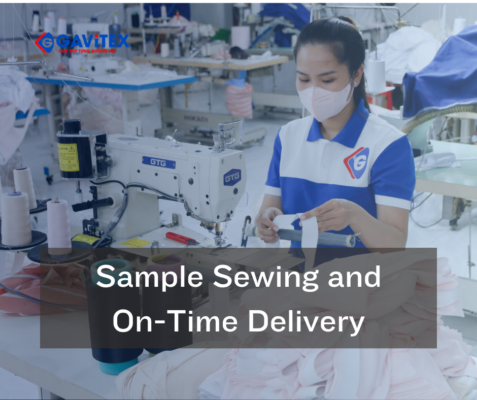
9. FAQ about ethical garment production with Gavitex
9.1 Common questions from sourcing, compliance and design teams
Below are five frequently asked questions about how ethical garment production works in practice at Gavitex.
Click to reveal each answer.
1. What does Gavitex need from us to start an ethical garment production project?
To start a meaningful ethical garment production project, we first need to understand your brand’s values,
product categories and target markets. Our team usually requests line plans, design directions or mood boards, expected volume
ranges and timing, together with any social or environmental standards you already follow. If you have existing audit reports
or internal guidelines, we use them as a starting point. From there, we work with you to map collection stages, quality
checkpoints and communication channels so that ethical requirements are built into the entire process, from sampling to final
shipments, not added at the very end.
2. Can ethical garment production still be competitive on price?
Yes. Responsible practices do have a cost, yet the biggest differences often come from how factories are organized and how
brands plan their calendars. At Gavitex, we use efficient layouts, training and technology to keep ethical garment production competitive while avoiding harmful shortcuts such as excessive overtime or unsafe conditions. When brands consider the
full picture—fewer delays, reduced rework, a lower risk of scandals and stronger customer loyalty—the total cost of working
with an ethical partner is often lower than using a purely cost-driven supplier. Our reference pricing shows that you can have
responsibility and commercial performance at the same time.
3. How does Gavitex monitor and improve ethical performance over time?
ethical garment production is not a fixed achievement; it is a continuous improvement process. Gavitex runs
internal checks on health and safety, working hours, wages and worker feedback, in addition to external audits requested by
buyers or independent organisations. Findings are reviewed by management and turned into corrective actions with clear
timelines. We also train supervisors and line leaders to identify issues early, while our HR and compliance teams keep open
communication with workers. Brands receive transparent reports and can participate in improvement plans, ensuring that
progress is visible from collection to collection rather than only on paper.
4. Is ethical garment production suitable for small or emerging brands?
Absolutely. Small and emerging brands are often the most passionate advocates for ethical garment production,
even if their volumes are modest. Gavitex can adapt planning, communication and order structures to the needs of younger
labels, focusing first on a limited number of styles and building up as demand grows. We help your team understand which
requirements are essential from day one and which can be developed over time. By starting early with responsible practices,
you create a solid foundation for future scaling and a compelling story that resonates with conscious consumers.
5. How can we explain ethical garment production to our end customers?
Many marketing teams struggle to translate complex sourcing topics into clear stories for customers. As your partner in
ethical garment production, Gavitex can provide verified information about working conditions, safety
practices and environmental efforts in formats that support your communication. This may include overviews of training,
summaries of health and safety measures or explanations of how garment manufacturing is organized to protect
workers. You can then adapt this material to your own tone of voice—on product pages, lookbooks or brand reports—confident
that it is backed by real practices on the factory floor.
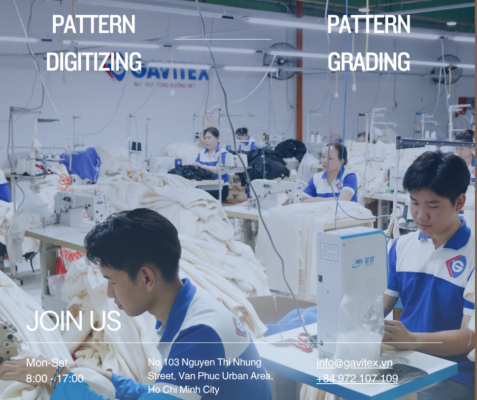
10. Contact Gavitex – your partner for ethical garment production
10.1 Turn responsible intentions into real products
If your brand is ready to move from declarations to concrete action, Gavitex is prepared to help. Our combination of industrial
capacity, transparent management and commitment to ethical garment production gives you a reliable base in Vietnam
for current and future collections. Together, we can align your design ambitions with responsible, well-documented production.
Explore how we structure our work across the broader
ethical fashion supply chain and how our dedicated
ethical garment production services can fit your next
season’s roadmap.
10.2 Call now for a tailored consultation and quote
Our specialists can review your categories, timelines and compliance priorities, then design a practical
ethical garment production plan. Whether you are restructuring an existing sourcing base or launching a new
project, we will help you balance values, lead time and cost in a transparent way.
Start your ethical garment production journey with Gavitex
Call our hotline 0972107109 or use the button below to connect directly with our team and receive a detailed
proposal tailored to your brand and markets.