
Efficient clothing assembly plant solutions by Gavitex
For global fashion brands, retailers, and start-up labels, partnering with the right clothing assembly plant can determine whether a collection launches on time, within budget, and at the quality level your customers expect. Gavitex brings together industrial engineering, lean management, and flexible service models to turn your designs into consistent, scalable reality.
As an experienced OEM clothing manufacturer and strategic partner for private label apparel, Gavitex designs and operates synchronized clothing production lines that balance speed, cost efficiency, and meticulous quality control. From basic T‑shirts to complex technical outerwear, our teams in Vietnam help brands bring new ideas to market with confidence.
Need a reliable production partner for your next collection?
Talk directly with Gavitex industrial engineers and merchandisers.
📑Contents
- 1. What is a clothing assembly plant and why it matters
- 2. Clothing assembly plant vs. traditional garment workshop
- 3. Production capacity and technology at Gavitex
- 4. Legal compliance and brand protection
- 5. Five reasons to choose Gavitex
- 6. Market insights and colorful capacity chart
- 7. Reference pricing: save 35–45% on production
- 8. Contact Gavitex / Get a quote
- 9. Frequently asked questions
1. Understanding the modern clothing assembly plant
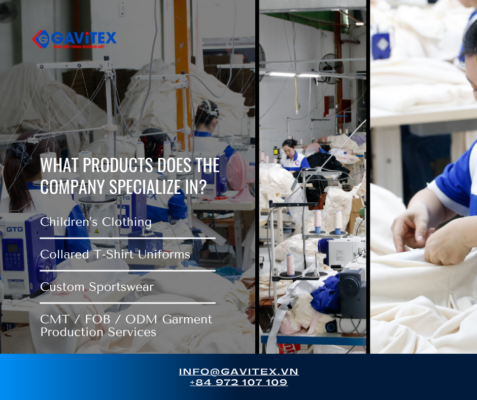
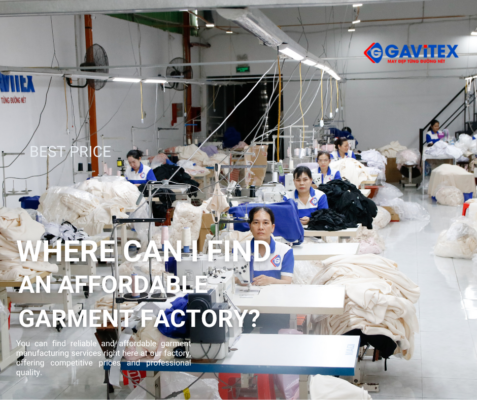
A modern clothing assembly plant is more than just a sewing floor. It is a synchronized industrial system where material flow, human skills, and digital tools are orchestrated to transform fabric into finished garments with minimal waste. At Gavitex, each line is engineered using lean principles so that every workstation, from cutting to packing, adds measurable value to your collection.
1.1 What defines a world-class clothing assembly plant?
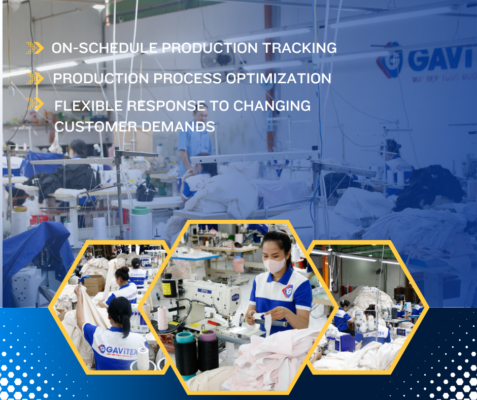
In a world-class clothing assembly plant, the layout is designed around efficiency and quality. Bundles of cut pieces move through specialized operations on clothing production lines, where every operator has a clear standard for cycle time, stitch quality, and safety. Visual boards track hourly output, defects, and on‑time delivery, allowing supervisors to act quickly when performance deviates from the plan. This approach reduces bottlenecks, shortens lead time, and increases consistency across large orders.
A key advantage of this structure is predictability. Because work content is carefully balanced across operations, brands can forecast production capacity more accurately. For B2B clients managing seasonal collections, this makes a clothing assembly plant an ideal backbone for high‑volume programs with frequent repeats, color extensions, or replenishment orders.
1.2 Value for brands, retailers, and private labels
For established fashion retailers, a well‑run clothing assembly plant offers scale and reliability. For rising labels, it offers access to professional garment manufacturing without the overhead of running a factory. Gavitex supports a range of models, from pure OEM clothing manufacturer services based on your existing tech packs, to end‑to‑end solutions that include pattern development, grading, sample making, and packaging ideas for private label apparel.
Our teams understand how custom clothing production needs differ from mass programs. Smaller drops might emphasize detailed finishing and unusual fabrics, while big‑box retail programs focus on cost per unit and replenishment speed. The Gavitex model adapts the same clothing assembly plant infrastructure to deliver what each type of client cares about most.
1.3 Core features and characteristics
Core features of a modern Gavitex clothing assembly plant include:
- Balanced clothing production lines engineered for targeted output per hour.
- Inline quality control to catch and fix defects before they travel down the line.
- Standardized work instructions and training for multi‑skilled operators.
- Digital tracking of work-in-progress and production status for transparent updates.
- Flexible modules dedicated to custom clothing production and complex styles.
Because Gavitex is based in Vietnam, we combine competitive labor structures with strong technical skill and export experience. Our clothing assembly plant teams speak the language of international fashion calendars, lab testing requirements, and compliance audits, so you can focus on design and brand building rather than firefighting production issues.
2. Clothing assembly plant vs. traditional garment workshop
Many brands still work with small workshops that rely on manual planning and simple batch processes. To decide which model fits your needs, it helps to compare a structured clothing assembly plant with a traditional cut‑and‑sew workshop. Both can make garments, but the experience, risk level, and scalability are very different.
2.1 How a clothing assembly plant operates
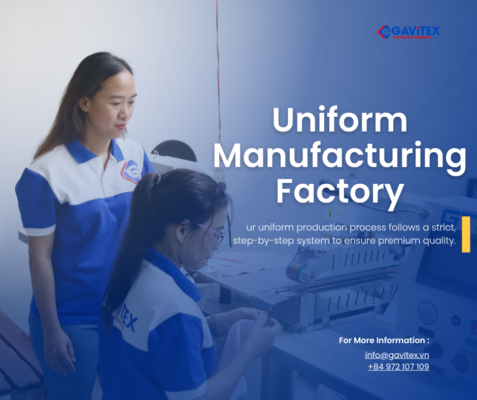
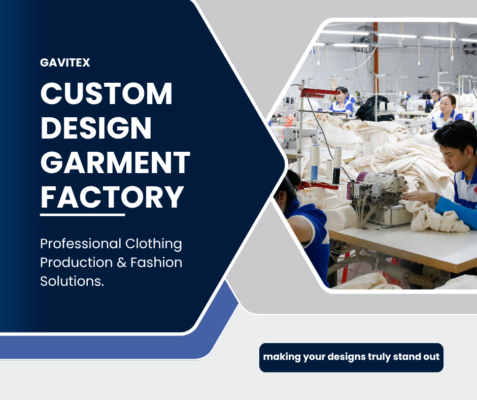
Inside a professional clothing assembly plant, every style is analyzed by industrial engineers before bulk production. Operations are broken down, timed, and arranged into a line balancing chart. Machines are selected deliberately—whether plain lockstitch, overlock, coverstitch, or specialized attachments—so that efficiency and quality are optimized from day one. Quick‑response teams handle changeovers and resolve problems that arise during production.
This structure allows Gavitex to handle complex garment manufacturing programs such as multi‑panel sportswear, uniforms, or athleisure pieces with bonded seams. The same organized lines also handle simpler items, maintaining stable output even when order sizes fluctuate. For retailers planning year‑round replenishment, a clothing assembly plant is particularly suitable because it can lock in capacity and repeat performance.
2.2 How a traditional workshop operates
By contrast, a traditional workshop typically organizes sewing in loose groups. Planning is often done on paper, and work bundles are moved around based on who is available rather than on a carefully engineered flow. This can work for very small runs, but it introduces variability. Quality issues may only be detected at the end of the line, causing rework and delays. Capacity is harder to predict, and adding new styles may slow the whole floor.
For start‑ups, this low‑structure model may seem attractive at first because minimums are sometimes flexible. However, growing brands quickly find that the lack of systematic control makes it difficult to scale. Your team spends more time chasing updates, re‑sampling, and negotiating delivery dates than planning the next collection.
2.3 Clear comparison for decision makers
| Aspect | Modern clothing assembly plant (Gavitex) | Traditional workshop |
|---|---|---|
| Planning | Engineer‑driven line balancing, clear capacity per style | Manual planning, capacity unknown until problems arise |
| Quality control | Inline checks at critical operations, root‑cause analysis | End‑line checks; issues often discovered too late |
| Scalability | Easy to add lines and styles with the same standards | Growth quickly creates bottlenecks and inconsistency |
| Communication | Digital reports and structured production meetings | Updates mostly via ad‑hoc messages or calls |
| Ideal for | Retailers, global brands, and mature private label apparel programs | Very small local projects with limited growth plans |
In short, a structured clothing assembly plant is designed for brands that want to grow steadily, build a recognizable fit and quality signature, and avoid last‑minute surprises. Workshops can still play a role for extremely small experiments, but once a style shows potential, moving it into a professional garment manufacturing environment like Gavitex protects your reputation and your margins.
3. Production capacity and technology at Gavitex
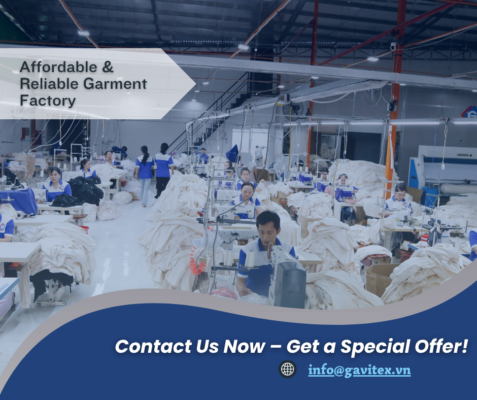
Gavitex operates as a vertically coordinated clothing assembly plant in Vietnam, built to serve international clients with demanding calendars. Our facilities combine manual craftsmanship with automated equipment to provide consistent output from small capsule collections to large repeat programs.
3.1 Scalable clothing production lines
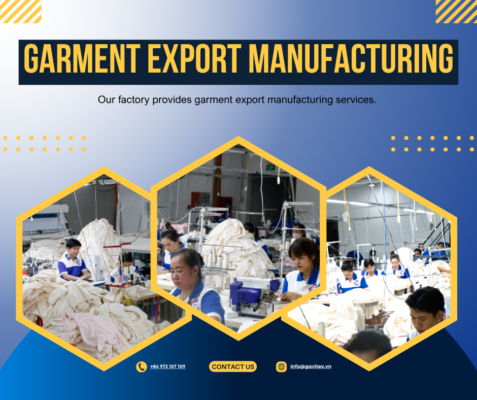
Each line at Gavitex is configured based on the product family. For staple knit items such as tees, polos, and sweatshirts, we use highly standardized clothing production lines capable of delivering high daily output with stable efficiency. For woven shirts, dresses, and bottoms, our modular lines allow for quick adjustments so we can respond to style changes or fit updates requested by your design team.
Because we operate as an experienced OEM clothing manufacturer, we can dedicate lines to specific retail programs or brand groups. This improves learning curves and reduces ramp‑up time for new seasons. When demand spikes, similar lines can be added or mirrored, keeping your delivery schedule intact while maintaining quality standards.
3.2 Modern equipment and digital tracking
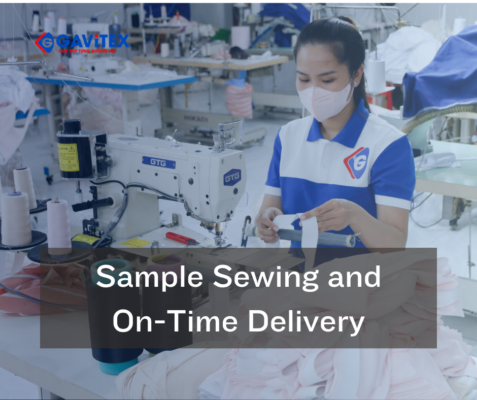
Our clothing assembly plant combines traditional sewing equipment with specialized machines for automatic pocket setting, buttonholing, bar‑tacking, and seam sealing. Automated spreaders and precise cutting support both high‑volume orders and custom clothing production for more complex patterns. Inline tablets and digital boards allow supervisors to update production data in real time, giving both Gavitex managers and your merchandisers a clear view of daily performance.
We also invest in sustainability and energy efficiency. Gavitex is actively building a roadmap toward a carbon neutral garment factory, aligning our garment manufacturing operations with the environmental expectations of leading global brands.
3.3 Flexible service models for different clients
Some partners come to Gavitex with ready‑made tech packs and graded patterns, seeking a dependable OEM clothing manufacturer to execute production. Others need more support with private label apparel, from fabric selection and trim sourcing through to branding concepts and packaging. Our merchandising teams are structured to serve both profiles, with dedicated account managers for long‑term multi‑category programs.
In addition, Gavitex collaborates with trusted ecosystem partners such as garment manufacturing specialists in Vietnam to expand capacity and offer integrated solutions when your volume peaks or you need additional product categories. Throughout these collaborations, your brand works through a single interface while Gavitex coordinates the technical and operational details inside the broader network.
4. Legal compliance and brand protection in a clothing assembly plant
Choosing a production partner is not only about technical capability. Legal compliance, data security, and brand protection are equally critical. Gavitex treats every clothing assembly plant project as a confidential collaboration, backed by clear contracts and structured risk management.
4.1 Transparent contracts and clear responsibilities
Every collaboration begins with a written manufacturing agreement that covers responsibilities for quality, delivery timelines, penalties for late shipment, and rules for handling rework. This contract can be aligned with your standard vendor manual so that our garment manufacturing operations integrate smoothly into your existing sourcing framework. We clarify payment terms, Incoterms, liability for freight damage, and procedures for style changes or cancellations.
For larger programs, Gavitex can sign long‑term framework agreements that lock in capacity within our clothing assembly plant for specific seasons or product categories. This gives you priority access during peak periods and provides us with the visibility needed to plan labor and machinery investments on your behalf.
4.2 NDA, data security, and sample protection
Gavitex routinely signs non‑disclosure agreements covering technical information, sketches, tech packs, and proprietary fit blocks. Digital files are stored on secure servers with restricted access based on role, and hard‑copy patterns are kept in controlled rooms. Prototype samples, lab dips, and pre‑production garments are tagged and stored separately from bulk production, ensuring your upcoming collections are not visible to unrelated teams inside the clothing assembly plant.
We understand that custom clothing production often involves unique fabrics, trims, or construction methods that define your brand identity. Our internal procedures forbid the reuse of your proprietary patterns or graphics for other clients. When needed, we can document these controls formally in our agreements so that your legal team has clear evidence of how your intellectual property is protected within Gavitex.
4.3 Brand reputation and regulatory compliance
Beyond confidentiality, Gavitex maintains compliance with international labor and environmental standards relevant to garment manufacturing in Vietnam. We work with mainstream audit schemes requested by global retailers and maintain traceability for fabric and trim sources where required. This not only protects your brand reputation but also supports marketing claims related to responsible production.
Brand protection checklist at Gavitex clothing assembly plant:
- Signed NDA for each major client and program.
- Secure storage and controlled access to digital and physical patterns.
- Clear ownership clauses for artwork, prints, and custom trims.
- Documented destruction or return of obsolete samples when required.
- Compliance with social, safety, and environmental audits requested by brands.
5. Five reasons to choose Gavitex as your clothing assembly plant partner
Gavitex combines engineering discipline with a service mindset focused on long‑term partnerships. Here are five practical reasons that global brands and emerging labels choose our clothing assembly plant in Vietnam.
5.1 Proven production know‑how
Our teams have hands‑on experience with knitted and woven products, from basics to more technical categories. A structured onboarding process aligns your technical specifications with our line standards before bulk production begins. This reduces misinterpretation and allows our clothing production lines to reach target efficiency earlier, especially important for large seasonal volumes.
5.2 Optimized cost structure
By running a lean clothing assembly plant with carefully balanced lines, Gavitex reduces non‑value‑added time such as waiting, unnecessary transport, and rework. These savings translate into competitive FOB prices without sacrificing quality. For brands consolidating suppliers, partnering with an efficient OEM clothing manufacturer like Gavitex often means better overall landed cost, because fewer delays and fewer claims free your internal teams to focus on sales and marketing.
5.3 Quality built into every step
Rather than relying only on final inspections, Gavitex integrates quality checks into each critical operation of our garment manufacturing flow. We use standardized workmanship references, needle and machine control procedures, and inline audits to keep defect rates low. Corrective actions are documented and shared with clients, giving you transparency about how issues are prevented in future orders.
5.4 Flexibility for both mass and custom clothing production
Brands often need a mix of high‑volume core items and smaller experimental drops. Gavitex separates capacity into stable lines for big programs and flexible modules for custom clothing production and private label apparel capsules. This means you can test new silhouettes, fabrics, or trims without disrupting your main replenishment flow, all within the same trusted clothing assembly plant.
5.5 Reliable communication and project management
A dedicated account manager and merchandiser team follow your styles from development through shipment. Clear milestone calendars, regular production status updates, and rapid responses to technical questions help your team make informed decisions. Because Gavitex manages multiple clothing production lines under one roof, you gain a single, stable point of contact for multiple categories, simplifying your vendor matrix.
In short: Gavitex offers the discipline of a modern clothing assembly plant, the creativity of a product‑driven partner, and the reliability of a long‑term supply chain ally for your brand.
6. Market insights and colorful chart for clothing assembly plant demand
Global demand for apparel continues to shift toward flexible, near‑real‑time supply chains. Brands need a clothing assembly plant that can support fast fashion cycles, sustainable collections, and durable workwear simultaneously. Below is a simplified visual snapshot of how Gavitex allocates typical capacity across major client segments within our garment manufacturing operations.
This mix illustrates how Gavitex balances its clothing assembly plant capacity: stable base volume from recurring programs, combined with innovative capsules and specialty items. For you, this means the reliability of a mature factory together with the adaptability needed to test new categories or channels.
7. Reference pricing: save 35–45% with Gavitex
While precise quotations depend on fabric, trims, complexity, and volume, it is useful to compare typical market levels with Gavitex target prices. The table below shows indicative FOB ranges for common products, where the Gavitex clothing assembly plant positions itself around 35–45% below typical international sourcing levels while maintaining export‑grade quality.
Illustrative FOB price comparison (per piece, USD)
| Product type | Market average range | Gavitex indicative price | Estimated saving |
|---|---|---|---|
| Basic cotton T‑shirt | $2.80 – $3.20 | $1.70 – $1.90 | ≈ 40% lower |
| Polo shirt (piqué knit) | $4.00 – $4.60 | $2.40 – $2.80 | ≈ 40–45% lower |
| Fleece hoodie | $7.00 – $8.00 | $4.20 – $4.80 | ≈ 35–40% lower |
| Denim jeans | $9.00 – $10.50 | $5.40 – $6.30 | ≈ 35–40% lower |
| Sports leggings | $6.50 – $7.50 | $3.90 – $4.40 | ≈ 40% lower |
| Corporate shirt (woven) | $7.50 – $8.50 | $4.20 – $5.00 | ≈ 35–45% lower |
| Workwear jacket | $16.00 – $18.00 | $9.60 – $11.00 | ≈ 35–40% lower |
These figures are indicative only and assume standard fabrics and trims. For an accurate calculation tailored to your styles, please contact the Gavitex team with tech packs and target quantities.
8. Partner with Gavitex: Contact and next steps
Whether you manage a global retail chain or a fast‑growing digital brand, Gavitex is ready to become your strategic clothing assembly plant partner in Vietnam. Our merchandising, technical, and production teams collaborate closely with your designers and sourcing managers to turn ideas into commercial collections.
When you reach out, you can expect:
- Initial discussion of your categories, volumes, and launch timelines.
- Guidance on how to structure tech packs for efficient garment manufacturing.
- Indicative lead times based on current capacity in our clothing assembly plant.
- A tailored quotation highlighting how Gavitex can reduce your landed cost.
You can also explore more about our specialized capabilities here:
clothing assembly plant services and our roadmap toward a greener
carbon neutral garment factory.
Ready to brief your next collection?
Hotline (Vietnam): 0972107109
9. Frequently asked questions about Gavitex clothing assembly plant
1. What types of products can Gavitex produce in its clothing assembly plant?
Gavitex operates diversified clothing production lines designed to cover a broad portfolio of products. We handle everyday basics such as T‑shirts, polo shirts, sweatshirts, and fleece hoodies, as well as more structured items like woven shirts, dresses, trousers, and denim. Our clothing assembly plant is also equipped for sportswear and athleisure, including leggings, training tops, and lightweight jackets with performance fabrics. For corporate and industrial clients, we deliver uniforms, workwear, and promotional items backed by consistent garment manufacturing standards. Because our lines are modular, we can dedicate specific modules to custom clothing production, allowing more complex or branded styles to move through the factory without slowing down your core volume programs.
2. How does Gavitex ensure consistent quality across large orders?
Quality at Gavitex is built into every step of the clothing assembly plant, not treated as a final checkpoint. Before bulk production, our technical team reviews your tech packs and creates clear workmanship standards and sample references. During sewing, inline quality controllers inspect garments at critical operations such as neck joining, armhole seams, and hem construction. Any deviation triggers immediate feedback and corrective action to prevent repetition. We track key metrics like defect rate, rework time, and audit scores by style and by line, allowing continuous improvement over multiple seasons. External final inspections can be arranged according to AQL levels agreed with your brand, giving you additional assurance that each shipment meets your expectations.
3. What minimum order quantities does the Gavitex clothing assembly plant require?
Minimum order quantities depend on product type, fabric, and the balance between color or print variations. For standard knit basics, the Gavitex clothing assembly plant usually recommends a higher minimum to reach full line efficiency, which ultimately lowers your unit cost. For more specialized or high‑value items, we can discuss lower quantities supported by modular clothing production lines dedicated to custom clothing production and private label apparel. Our team will review your line plan, suggest practical minimums by style, and propose consolidation strategies, such as grouping similar fabrics or silhouettes. The goal is to find a realistic starting point that protects quality and cost while giving your brand enough flexibility for testing new styles.
4. How does Gavitex handle confidentiality and protect my designs?
Gavitex treats every collaboration as a confidential partnership. We are prepared to sign NDAs that cover sketches, measurements, construction methods, and any proprietary fit blocks you share with us. Inside the clothing assembly plant, access to digital files is restricted based on roles, and printed patterns or markers are stored in controlled rooms. Prototype garments and development samples are segregated from bulk production stock to reduce the risk of unauthorized viewing. Our internal rules explicitly forbid using your designs, prints, or branded trims for other clients. When your styles are discontinued, samples and relevant materials can be returned or destroyed under documented procedures. These measures ensure that the creative value behind your garment manufacturing programs remains uniquely yours.
5. How do I get a quotation and start working with the Gavitex clothing assembly plant?
To receive a quotation, you can share your tech packs, approximate order quantities, target delivery window, and any special requirements regarding fabrics, trims, or testing. Our merchandising team will review the information, consult with engineers in the clothing assembly plant, and estimate realistic line capacity as well as lead time. You will then receive a costing breakdown that reflects fabric consumption, making time on our clothing production lines, trims, and overheads. If you are still developing your collection, Gavitex can also support sample development and pattern adjustments before committing to bulk. Once terms are agreed, we confirm a production schedule and build your styles into our planning system so you have clear visibility from the first cutting date to final shipment.