
Clothing manufacturing agreements with Gavitex for serious fashion brands
When a fashion brand scales beyond the first few collections, everything changes. Sample runs are no longer enough — you need
consistent quality, predictable timelines and a manufacturing partner who treats your product and brand as carefully as you do.
That is exactly where well‑structured clothing manufacturing agreements become the backbone of reliable growth.
Gavitex, a Vietnam‑based specialist in modern garment manufacturing, helps international labels transform informal
orders into professional long‑term cooperation. By combining clear contracts, efficient clothing production lines
and transparent communication, Gavitex supports brands, retailers and emerging designers in building stable, profitable supply chains.
Ready to turn your next collection into a predictable production plan?
Talk to Gavitex about long‑term clothing manufacturing agreements for your brand.
1. What are clothing manufacturing agreements and why do they matter?
A clothing manufacturing agreement is more than a contract. It is the rulebook that defines
how your collections will be produced, what quality looks like and how risks are shared between brand and manufacturer.
In simple terms, clothing manufacturing agreements set out all the practical details of the partnership between
a fashion company and its factory. Instead of sending occasional tech packs and hoping for the best, brands use these agreements
to define product categories, price structures, capacity commitments and communication frameworks for the full production cycle.
For brands working with an OEM clothing manufacturer like Gavitex, these agreements give both sides the confidence
to invest: brands allocate marketing and inventory budgets, while factories invest in people, machinery and dedicated
clothing production lines for stable clients. This shared commitment is what turns a supplier into a strategic partner.
1.1 Core elements of effective clothing manufacturing agreements
High‑performing clothing manufacturing agreements usually include several indispensable components:
- Scope of products and categories – which types of custom clothing production are covered: knitwear, woven tops, outerwear, sportswear or
private label apparel capsules. - Pricing logic and cost breakdown – base CM (cut‑make) or FPP (full package) rates, fabric sourcing fees, embellishment complexity and packing details.
- Quality standards and testing – tolerances, acceptable defects per lot, colorfastness and washing tests for different markets.
- Lead time and capacity – typical production windows, peak‑season rules and minimum monthly capacity reserved for your brand.
- Communication and approvals – who signs off on lab dips, pre‑production samples and size sets, and how feedback is tracked.
By putting these rules in writing, clothing manufacturing agreements remove ambiguity and reduce the risk of misunderstandings that cost time and money.
1.2 Business value for fashion brands
For B2B buyers, the biggest value of solid clothing manufacturing agreements is predictability. When the agreement defines
clear prices and timelines, your merchandising team can plan seasons and pre‑orders with confidence. You know how much capacity Gavitex
can allocate to your brand and how quickly garment manufacturing can ramp up if a style performs better than expected.
Another important benefit is internal alignment. Sourcing managers, designers, finance teams and even logistics providers can work off
the same framework. Instead of renegotiating every PO, the agreement acts as a reference shared by all departments, which is especially
powerful for brands with offices in multiple countries.
1.3 How Gavitex approaches clothing manufacturing agreements
Gavitex treats each brand’s needs as unique. For some partners, clothing manufacturing agreements focus on
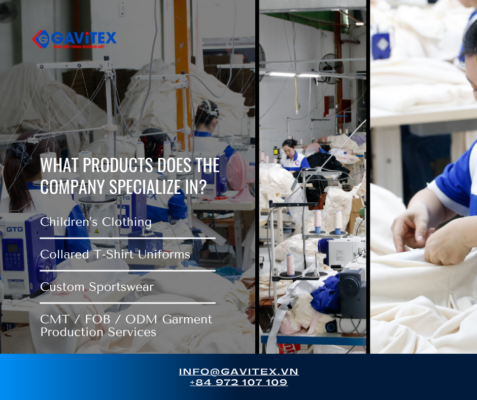
flexibility and low minimums, ideal for a fast‑moving clothing manufacturer for startups
and digital‑first labels testing new concepts. For more established retailers, the emphasis may be on capacity guarantees, multi‑season cost stability
and dedicated clothing production lines that can deliver repeat orders quickly.
In every case, the goal is the same: design a framework that protects both sides, supports long‑term cooperation and keeps your
private label apparel collections competitive on quality, price and delivery.
2. Clothing manufacturing agreements vs informal purchase orders
Many brands start their journey with simple purchase orders. They send a tech pack, ask three factories for prices,
and pick the option that looks best for that specific style. This approach may work for very small volumes, but when collections
grow, it quickly reveals its limits. Comparing this model with structured clothing manufacturing agreements makes the difference clear.
2.1 Informal ordering model: quick but fragile
With ad‑hoc orders, brands maintain a loose relationship with their suppliers. Each order is negotiated as a separate deal,
often based purely on price per piece. There is rarely a commitment from the factory to keep capacity open for future collections,
and brands may shift from one supplier to another depending on seasonal needs.
This flexibility comes at a cost. Informal orders can lead to unstable quality and changing lead times. Factories may prioritize
clients who offer more predictable volumes or formal clothing manufacturing agreements. As a result, brands relying only on
spot orders can face production delays exactly when they need product most.
2.2 Structured clothing manufacturing agreements: stable and scalable
In contrast, brands that sign structured clothing manufacturing agreements with Gavitex build a deeper partnership.
Instead of negotiating every detail from zero, both sides follow a framework that covers yearly forecasts, indicative styles, pricing rules
and sample approval flows. This allows Gavitex to dedicate lines, train supervisors on your brand’s requirements and fine‑tune
custom clothing production methods to your exact fits.
For example, if your label plans to expand into sportswear, the agreement can define how performance fabrics are sourced and how
moisture‑wicking materials are handled on the line. That level of planning is rarely possible with one‑off orders from a general
OEM clothing manufacturer.
2.3 Which model is right for you?
Very small capsule collections might still start with informal POs. But once you plan recurring drops, multi‑market launches or
complex size runs, structured clothing manufacturing agreements almost always create better outcomes. They reduce hidden
costs such as rush freight, rework and last‑minute sampling, and they preserve your team’s time and energy.
Gavitex often helps brands transition from a loose sourcing model to a professional framework. That can start with a limited‑scope
agreement on a single product category and grow into a wider partnership as performance and trust build over time.
3. Gavitex production capabilities under clothing manufacturing agreements
Strong clothing manufacturing agreements are only valuable when the factory behind them can truly deliver.
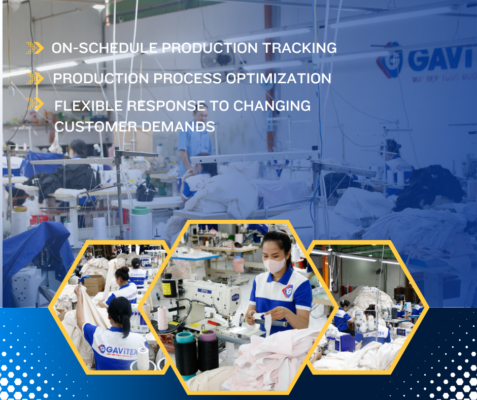
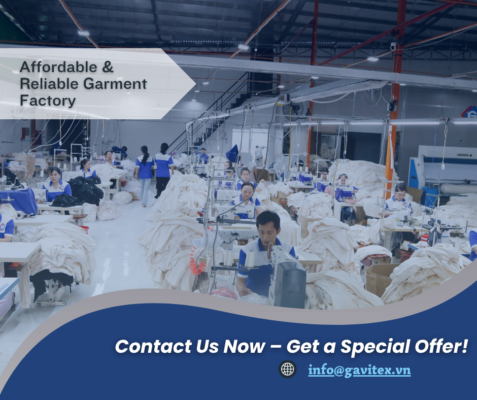
Gavitex combines modern machinery, skilled technicians and disciplined processes to turn written commitments into real‑world performance.
3.1 Modern clothing production lines and technology
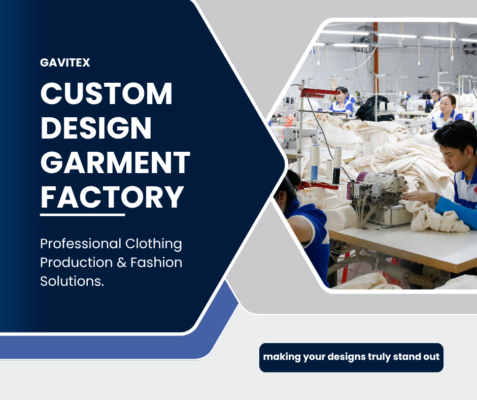
Gavitex operates streamlined clothing production lines designed for flexibility. Layouts can be adapted for
jersey basics one season and more complex outerwear the next. Depending on the agreement, Gavitex can configure lines for:
- High‑volume basics such as T‑shirts and polos with efficient garment manufacturing takt times.
- Fashion‑forward private label apparel that requires more manual work and detailed finishing.
- Technical custom clothing production like sportswear, uniforms or workwear with special seams and reinforcements.
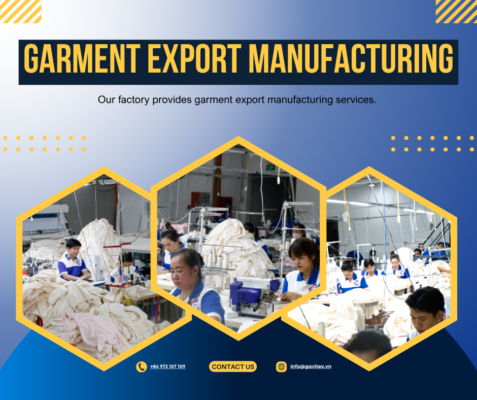
The factory invests in modern sewing equipment, fabric spreaders, computerized cutting and quality checkpoints that match the
complexity of your brand’s collections. When capacity for your line is reserved through clothing manufacturing agreements,
these investments are more efficient and consistent.
3.2 Skilled teams and process control
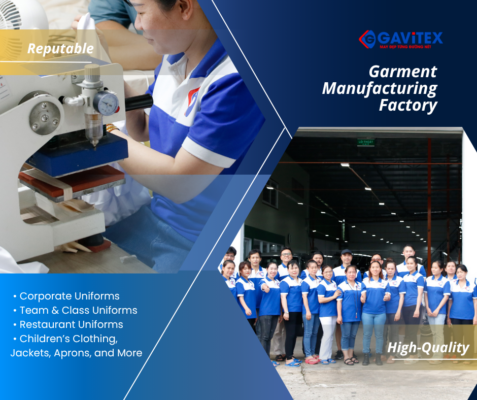
Gavitex brings structure to day‑to‑day production. Line leaders, industrial engineers and quality controllers all work within the
framework defined by each brand’s clothing manufacturing agreements. This includes:
- Standard operating procedures tailored to your signature fits and finishing details.
- In‑line QC and end‑line inspection plans aligned with your AQL and defect categories.
- Clear escalation paths when style‑related issues are detected during garment manufacturing.
Because the same brand returns season after season, Gavitex can build deep product knowledge. Sewing operators become familiar with
recurring styles, which reduces learning curves, speeds up changeovers and keeps quality consistent even during capacity peaks.
3.3 Flexible capacity for brands of different sizes
Whether you are a growing online label or a traditional retail chain, Gavitex can adapt. For emerging brands,
clothing manufacturing agreements can focus on realistic minimum order quantities, clear pricing tiers and support from
pattern‑making to packing. For larger programs, agreements may secure dedicated lines and priority access during busy months.
Through its network of partners specialized in garment manufacturing in Vietnam, Gavitex can also coordinate
supporting services such as printing, embroidery and packaging. The result is a full production ecosystem that feels like an extension of your own team.
When this operational capability is combined with transparent clothing manufacturing agreements, brands gain a dependable engine
to launch new categories, expand into new markets and maintain consistent quality year after year.
4. Legal structure and brand protection within clothing manufacturing agreements
Trust is essential in any manufacturing relationship. Well‑written clothing manufacturing agreements
protect both commercial interests and the intellectual property behind your collections.
4.1 Key legal components
A robust agreement with Gavitex normally covers far more than price and lead time. To protect your brand, it should address:
- Clear responsibilities – which obligations sit with the brand (for example, providing accurate tech packs) and which are carried by the factory.
- Warranty and claims – how quality issues are identified, documented and resolved, including rework, discounts or replacements.
- Compliance and standards – commitments to follow labor, safety and environmental regulations in the countries of production.
- Termination and exit – what happens if either party needs to end the agreement, and how existing orders are handled.
These clauses, combined with commercially sound clothing manufacturing agreements, reduce uncertainty and show that both sides
are serious about cooperation.
4.2 Non‑disclosure and confidentiality
For many labels, the biggest concerns are style confidentiality and protection of future strategy. Gavitex can work under
non‑disclosure agreements that sit alongside your main clothing manufacturing agreements. These NDAs typically cover:
- Protection of sketches, tech packs, grading rules and construction details.
- Restrictions on sharing your brand’s name, images or samples without consent.
- Secure handling and storage of finished garments, fabric and trims.
With confidentiality in place, you can confidently share long‑term product roadmaps and collaborate on new
custom clothing production concepts without worrying about leaks to competitors.
4.3 Brand integrity and market protection
Another aspect of legal protection is how your brand appears in the market. Clothing manufacturing agreements can include
clauses that prevent unauthorized sales of over‑runs, seconds or cancelled orders. For example, you may require that surplus
stock is either destroyed, de‑branded or offered back to you first.
Gavitex also understands the importance of label compliance. From country of origin and fiber composition to care instructions,
your private label apparel must respect the regulations of each target market. Agreements can specify labeling requirements
and responsibilities for keeping information up to date as regulations evolve.
Combined, these legal tools turn clothing manufacturing agreements into a powerful shield for your creative work and brand identity,
while still allowing flexible, collaborative development with your manufacturing partner.
5. Five reasons brands choose Gavitex for clothing manufacturing agreements
Many factories can sew garments. Fewer can build reliable, transparent partnerships based on clear
clothing manufacturing agreements. Here are five reasons international brands choose Gavitex.
5.1 Structured yet flexible process
Gavitex offers a structured onboarding process: product review, sample development, cost breakdown, pilot run and then full
clothing manufacturing agreements. Within this structure there is room for flexibility — test capsules, staggered deliveries
and evolving styles are all possible once the foundation is clear. This balance is ideal for modern brands that need both discipline
and speed.
5.2 Transparent costing and cost optimization
Instead of mysterious “all‑in” prices, Gavitex breaks costs into understandable components: fabric, trims, CM, printing, packing,
logistics support and so on. Agreements can include annual cost review cycles and efficiency targets on the
clothing production lines. When productivity improves, brands benefit through more competitive prices — a win‑win that is only
possible when clothing manufacturing agreements define how savings are shared.
5.3 Consistent quality and technical support
Quality is not an accident. Gavitex uses technical pattern‑makers, sample rooms and experienced quality teams to support
custom clothing production. Once a style is approved, the related documentation is locked in and becomes part of your
master library under the agreement. This ensures consistency across re‑orders, new colorways and future seasons.
5.4 Reliable lead times and delivery performance
Late deliveries cost far more than expedited freight. With clear clothing manufacturing agreements, Gavitex and the brand
can plan fabric booking, line loading and shipping windows well in advance. Capacity planning tools and realistic critical paths
mean that lead times are not just promises, but achievable commitments.
5.5 Partnership mindset for growth
Finally, Gavitex approaches each client as a long‑term partner, not a one‑time project. The team is proactive in suggesting improvements,
whether that means adjusting fits for better yield, introducing new fabric options, or proposing changes in
garment manufacturing methods to reduce cost without compromising quality. This mindset is reflected in the way
clothing manufacturing agreements are written: they are living frameworks that can evolve as both business and collections grow.
6. Market insights: adoption of clothing manufacturing agreements
As global supply chains become more complex, more brands are moving from transactional sourcing to structured
clothing manufacturing agreements. While exact percentages vary by region and product category, the overall trend is clear:
serious fashion businesses rely increasingly on clearly defined partnerships.
The simplified chart below illustrates how different groups of brands work with factories, based on typical industry observations.
It compares brands primarily using formal clothing manufacturing agreements, those mixing agreements with ad‑hoc orders and
those relying almost entirely on informal purchasing.
6.1 Illustrative adoption chart
Share using structured clothing manufacturing agreements
Mix of agreements and spot orders
Gradual shift toward formal agreements
Mostly informal purchase orders
Values shown are illustrative to visualize how companies increasingly prefer structured clothing manufacturing agreements.
As more brands move into omnichannel retail and cross‑border e‑commerce, the need for professional partners like Gavitex grows.
Well‑designed clothing manufacturing agreements are one of the most effective ways to manage that complexity while protecting margins.
7. Indicative pricing for clothing manufacturing agreements at Gavitex
To help sourcing teams benchmark, the table below shows indicative CM (cut‑make) price ranges that are typically
35–45% below many Western market manufacturing levels, depending on product type and complexity.
Actual prices within clothing manufacturing agreements will depend on fabric, trims, print techniques, volumes and delivery terms.
However, this overview demonstrates how a Vietnam‑based partner like Gavitex can help brands remain competitive while maintaining quality.
7.1 Example CM price ranges (per piece, ex‑factory)
| Product category | Typical market CM range (USD) | Gavitex indicative CM range (USD) | Approx. saving |
|---|---|---|---|
| Basic T‑shirts & polos | 1.60 – 2.20 | 0.95 – 1.35 | ≈ 40–45% lower |
| Casual shirts & blouses | 2.80 – 3.60 | 1.80 – 2.20 | ≈ 35–40% lower |
| Hoodies & sweatshirts | 3.50 – 4.50 | 2.10 – 2.80 | ≈ 35–40% lower |
| Lightweight jackets | 4.80 – 6.00 | 2.90 – 3.70 | ≈ 35–40% lower |
| Sportswear / leggings | 2.80 – 3.80 | 1.70 – 2.30 | ≈ 40–45% lower |
| Uniforms / workwear sets | 6.00 – 8.50 | 3.60 – 5.10 | ≈ 35–40% lower |
Figures are indicative and for reference only. Your specific clothing manufacturing agreements with Gavitex will be
tailored to your product mix, volumes and service needs.
By formalizing cooperation under clear clothing manufacturing agreements, brands can lock in competitive pricing, reduce
unexpected surcharges and plan margins with confidence. Long‑term volume commitments also make it easier for Gavitex to offer
better rates than purely transactional sourcing.
8. FAQ about clothing manufacturing agreements with Gavitex
1. What information do I need before signing clothing manufacturing agreements with Gavitex?
To prepare strong clothing manufacturing agreements with Gavitex, it helps to gather a clear picture of your
collection and business strategy. At minimum, you should outline your main product categories, expected annual volumes,
target price points and key markets. Sharing example tech packs, previous POS from other suppliers and any existing quality
manuals gives Gavitex a realistic view of your requirements. If you already have size charts or fitting standards, these
should also be included. From a commercial perspective, it is important to share your preferred Incoterms, payment terms
and typical calendar for sampling and bulk placement. The more transparent you are at this stage, the easier it is to design
clothing manufacturing agreements that protect your interests while remaining practical for the factory to execute.
2. How do clothing manufacturing agreements support private label apparel development?
For brands building private label apparel, having a structured framework is essential.
Clothing manufacturing agreements can define how new styles are developed from concept to bulk production,
including sample rounds, fit approval, grading, wash testing and packaging decisions. With Gavitex, this process can also
cover design input and technical support when needed, especially helpful for smaller labels that do not have large in‑house
technical teams. By capturing this workflow in the agreement, both sides know who is responsible at each step and how long
each stage typically takes. This reduces delays and helps your merchandising team plan launches with more confidence. As your
private label range expands into categories such as sportswear, uniforms or workwear, the same agreements can be extended to
cover those segments, keeping cooperation consistent and manageable.
3. Can Gavitex support small minimums under clothing manufacturing agreements?
Yes, Gavitex can adapt clothing manufacturing agreements to brands at different stages of growth. While large programs
naturally benefit from better economies of scale, smaller labels and online brands can still access professional manufacturing
through flexible structures. For example, the agreement may define higher unit costs at very low MOQs, with automatic price
reductions once volume thresholds are crossed. It can also group similar styles onto the same clothing production lines
so that fabric and trim usage is optimized. The key is to be realistic about what you need now while designing agreements that
leave room to grow. Gavitex will help you balance variety, complexity and volume in a way that works for your budget and long‑term plans.
4. How are delays or quality issues handled within clothing manufacturing agreements?
One of the main advantages of formal clothing manufacturing agreements is that they define in advance how to handle
problems if they occur. Agreements with Gavitex typically include clear milestones for sample approval, material readiness,
in‑line inspection and final audits. If a delay happens, there is already a process for root‑cause analysis, corrective
actions and re‑planning shipments. Similarly, if quality issues arise, the agreement can describe how defects are measured,
what thresholds trigger rework or discounts, and how preventive measures are implemented for future production. Instead of
emotional negotiations on a shipment‑by‑shipment basis, both parties refer to the framework they have already accepted,
which saves time and protects the relationship.
5. How do clothing manufacturing agreements relate to long‑term sustainability goals?
Many brands now see sustainability as central to their identity, not an afterthought.
Structured clothing manufacturing agreements offer a practical way to embed these values into day‑to‑day production.
Together with Gavitex, you can define preferred fabric types, limits on certain finishes, recycling or reuse policies for
packaging and expectations around energy and water usage. The agreement can also include traceability requirements, for
example documenting fabric sources or keeping batch records for critical components. Once these parameters are written into
the framework, it becomes easier to track progress, report to stakeholders and involve your customers in the story behind
your products. As regulations and market expectations evolve, these elements of the agreement can be updated without
rebuilding the entire cooperation from zero.
9. Contact Gavitex – turn your next collection into a clear agreement
If you are ready to move beyond unpredictable sourcing and build a reliable partnership,
clearly written clothing manufacturing agreements with Gavitex are a powerful next step.
Whether you manage a growing online brand, a regional retail chain or a global label, Gavitex can help you design a model that fits
your product mix, risk profile and growth plans.
From modern clothing production lines in Vietnam to technical pattern‑making and quality control, the Gavitex team is ready to support
your journey. Share your tech packs, forecast and target prices, and together you can build a roadmap for sustainable, profitable
garment manufacturing.
For direct consultation and a tailored quotation, call 0972107109 or use the quick call button below:
Call for consultation & Get a quick quote
Together with Gavitex, your collections can move from idea to market through clear, dependable
clothing manufacturing agreements that support your brand for years to come.