

Seamless Underwear Manufacturing Process for Private Label Brands
Seamless underwear is knitted largely in one piece on circular machines, giving smooth, invisible comfort [...]
Aug
French Terry vs Fleece for Hoodie Manufacturing
French terry and fleece are the two fabrics most hoodies are made from, and the [...]
Aug
Sports Bra Manufacturing Checklist: Support, Fabric, and Construction
A sports bra must deliver real support, comfort and moisture management across a wide range [...]
Aug
Vietnam Export-Quality Garment Factory: Sourcing High-Quality, Ethical Apparel From Vietnam
Gavitex supports export-quality garment manufacturing in Vietnam for international apparel brands, covering sampling, fabric coordination, [...]
Feb
Vietnam Garment Production Factories: Sourcing, Manufacturers, Ethical Apparel & Compliance Guide
Gavitex provides garment production support in Vietnam for international apparel brands, covering sampling, fabric sourcing, [...]
Feb
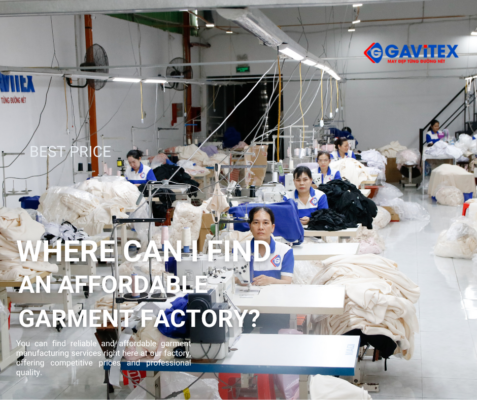
Vietnam Clothing Manufacturing For Export: Sourcing, Quality, And Sustainable Apparel
Unlocking the potential of Vietnam clothing manufacturing for export is critical for businesses seeking cost-effective [...]
Feb
Largest Garment Factory In Vietnam: Top Producer, Capacity, And Workforce Insights
The quest to pinpoint the largest garment factory in Vietnam is crucial for businesses seeking [...]
Feb
Garment Factories In Vietnam: Sourcing, Manufacturers, & Ethical Apparel Production
Understanding the landscape of garment factories in Vietnam is crucial for businesses seeking efficient and [...]
Feb
Inside the CMT manufacturing process: how Gavitex changed my production
For years I bounced between factories, chasing price lists and minimum order quantities, but I never really understood what was happening on the sewing lines. Everything changed when I travelled to Vietnam and walked through Gavitex for the first time. Instead of random chaos, I saw a clear, engineered CMT manufacturing process with disciplined checkpoints from sample to shipment. Quality reports were on the walls, operators knew their targets, and supervisors talked about efficiency like seasoned engineers. In this article, I want to unpack that experience and guide you through how a well–designed CMT manufacturing process can transform your sourcing strategy.
☰ Table of contents
- My journey to a structured CMT manufacturing process
- Core features and value of the CMT manufacturing process
- Comparing the CMT manufacturing process with OEM full package
- Gavitex capabilities and production systems
- Legal frameworks and brand protection
- Five reasons to trust Gavitex with your CMT manufacturing process
- FAQ about the CMT manufacturing process
- Get a quote & contact Gavitex
My story: discovering a disciplined CMT manufacturing process at Gavitex
From scattered suppliers to one reliable hub
At first, my brand outsourced production wherever we could find capacity. Each factory claimed to have a robust CMT manufacturing process, but reality looked different. Tech packs were misinterpreted, samples came back inconsistent, and clothing production lines would be reconfigured at the last minute without telling us. We spent endless nights recalculating delivery windows and explaining the same issues again and again. I knew that if we wanted to scale, we needed more than machines and cheap labour – we needed partners that understood structured garment manufacturing and long–term collaboration.
First visit to Vietnam and the Gavitex floor
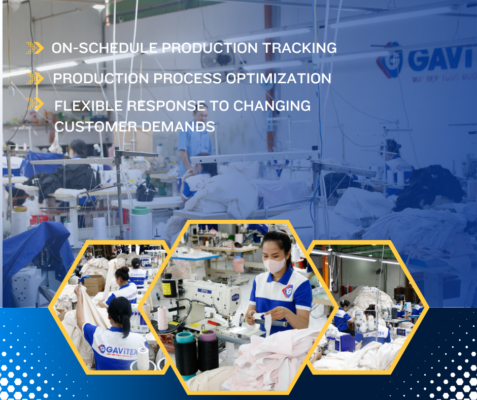
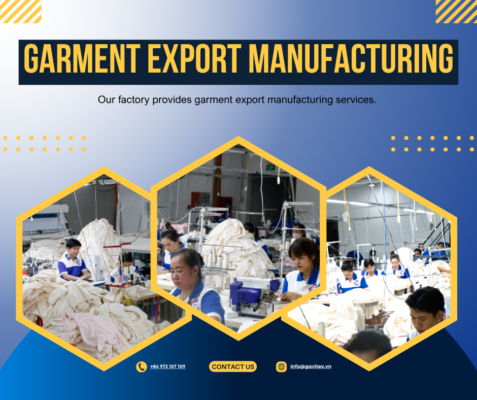
When I walked into Gavitex, the atmosphere was completely different. The supervisors described each step of the CMT manufacturing process with calm confidence: pattern validation, grading, marker optimisation, cutting, bundle management, inline checks and final audits. On every line, takt times and efficiency charts were visible. The team openly compared their methods to other CMT garment suppliers in Vietnam, explaining how they had improved productivity and consistency over the years. It was clear I was not talking to a random vendor but to a partner with a deep grasp of industrial garment manufacturing.
From trial capsules to full–scale production
We started cautiously with a trial capsule. The Gavitex team walked us through their CMT manufacturing process for each style: how many operators would handle the neckline, what operation bundle sizes would be, how they would control shrinkage, and when pre–production meetings would take place. Every promise was documented; every risk had a mitigation plan. When the goods landed in our warehouse, internal QA barely found anything to comment on. The experience convinced me that a disciplined CMT manufacturing process is not just a technical concept; it is a competitive advantage that saves time, reduces stress and protects brand reputation.
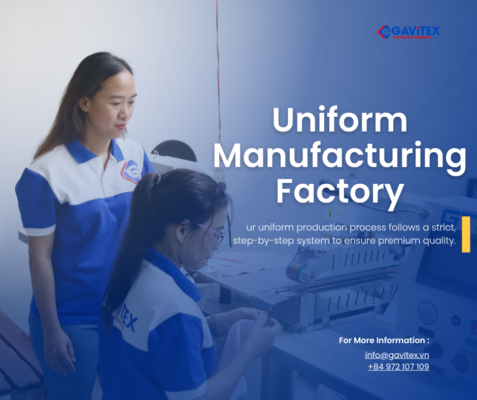
Core characteristics and value of the CMT manufacturing process
Clear division of responsibilities and cost transparency
At its heart, the CMT manufacturing process is built on a simple division of roles. The brand owns fabrics and trims, while the factory provides labour, technology and process control. This separation makes costs transparent. Instead of a single opaque price, you can see exactly how processing, materials and logistics contribute to the final garment. Gavitex leverages this structure to create detailed, operation–level costing for each style. They break down time per step on their clothing production lines and then benchmark it against other programs. That clarity enables better negotiations and smarter design decisions, especially for brands scaling their custom clothing production.
Engineered garment manufacturing rather than improvisation
In a mature CMT manufacturing process, nothing is left to improvisation. Gavitex starts by analysing tech packs and, when necessary, suggesting improvements that protect fit and production efficiency. Industrial engineers build operation bulletins for each style, assigning workstation layouts, machine types, and helper positions. These bulletins are then used to set up clothing production lines with balanced workloads. This approach turns garment manufacturing into a repeatable system rather than a high–risk experiment. For brands, that means stable quality, predictable lead times, and less firefighting when launching new seasons.
Flexibility for private label apparel and omnichannel brands
A well–structured CMT manufacturing process also brings flexibility. Because processing is separated from fabric buying, brands can negotiate materials centrally across programs and then direct them to different factories as needed. Gavitex uses modular production cells that can be tuned for basics or more complex private label apparel styles. This flexibility is crucial for omnichannel retailers and direct–to–consumer labels that launch frequent drops and micro–collections. Instead of forcing every design into a rigid scheme, the factory adjusts line configurations while keeping the fundamentals of garment manufacturing – quality checks, work instructions, operator training – consistent across the floor.
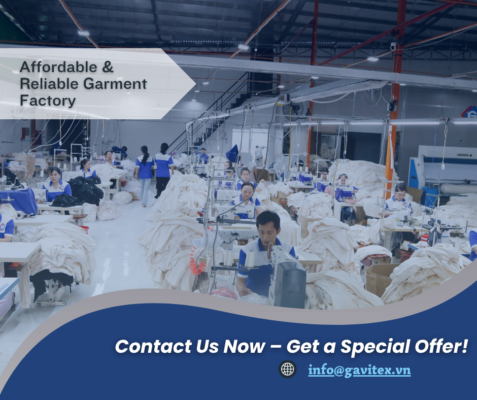
Comparing the CMT manufacturing process with full–package OEM models
Different cost structures and sourcing control
In a full–package model, an OEM clothing manufacturer buys the fabric, manages trims, and charges a single price for finished goods. This can be convenient, but it blurs the real drivers of cost. By contrast, the CMT manufacturing process separates processing from materials. You might negotiate directly with mills for fabrics while relying on factories like Gavitex to turn those inputs into garments. This split lets experienced buyers manage fabric libraries, consolidate yardage and optimise shipping, all while keeping the labour side competitive. For brands with a clear sourcing strategy, the CMT manufacturing process offers far more control.
Risk distribution and visibility of garment manufacturing
With an OEM clothing manufacturer, material risk sits largely with the factory. That may sound attractive but often reduces transparency in fabric selection and quality decisions. In the CMT manufacturing process, the brand owns the fabric and can decide how to allocate it between programs or vendors. Gavitex supports this by integrating rigorous fabric inspection into their garment manufacturing procedures. Shade bands, lab tests and width checks are carefully recorded before cutting. The result is a balanced model where risk and visibility are shared in a structured way, rather than being hidden behind a single unit price.
When each model makes sense – and how to combine them
In practice, advanced brands rarely choose one model exclusively. Complex outerwear or highly technical sportswear might stay with a full–package provider, while core knits, casual bottoms and many basics run through a structured CMT manufacturing process. Gavitex helps brands design this mix. They take a wide view of your sourcing map, advising when to use their capacity, when to rely on other CMT garment suppliers, and when to retain full–package options. Over time, this balanced approach supports resilient garment manufacturing networks that can absorb demand shifts, price shocks and new market opportunities.
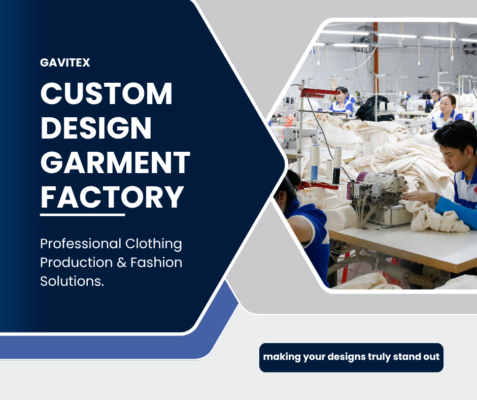
Gavitex capabilities built around a robust CMT manufacturing process
Segmented clothing production lines for different ranges
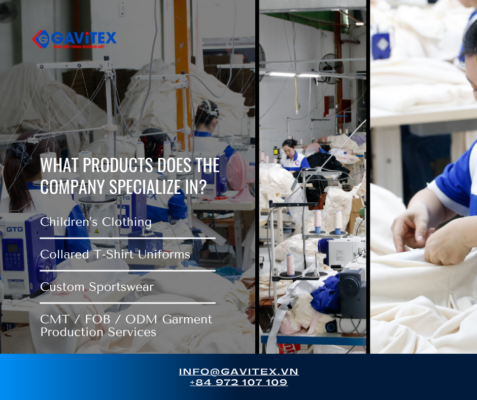
Gavitex structures their factory around product families. Lightweight T–shirts, fleece, woven shirts and performance wear all follow a tailored CMT manufacturing process. Lines are designed with specific operation layouts to match each range. For basics, the focus is on high–efficiency clothing production lines that repeat stable operations every season. For fashion–forward ranges, lines are more flexible, allowing quick changes while keeping critical garment manufacturing controls in place. This segmentation avoids the chaos of mixed lines and gives buyers predictable lead times across very different collections.
Technology, planning and performance monitoring
The Gavitex CMT manufacturing process is supported by smart technology rather than flashy gadgets. CAD systems create efficient markers, planning tools align daily output with shipment windows, and digital dashboards display target vs. actual efficiency. Supervisors walk the floor with clear data, not just intuition. This makes it possible to adjust staffing, break times or feeding sequences based on real performance. For brands relying on their garment manufacturing capacity, this disciplined monitoring means fewer surprises and more stable delivery performance, even during peak seasons.
Project management for global custom clothing production
One of the strongest aspects of Gavitex is how they manage projects. Each program in the CMT manufacturing process is assigned to a merchandiser and a technical contact who coordinate everything from sampling through production to final inspection. They manage lab dips, fit comments, and carton specs in close collaboration with your team. This structure is especially valuable for custom clothing production where details shift during development. Instead of losing information between departments, Gavitex maintains a single narrative for each style, ensuring smooth garment manufacturing from first prototype to replenishment orders.
Legal certainty and brand protection within the CMT manufacturing process
Contracts that define standards and expectations
In international business, a strong relationship needs a strong legal framework. At Gavitex, the CMT manufacturing process is always supported by clear contracts that describe quality levels, testing requirements, inspection methods, and tolerance limits. These agreements set transparent expectations for both sides. Buyers know how their garment manufacturing performance will be measured, while the factory understands exactly what constitutes acceptable quality and on–time delivery. This clarity reduces disputes and turns discussions about claims or improvements into constructive conversations rather than emotional arguments.
Non–disclosure, secure sampling and IP protection
Many brands fear that their designs might be copied or leaked when they share detailed specs with factories. Gavitex tackles that concern head–on. Non–disclosure agreements and strict internal policies govern how samples, technical drawings and digital files are handled at every step of the CMT manufacturing process. Access to sensitive private label apparel programs is restricted to key staff, and samples are stored and transported according to defined procedures. This gives brands the confidence to share innovative concepts early, accelerating garment manufacturing development without compromising intellectual property.
Compliance and local support from Vietnam sourcing partners
Alongside contracts and NDAs, compliance with buyer standards and local regulations is essential. Gavitex keeps comprehensive records for each step of the CMT manufacturing process, from fabric certificates and test reports to inspection logs. When brands need support on specific market regulations or logistics, Gavitex cooperates with experienced local experts such as Vietnam sourcing partners. This integrated support structure ensures that garment manufacturing not only meets fashion expectations but also satisfies the documentation demands of major retailers and international authorities.
Five reasons to choose Gavitex for your CMT manufacturing process
1. Strategic understanding of brands and markets
Many factories talk about capacity; Gavitex talks about positioning. Before they touch a single pattern piece, they ask where your brand sits in the market, what your price ladders look like, how your channels are structured and how quickly you plan to grow. This strategic mindset shapes the way they design your CMT manufacturing process. A label aimed at premium boutiques needs different construction details and flexibility than a mass–market program built for huge runs. Because Gavitex understands this, they build garment manufacturing solutions that fit your long–term plan rather than just one season.
2. Balanced triangle of cost, quality and lead time
In sourcing, every decision affects cost, quality and speed. Gavitex has built its CMT manufacturing process to keep these three dimensions in balance. Efficient clothing production lines and carefully trained operators keep processing costs low – often 35–45% lower than comparable operations in higher–cost regions when you compare similar products. At the same time, layered quality controls and robust planning protect the integrity of garment manufacturing and delivery dates. Rather than promising everything and struggling later, Gavitex commits to realistic targets and delivers against them consistently.
3–5. Scalability, innovation support and partnership culture
Third, Gavitex scales smoothly when your demand grows. As styles become bestsellers, they can add extra lines or shifts without diluting the discipline of the CMT manufacturing process. Fourth, they support innovation: their engineers and technicians suggest improvements in construction that simplify garment manufacturing while preserving the look and feel of your designs. Finally, the partnership culture is genuine. Instead of treating every negotiation as a fight over pennies, Gavitex behaves like an extension of your sourcing team. Challenges are analysed transparently, solutions are agreed jointly, and mutual trust grows with each season.
- Strategic input on category and market positioning.
- Competitive processing rates from efficient garment manufacturing.
- Scalable capacity across multiple clothing production lines.
- Technical support for custom clothing production and new designs.
- Collaborative mindset focused on long–term growth.
FAQ – practical questions about the CMT manufacturing process
Below are some of the questions I hear most often from sourcing teams, entrepreneurs and designers who are exploring how to integrate a structured CMT manufacturing process into their supply chains with partners like Gavitex.
1. What information do I need before starting the CMT manufacturing process with Gavitex?
To launch a smooth CMT manufacturing process, you should prepare a complete package of style information. This includes detailed tech packs with measurements, graded size charts, construction notes, fabric specifications, trims list, and packaging instructions. If you already work with nominated mills, share their contacts and lead times so planning can align garment manufacturing capacity with fabric availability. For each style, indicate target quantities, delivery windows and any retail compliance requirements. Gavitex then uses this data to build operation bulletins, configure clothing production lines and estimate realistic processing rates. Even if some details change later, providing a clear starting point reduces misunderstandings, shortens development cycles and allows the factory to highlight potential risks before production begins.
2. How does Gavitex control quality during the CMT manufacturing process?
Gavitex treats quality as an integral part of the CMT manufacturing process, not as a final inspection step. First, fabrics are checked for shade, width, defects and key physical properties. Next, cutting teams follow strict spreading rules to avoid distortion and ensure accurate markers. On the sewing floor, inline inspectors monitor critical seams and construction points according to clear criteria defined during pre–production meetings. Non–conformities are recorded and analysed to prevent repetition rather than just repair defects. At the end, finished garments go through measurement checks and visual audits based on agreed AQL levels. This layered approach keeps garment manufacturing stable and gives brands confidence that problems will be detected early, when they are still easy to correct.
3. Is the CMT manufacturing process suitable for private label apparel and smaller brands?
Yes, the CMT manufacturing process can be an excellent choice for private label apparel and fast–growing smaller brands, as long as expectations around minimum order quantities are aligned. Because you own the fabric and trims, you maintain control over core components of your product while leveraging Gavitex’s structured garment manufacturing capacity. This allows you to build consistent quality across different collections and seasons. At the same time, modular clothing production lines make it possible to handle a mix of larger replenishment orders and smaller, more experimental capsules. For young labels, this combination provides an industrial backbone without forcing them into oversized orders or inflexible long–term commitments.
4. How long does it take to move a style into a stable CMT manufacturing process?
The time required to stabilise a style within the CMT manufacturing process depends on complexity, fabric behaviour and the quality of initial tech packs. For simple T–shirts or basic bottoms, the sequence from first prototype to bulk production can be surprisingly quick once patterns and measurements are confirmed. More complex garments, such as multi–panel sportswear or heavily detailed shirts, need additional fit reviews and sometimes small design adjustments to match industrial realities. Gavitex typically proposes a structured timeline that includes sample stages, pre–production meetings and trial runs on the line. By treating this timeline as a joint project, both the brand and the factory can fine–tune garment manufacturing so that later repeats run smoothly with minimal further tweaks.
5. Why choose Vietnam and Gavitex for my CMT manufacturing process instead of other regions?
Vietnam combines competitive labour costs with a highly skilled workforce and strong infrastructure, making it a natural home for the CMT manufacturing process. Ports, roads and supporting industries work together to keep lead times predictable. Within this context, Gavitex offers a particularly strong proposition. They blend disciplined garment manufacturing methods, transparent communication and an authentic partnership culture, supported by local experts such as specialised sourcing partners in Vietnam. For brands seeking long–term stability rather than short–term bargains, this combination of technical depth, clear processes and reliable capacity makes Gavitex a compelling anchor for their regional sourcing and global custom clothing production plans.
Start your next season with a reliable CMT manufacturing process
From first sketch to loaded container
Looking back at my own experience, shifting key programs to Gavitex was one of the best sourcing decisions I have made. Instead of piecing together capacity from multiple factories, I now rely on a single partner with a clear, data–driven CMT manufacturing process. Their engineers, merchandisers and quality teams work as one unit, turning my designs into well–made garments that arrive on time and match our brand promise. For any label that wants to build a strong foundation for international growth, a disciplined approach to garment manufacturing is not optional – it is essential.
Talk to Gavitex about your CMT manufacturing process
If you are reviewing your sourcing strategy or planning to move more production to Vietnam, now is the perfect moment to discuss your next collections with Gavitex. Share a few representative styles, target prices and volumes, and let their team propose a tailored CMT manufacturing process for your needs. You can explore their role among leading CMT garment suppliers in Vietnam and read more about their structured approach to designing the CMT manufacturing process. When you are ready, the team is just a phone call away and prepared to turn your sketches into a reliable production pipeline.
Call for consultation & Get a quick quote
Hotline: 0972107109