Mastering economy of scale clothing production with a trusted partner in Vietnam
As orders grow, brands quickly discover that real profit comes from mastering economy of scale clothing production rather than chasing the lowest unit price. In Vietnam, Gavitex helps apparel labels, retailers and private label apparel programs turn volume into a strategic advantage by aligning garment manufacturing, fabrics and logistics under a single, transparent system.
Hotline: 0972107109
What Economy of Scale Clothing Production Really Means
In apparel, economy of scale clothing production describes how unit costs fall when brands funnel enough orders through well-organised factories. It is not only about booking big volumes; it is about repeating successful styles, planning fabrics intelligently, setting up efficient clothing production lines and trusting an OEM clothing manufacturer that understands long-term brand strategy. When these elements come together, the same factory hours produce more saleable products at lower overall cost.
From scattered orders to structured volume
Many growing labels start with scattered orders: a few hundred pieces per style, split across several suppliers. This may feel flexible, but it often leads to duplicated development work, inconsistent quality and weak leverage on price. By contrast, economy of scale clothing production encourages brands to concentrate compatible styles, fabrics and colours with a smaller number of reliable partners like Gavitex. As repeats accumulate, the cost of development and sampling is spread across larger volumes, while operators on the sewing floor become faster and more accurate with each run.
How scale interacts with garment manufacturing
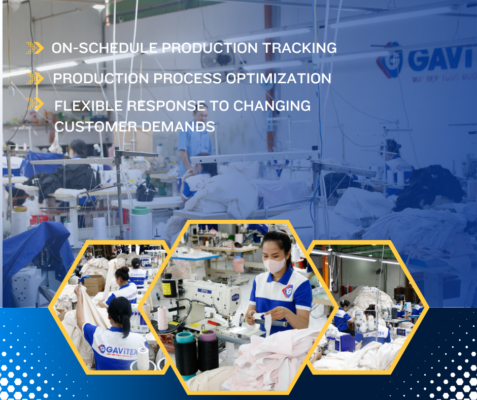
In modern garment manufacturing, every minute counts. Patterns, markers, cutting, stitching, finishing and packing are more efficient when lines run similar products for a sustained period. With economy of scale clothing production, Gavitex can dedicate specific clothing production lines to your core blocks and bestsellers. Machine settings, work instructions and quality checkpoints are optimised once and then reused. This reduces changeover time and learning curves, so more of the working day is spent producing good pieces instead of adjusting.
Linking scale with fabric and supplier strategy
Scale does not only show up in the sewing room. When fabric and trim orders are planned across seasons, mills and accessory suppliers also benefit from stable demand. Gavitex coordinates with these partners so that your custom clothing production benefits from volume agreements on yarns, fabrics and prints. Combined with structured planning, this approach turns economy of scale clothing production into better lead times, more predictable quality and lower waste across the entire chain.
Features and Business Value of Economy of Scale Clothing Production
Lower unit cost without compromising quality
The obvious benefit of economy of scale clothing production is lower unit cost. Fixed overheads such as management, sampling and equipment amortisation are spread across more pieces, while variable costs improve through better negotiation and higher efficiency. At the same time, consistent volume with Gavitex allows us to invest in training and tools that raise overall quality. Instead of pushing prices down by cutting corners, you are reducing cost by making the system itself smarter.
Stronger product consistency and brand image
When the same styles run repeatedly through the same facility, small details can be refined each season. Fit, stitching density, wash effects and packaging gradually align with your brand standards. Customers notice that your garments feel reliable, whether they buy online or in stores. For private label apparel programs, this consistent execution is critical. Economy of scale clothing production creates the conditions for stable quality by limiting variation in process and supplier.
Better planning, fewer last-minute surprises
Scale also improves planning. If core T-shirts, hoodies or uniforms are regularly produced at Gavitex, we can anticipate seasonal peaks, book capacity earlier and coordinate material arrivals. This reduces the risk of suddenly discovering that a mill is fully booked or a factory line is unavailable. For brands managing multiple drops, economy of scale clothing production with a trusted partner in Vietnam becomes a stabilising force that reduces scramble and firefighting.
Where Economy of Scale Creates the Biggest Impact
- Core basics and essentials that run every season.
- Uniforms and workwear where stability matters more than constant change.
- Multi-country private label apparel programs with strict guidelines.
- Categories managed by experienced OEM clothing manufacturer partners.
Economy of Scale Clothing Production vs Small-Batch Manufacturing
When small-batch clothing production works
Small-batch or micro-factory models prioritise flexibility. They allow brands to test new ideas with minimal risk, react quickly to trends or offer made-to-order drops. This approach is valuable at the beginning of a journey or in highly experimental segments. However, per-piece costs are higher, planning is more complex and it is difficult to negotiate strong terms with mills and factories based on limited volume. Over-reliance on small batches can trap a growing brand in permanently high costs.
How economy of scale evolves this model
Once designs prove themselves and demand becomes predictable, it is often more effective to shift them into economy of scale clothing production. At this stage, Gavitex can combine your orders into longer runs, set up dedicated clothing production lines and coordinate materials for multiple drops at once. You preserve some flexibility by keeping a portion of the collection in small-batch testing, while letting core items benefit from scale. The result is a portfolio that balances innovation with margin.
Finding the right mix for each brand
Gavitex helps clients map their assortment into segments: experimental, growth and stable. Experimental pieces may remain in lower-volume models; growth items transition gradually to larger programs; stable products move fully into economy of scale clothing production. Linking this framework to your broader strategy, such as
economies of scale in manufacturing, means that purchasing teams, planners and designers are aligned on how to use volume in a deliberate way.
Rather than choosing between small-batch agility and economy of scale clothing production, most successful brands blend both, using Gavitex as the stable base for their high-volume programs.
Gavitex Capacity, Technology and Workflow for Scale
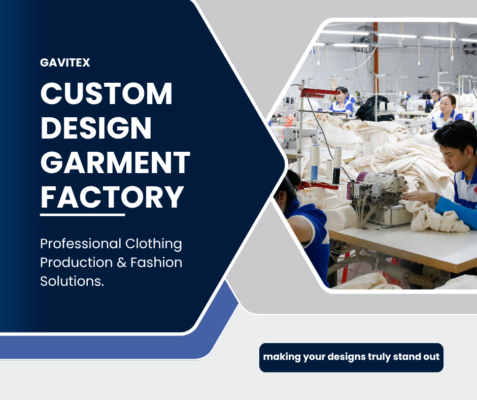
Integrated lines from fabric to finished garment
Gavitex operates as a vertically integrated partner. Through a controlled network, we coordinate knitting, weaving, dyeing, printing and stitching so that economy of scale clothing production is supported at each stage. This integration allows us to see where bottlenecks might appear and fix them before they impact delivery. For clients, it means one partner is responsible for aligning fabrics, garment manufacturing and packing, rather than handling multiple vendors separately.
Clothing production lines configured for repeat styles
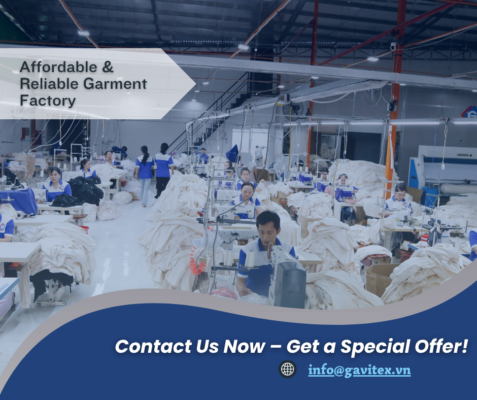
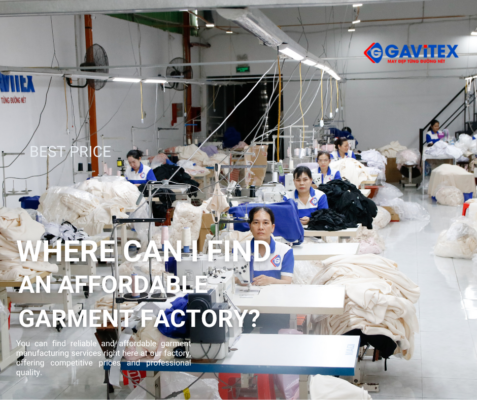
Our clothing production lines are organised to support repeat programs: core T-shirts, polos, hoodies, joggers, uniforms and simple woven pieces. Once a style is proven, workstations, quality checkpoints and line balancing are refined and documented. In subsequent seasons, the same files are reused, allowing operators to reach full efficiency quickly. This is how economy of scale clothing production turns experience into structured savings for brands.
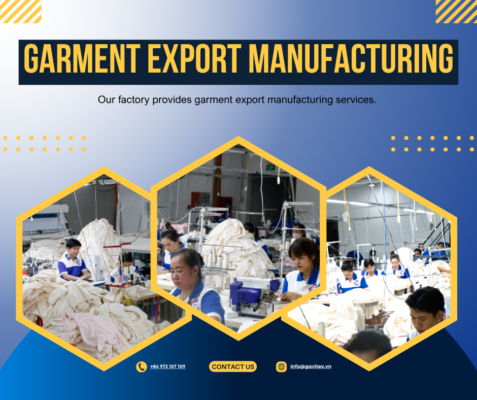
Technology and data for continuous improvement
We track efficiency, defect rates and style-specific metrics, then feed this data into planning sessions with clients. Over time, this collaboration improves how economy of scale clothing production is deployed: some fabrics may shift to different mills, certain operations can be automated, or packing methods can be adjusted to save freight costs. For global brands that require transparent partners, this data-driven approach is as important as unit price.
What You Can Expect from Gavitex
- Clear capacity views for ongoing economy of scale clothing production programs.
- Documented workflow from design handover to final inspection.
- Support for both custom clothing production and large private label ranges.
- A long-term base in Vietnam that grows in step with your volumes.
Contracts, NDAs and Brand Protection at Scale
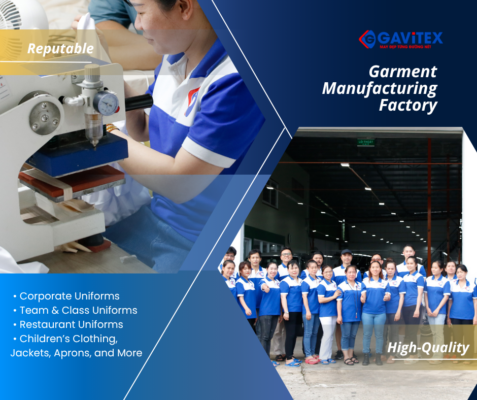
Commercial frameworks for long-term programs
When brands commit to economy of scale clothing production, they need contracts that reflect this longer horizon. Gavitex works with clients to define pricing structures, minimums, forecast visibility and flexibility windows that make sense for both sides. These frameworks recognise that some seasons will exceed expectations and others will fall short, while maintaining a stable base of volume that allows the factory to invest in people and equipment.
Non-disclosure and design confidentiality
As volumes grow, your designs and technical files become more visible across the supply chain. NDAs and confidentiality clauses ensure that patterns, construction details and sourcing strategies remain protected. Within Gavitex, access to your style library and planning data for economy of scale clothing production is limited to staff working directly on your account. We do not repurpose your proprietary elements for other clients or generic marketing without permission.
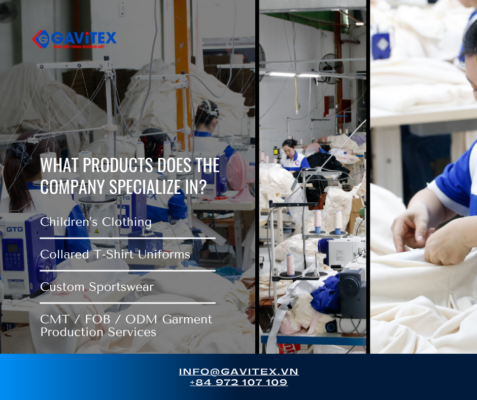
Traceability, testing and risk management
Higher volume magnifies both success and risk. That is why Gavitex maintains records of lot numbers, test reports and inspection findings for major programs. If a question arises about a large batch in the market, we can quickly identify when and where it was produced, what standards applied and which corrective actions are appropriate. This traceability is especially important for private label apparel sold through large retailers, where compliance requirements and consumer expectations are strict.
With the right legal frameworks, NDAs and traceable processes, economy of scale clothing production becomes a safe foundation rather than a source of risk.
5 Reasons to Choose Gavitex for Economy of Scale Clothing Production
1) Strategic guidance, not just factory capacity
Gavitex acts as a partner rather than simply a supplier. We help map your assortment, volumes and channels into a realistic plan for economy of scale clothing production. This includes identifying which styles are ready to shift to larger programs, where fabrics can be consolidated and how to organise garment manufacturing so that core items flow smoothly. This strategic input gives sourcing teams a clear roadmap instead of relying on ad-hoc decisions each season.
2) Robust production lines and skilled operators
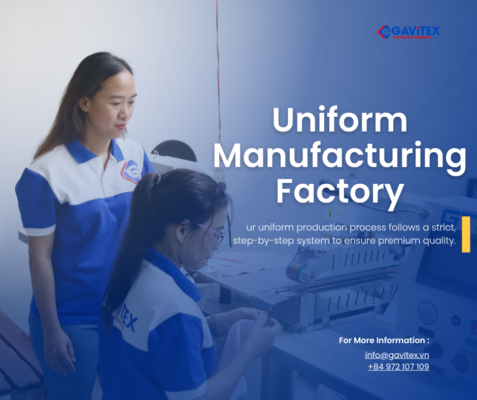
Scale only works when lines are stable. Our trained operators, line leaders and quality controllers know how to handle recurring programs without losing attention to detail. We focus on standard operating procedures and visual aids for key styles, ensuring that economy of scale clothing production does not mean careless repetition but disciplined execution. This matters for brands that want both sharp price points and a premium feel.
3) Cost optimisation across the full value chain
As an experienced OEM clothing manufacturer, Gavitex examines costs at every step: fabric yields, sewing minutes, trims, packing and freight. We look for design tweaks that reduce waste, bundling opportunities in material purchasing and process changes that cut handling time. All of this is anchored in economy of scale clothing production, where the gains from each improvement multiply as volume grows.
4) Communication and transparency for B2B stakeholders
Buyers, planners and brand managers need clear information. Gavitex structures updates around milestones: development status, capacity booking, material readiness, sewing progress and shipment. When discussing economy of scale clothing production, we provide both the big picture and concrete numbers, so you can build solid business cases and present confident updates to your own leadership teams.
5) Long-term learning and continuous improvement
The more seasons we share, the better your cost and quality curves become. Gavitex tracks how each style performs in production and in the market, then uses these insights to refine future collections. Over time, economy of scale clothing production with Gavitex becomes a living system of knowledge, not just a static set of purchase orders.
Call for consultation & Get a quick quote
Frequently Asked Questions about Economy of Scale Clothing Production
Click each question below to reveal detailed explanations of how Gavitex manages
economy of scale clothing production for international apparel clients.
What does economy of scale clothing production mean in everyday practice?
In practice, economy of scale clothing production means concentrating recurring styles, fabrics and colours with a limited number of trusted factories so that unit costs fall without lowering standards. Instead of developing similar garments with many suppliers, you repeat proven blocks at one partner, allowing them to refine patterns, markers and line layouts. Fabric orders are combined, mills offer better terms and operators become faster as they produce the same style more often. At Gavitex, we help brands identify which products are ready for this approach, design capacity plans around them and track results over time. The goal is a system where each new season builds on the previous one, rather than starting from zero.
Will we lose flexibility if we move more volume into economy of scale clothing production?
It is a common concern that shifting to economy of scale clothing production will reduce flexibility, but the reality is more nuanced. Gavitex encourages brands to keep a portion of their range for testing new ideas in smaller batches, while migrating stable styles into scale programs. Core items obtain the benefits of lower cost and consistent quality, whereas experimental designs can still be handled in shorter runs. Because we coordinate both segments, we can share learning between them, ensuring that successful trial products are ready to enter scaled production when demand justifies it. The result is a portfolio that is both agile and cost-effective, instead of choosing one extreme.
How can smaller or mid-size brands benefit from economy of scale clothing production?
Economy of scale clothing production is not reserved only for the largest retailers. Many smaller or mid-size brands have repeating blocks, such as basic tees, sweats, uniforms or seasonal carry-over styles. Gavitex works with these clients to bundle demand across channels and seasons. For example, online and wholesale quantities for the same product can be combined into a single program, and different markets can share common fabrics while varying colours or prints. By treating volume as a coordinated whole, even brands with modest per-style orders can access better terms and more professional garment manufacturing setups than they would achieve with scattered, one-off orders.
How does Gavitex protect our brand identity when consolidating production?
When more of your collection flows through one partner, protecting brand identity becomes even more important. Gavitex uses NDAs, controlled file access and clear labelling of physical samples to keep your patterns, construction methods and styling details confidential. We do not repurpose your designs or specific solutions for other clients, even when we see technical efficiencies that could help them. For large economy of scale clothing production programs, we can also implement dedicated sample rooms or pattern libraries, ensuring that your identity remains distinct while still benefiting from the efficiency of a shared factory environment.
What information should we share to model savings with Gavitex?
To estimate the impact of economy of scale clothing production, it is helpful to share your current assortment structure, volume per style, delivery windows and target price architecture. Information about fabric types, existing suppliers and typical issues (for example, rework, delays or high return rates) also provides context. With these inputs, Gavitex can propose scenarios that group styles into larger programs, show how costs change at different volume thresholds and suggest where consolidating suppliers will deliver the biggest benefits. This collaborative modelling gives buyers and financial teams a clear picture of the value created by moving toward a more integrated production base in Vietnam.
Get a Quote for Economy of Scale Clothing Production with Gavitex
economy of scale clothing production program in Vietnam.
If you are ready to move beyond fragmented sourcing and build a reliable system of economy of scale clothing production, Gavitex is ready to support you. Our team in Vietnam combines fabrics, lines and logistics into one coherent solution for brands and retailers.
Hotline: 0972107109
You can also explore the dedicated Gavitex page on
economy of scale clothing production and related insights around
economies of scale in manufacturing. For a wider view of Vietnam's apparel ecosystem, regional resources on
garment manufacturing can help you plan long-term sourcing.
© Gavitex. Vietnam-based partner for brands and retailers that need reliable
economy of scale clothing production integrated into efficient custom clothing production.