
Environmentally Friendly Clothing Manufacturing for Global Brands | Gavitex
Fashion is changing. Consumers expect brands to reduce impact, prove responsibility and still deliver attractive, well-made garments. For sourcing managers and brand owners, environmentally friendly clothing manufacturing is no longer a niche option. It is becoming the standard for competitive, future-proof apparel collections.
Gavitex supports brands around the world with environmentally friendly clothing manufacturing from Vietnam, combining responsible material choices, efficient garment manufacturing, and transparent processes. Instead of treating sustainability as a marketing slogan, we integrate it into everyday decisions on fabric, energy use, clothing production lines and packaging.
- Lower environmental footprint while maintaining commercial performance.
- Practical, scalable solutions for custom clothing production and private label apparel.
- Partnership mindset from a seasoned OEM clothing manufacturer in Vietnam.
Talk with our team to see how your next collection can benefit from environmentally friendly clothing manufacturing without sacrificing quality or speed.
- Environmentally friendly clothing manufacturing — what it really means
- Key features, characteristics and value for apparel brands
- Environmentally friendly clothing manufacturing vs conventional production
- Gavitex capabilities & end-to-end processes
- Contracts, NDAs & brand protection
- 5 reasons to choose Gavitex
- FAQ about environmentally friendly clothing manufacturing
- Contact / Get a quote from Gavitex
What Is Environmentally Friendly Clothing Manufacturing?
From abstract idea to real decisions on the factory floor
At its core, environmentally friendly clothing manufacturing means making garments in a way that systematically reduces negative impact on climate, water, chemicals and waste, while still delivering reliable quality and fair economics. It is not a single certificate or a marketing claim. It is a series of concrete choices: which fibers to use, how to dye and finish, how to cut and sew, how to run clothing production lines, and even how to pack and ship finished products.
These choices touch every step of modern garment manufacturing. Selecting recycled or responsibly sourced fibers can reduce raw-material impact. Investing in efficient cutting equipment lowers fabric waste. Designing styles smartly allows easier repairs and longer use. At Gavitex, each decision is viewed through the lens of environmentally friendly clothing manufacturing, so brands can improve footprints without losing control over cost and lead time.
Key pillars: materials, processes, people and transparency
For apparel brands, it helps to think about four main pillars. First, materials: switching to better fibers, smarter blends and more efficient patterns. Second, industrial processes: optimizing cutting, sewing and finishing to minimize waste and energy. Third, people: protecting workers, offering training and promoting safe conditions across custom clothing production. Fourth, transparency: being able to trace where garments are made and under which conditions. When all these pillars are aligned, environmentally friendly clothing manufacturing becomes a repeatable system rather than a one-off campaign.
Gavitex approaches these pillars as an integrated whole. As an experienced OEM clothing manufacturer, we look at your product and brand positioning, then design realistic paths to lower environmental impact step by step. Some brands begin with fabric changes, others with process improvements on the sewing lines. The important thing is to move in a structured way so every season builds on the previous one.
Regulators, retailers and end customers are all paying closer attention to how garments are produced. Brands that invest early in environmentally friendly clothing manufacturing are better positioned to answer tough questions, meet future regulations and avoid last-minute, expensive changes to supply chains. Working with a partner like Gavitex lets you link impact reduction with robust industrial performance.
Features, Characteristics and Value for Apparel Brands
Tangible features of environmentally friendly clothing manufacturing
Brands sometimes assume that environmentally friendly clothing manufacturing is vague or hard to measure. In reality, it shows up in very concrete features. You see it in the choice of fibers and finishes, in how fabric is laid and cut, in how washing and printing are performed, and in how waste is tracked. You also see it in the way factory teams are trained to manage chemicals, handle defects and maintain machines. All of these are measurable, auditable aspects that can be incorporated into supplier scorecards.
At Gavitex, value-adding features include efficient marker planning to reduce fabric offcuts, careful selection of dyes and auxiliaries, and controlled use of energy-intensive processes. Our garment manufacturing teams work closely with technical and sourcing teams on the brand side to adjust styles or components where a small change can have a big impact. This may involve simplifying over-engineered details, consolidating trims, or adjusting construction to support longer garment life.
Value beyond marketing: cost, risk and resilience
The value of environmentally friendly clothing manufacturing goes far beyond communication campaigns. Responsible processes often reduce waste, which directly lowers cost. Cleaner, safer operations reduce the likelihood of regulatory issues or sudden disruptions. Transparent tracking of production improves traceability, which is increasingly required by major retailers and platforms. And by investing in more efficient clothing production lines, Gavitex strengthens long-term capacity for both standard and private label apparel programs.
In short, this approach treats sustainability as a business-strengthening strategy: it protects brands from emerging risks while opening doors to new customers and channels that prioritize responsible sourcing.
- Reduced material waste through improved cutting and pattern efficiency.
- Better use of energy and water in industrial processes.
- Improved compliance for brands operating in strict regulatory markets.
- Enhanced story value for collections built on environmentally friendly clothing manufacturing.
- More resilient, future-ready custom clothing production capacity.
Environmentally Friendly Clothing Manufacturing vs Conventional Production
Understanding the trade-offs
Conventional production lines often focus purely on speed and immediate unit cost. Fabrics are selected for price, processes for throughput, and waste is treated as unavoidable. Environmentally friendly clothing manufacturing uses a broader scorecard. It considers cost per garment and impact per garment together, aiming to reduce both where possible. This may require additional planning or investment at the start, but the long-term benefits show up in brand equity, compliance and stability.
Some brands assume that responsible production always costs more. That can be true when changes are implemented in a rush or only in isolated parts of the supply chain. When Gavitex works with partners from an early stage, we design styles, material flows and clothing production lines so that responsible choices and industrial efficiency reinforce each other. In many cases, smarter processes offset a significant portion of the cost of upgraded materials or finishes.
- Focus on short-term cost, limited view on impact.
- Lower transparency in materials and processes.
- Waste often tolerated as a normal part of operations.
- Higher risk of future regulatory or reputational issues.
- Integrated view of cost, impact and quality.
- Material and process choices reviewed for footprint.
- Continuous improvement loops on waste and efficiency.
- Better alignment with customers, retailers and regulations.
The goal is not to flip a switch overnight. Instead, brands and Gavitex can gradually move programs from conventional to environmentally friendly clothing manufacturing by prioritizing key styles, building evidence, and then extending proven practices across collections and seasons.
Gavitex Capabilities in Environmentally Friendly Clothing Manufacturing
Industrial capacity and technology
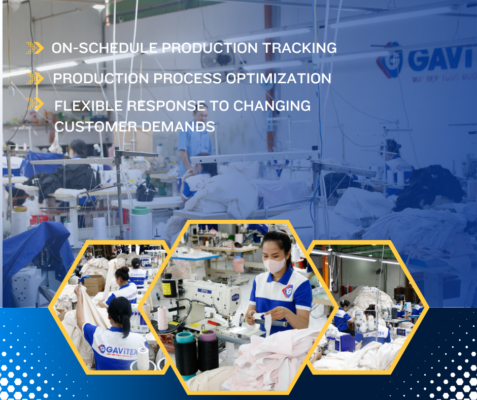
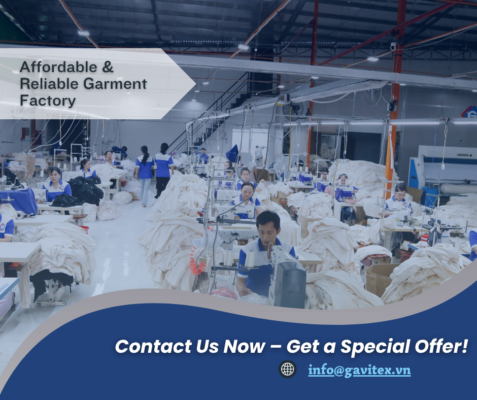
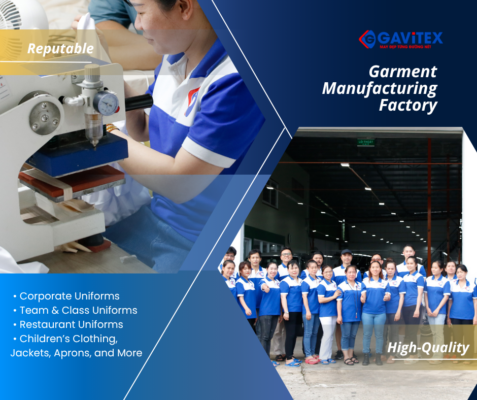
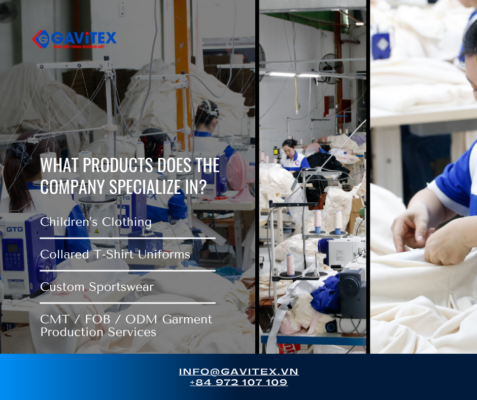
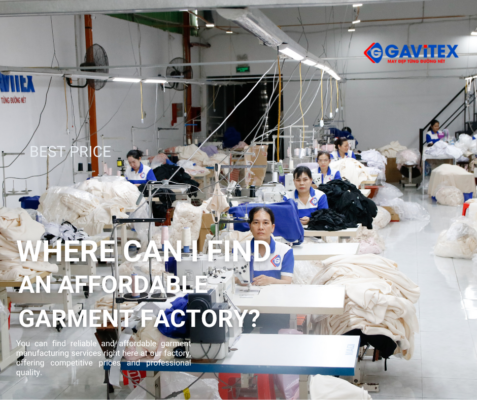
Gavitex operates structured clothing production lines designed for both reliability and flexibility. As an OEM clothing manufacturer, we can support basics, fashion pieces and private label apparel programs with consistent quality. Our focus on environmentally friendly clothing manufacturing shows up in choices like modern cutting equipment to reduce fabric waste, optimized line layouts to minimize idle time, and maintenance routines that improve energy efficiency.
We also support end-to-end garment production, from development through packing, so that responsible decisions made in design and sampling carry all the way through bulk shipments.
Processes, training and continuous improvement
Technical capability alone is not enough. Our teams receive regular training on safe chemical handling, waste segregation, and best practices in garment manufacturing. Data from inline inspections, audits and energy monitoring is used to identify hotspots where improvements can both strengthen environmentally friendly clothing manufacturing and enhance line efficiency. In this way, sustainability goals and productivity targets support one another instead of competing.
Gavitex also keeps a close eye on global developments, drawing inspiration from industry resources such as garment manufacturing insights to refine our methods and stay aligned with best practices.
Supply chain collaboration and transparency
Environmentally responsible production is only as strong as the supply chain behind it. Gavitex collaborates closely with fabric mills, trim suppliers and logistics partners to support environmentally friendly clothing manufacturing from fiber to finished garment. We document sources, track critical processes and share information with brand partners so they can respond confidently to retailer and regulator questions.
Legal Structure, Brand Protection and Confidentiality
Contracts that support responsible manufacturing
As volumes and visibility grow, brands must be sure that their partners can uphold both environmental and commercial commitments. Gavitex works under clear manufacturing contracts that describe responsibilities, quality levels, corrective-action procedures and compliance expectations. These agreements are aligned with our approach to environmentally friendly clothing manufacturing, covering topics such as chemical management, waste handling and traceability as well as classic production metrics.
NDAs, sample protection and IP management
In parallel, we use non-disclosure agreements and practical controls to protect designs, artwork and technical documents. For sensitive collections and high-profile private label apparel programs, sample rooms and digital pattern systems are restricted to authorized personnel. Access to development areas can be adapted depending on the sensitivity of each project, ensuring that environmentally friendly clothing manufacturing happens in a secure environment where your brand identity is respected.
Structured escalation and risk management
Even with strong systems, issues can arise. What matters is how quickly and transparently they are addressed. Gavitex agrees in advance with partners on how to investigate deviations, handle rework or replacements, and prevent repeat issues. These processes apply both to environmental commitments and traditional quality criteria, reinforcing trust as programs scale.
- Written contracts and NDAs aligned with sustainability goals.
- Controlled access to sensitive samples and technical files.
- Clear responsibilities for data, documents and approvals.
- Issue-handling and escalation procedures that cover both impact and quality.
5 Reasons to Choose Gavitex for Environmentally Friendly Clothing Manufacturing
1. Integrated vision of impact and industrial performance
Gavitex does not treat impact reduction and productivity as separate topics. We analyze how style design, material choice and line configuration work together, and then design environmentally friendly clothing manufacturing solutions that support both sustainability targets and cost objectives. This integrated mindset helps brands avoid trade-offs that damage either margins or credibility.
2. Flexible support for different business models
Whether you manage a direct-to-consumer label, a multi-country retail chain or a corporate uniform line, we adapt our garment manufacturing solutions to your reality. Basics and high-volume products can leverage strong environmentally friendly clothing manufacturing practices, while more experimental or limited runs still benefit from shared systems and materials. This flexibility allows your assortment strategy to evolve without having to change factories every season.
3. Transparent costing and realistic scenarios
Brands appreciate transparent costing and clear explanations. Gavitex works with you to model how different levels of environmentally friendly clothing manufacturing — from minor improvements to ambitious programs — affect unit cost, lead time and risk. You can see where investments have the biggest impact and choose scenarios that fit your commercial strategy and price architecture.
4. Commitment to learning and long-term partnership
Responsible production is a moving target. New materials, guidelines and customer expectations appear every year. Gavitex invests time and resources in staying updated, refining our environmentally friendly clothing manufacturing approach and sharing insights with partners. We view each season as part of a multi-year journey rather than a one-off transaction.
5. Vietnam-based partner with global standards
Operating in Vietnam gives Gavitex access to skilled labor, strong textile ecosystems and competitive cost structures. By embedding environmentally friendly clothing manufacturing practices into this context, we provide brands with a compelling combination of price, quality and responsibility. This makes it easier to position your products confidently in demanding markets.
FAQ: Environmentally Friendly Clothing Manufacturing with Gavitex
Below are common questions from brands that are exploring or scaling environmentally friendly clothing manufacturing with Gavitex as their partner.
What does environmentally friendly clothing manufacturing actually include?
Is environmentally friendly clothing manufacturing always more expensive?
Can environmentally friendly clothing manufacturing work for private label apparel?
How do you ensure that claims about environmentally friendly clothing manufacturing are credible?
What is the best way to start a project with Gavitex?
Contact Gavitex — Turn Responsibility into a Competitive Advantage
Talk to a team that lives environmentally friendly clothing manufacturing every day
If you are exploring environmentally friendly clothing manufacturing for the first time or looking to scale existing initiatives, Gavitex is ready to help. Our experience with international brands, flexible garment manufacturing setups and clear communication make it easier to move from ideas to reliable production.
Call 0972107109 to discuss styles, volumes and timelines with the Gavitex team and see how environmentally friendly clothing manufacturing can support your next collection.
Explore more about how Gavitex combines responsible production and strong industrial capability:
Final prices, minimums and lead times for Gavitex environmentally friendly clothing manufacturing programs depend on style complexity, compliance needs and long-term volume commitments. Our team is ready to create a clear, realistic plan tailored to your brand.