


Seamless Underwear Manufacturing Process for Private Label Brands
Seamless underwear is knitted largely in one piece on circular machines, giving smooth, invisible comfort [...]
Aug
French Terry vs Fleece for Hoodie Manufacturing
French terry and fleece are the two fabrics most hoodies are made from, and the [...]
Aug
Sports Bra Manufacturing Checklist: Support, Fabric, and Construction
A sports bra must deliver real support, comfort and moisture management across a wide range [...]
Aug
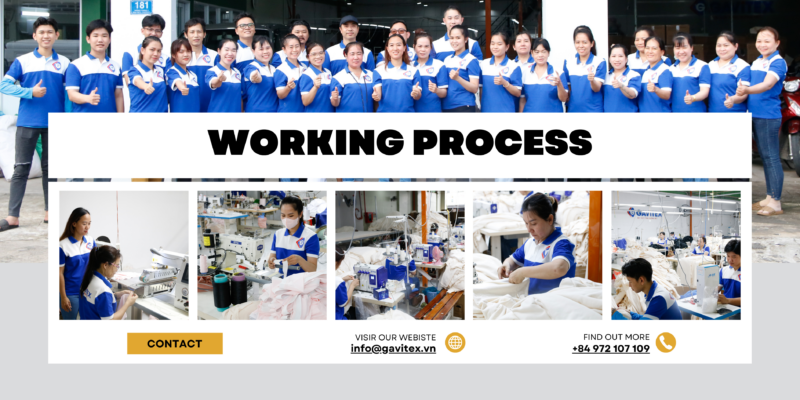
Vietnam Export-Quality Garment Factory: Sourcing High-Quality, Ethical Apparel From Vietnam
Gavitex supports export-quality garment manufacturing in Vietnam for international apparel brands, covering sampling, fabric coordination, [...]
Feb
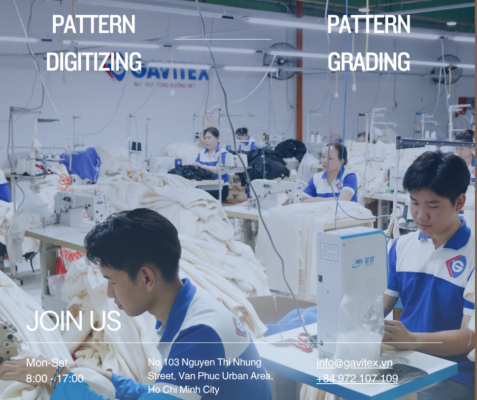
Vietnam Garment Production Factories: Sourcing, Manufacturers, Ethical Apparel & Compliance Guide
Gavitex provides garment production support in Vietnam for international apparel brands, covering sampling, fabric sourcing, [...]
Feb
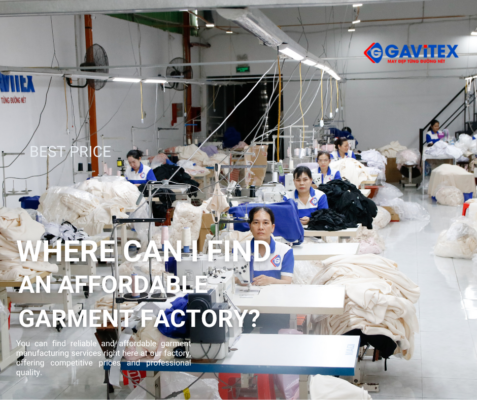
Vietnam Clothing Manufacturing For Export: Sourcing, Quality, And Sustainable Apparel
Unlocking the potential of Vietnam clothing manufacturing for export is critical for businesses seeking cost-effective [...]
Feb
Largest Garment Factory In Vietnam: Top Producer, Capacity, And Workforce Insights
The quest to pinpoint the largest garment factory in Vietnam is crucial for businesses seeking [...]
Feb
Garment Factories In Vietnam: Sourcing, Manufacturers, & Ethical Apparel Production
Understanding the landscape of garment factories in Vietnam is crucial for businesses seeking efficient and [...]
Feb
Contract Garment Factory Gavitex for Global Brands
Choosing the right contract garment factory can make or break your apparel business. Quality, speed, flexibility, and reliability in production are no longer “nice to have” – they are the foundation of scaling fashion brands, uniform programs, and private label lines globally. Gavitex, based in Vietnam, supports international brands with modern garment manufacturing, efficient clothing production lines, and full-package support from development to delivery.
Contents – Your Guide to Working with a Contract Garment Factory
- 1. What is a contract garment factory and how does it work?
- 2. Market overview & demand for contract manufacturing
- 3. Contract garment factory vs other production models
- 4. Gavitex production capabilities & technology
- 5. Legal assurance & brand protection
- 6. Five reasons to choose Gavitex as your partner
- 7. Reference price list & cost advantages
- 8. Frequently asked questions (FAQ)
- 9. Contact Gavitex / Get a quote instantly
Call for consultation & Get a quick quote
1. What a contract garment factory really does for your brand
At its core, a contract garment factory is a production partner that manufactures apparel for your label under a clear contract. Instead of investing in buildings, machines, and labor management, brands can rely on a specialized partner that already operates efficient clothing production lines, owns industrial equipment, and manages skilled workers. You remain in control of design, brand identity, and sales channels, while the factory focuses on executing production with consistency and scale.
Core features of a modern contract garment factory
A professional contract garment factory like Gavitex offers much more than sewing capacity. It integrates fabric sourcing, material planning, pattern making, grading, sample development, bulk cutting, sewing, finishing, and packing into a unified process. This full-package or custom clothing production model lets brands send tech packs and receive finished garments ready for distribution. The factory optimizes line balancing, worker training, and quality checkpoints to protect your margin and reputation.
Because a contract garment factory handles volume from multiple clients, it can invest in specialized machinery, such as automatic cutting, digital pattern systems, and pressing equipment, which an individual brand might find too expensive. For example, one line may focus on knit private label apparel, while another line is tailored to woven shirts, uniforms, or outerwear. This specialization generates high efficiency and stable output even during peak seasons.
Another key feature is flexibility. Modern buyers frequently change styles, colors, and collections. A strong contract garment factory responds with modular lines that can be reconfigured quickly, and with cross-trained operators who can shift between styles. For brands, this means lower risk when testing new categories, capsule collections, or promotional runs. Instead of building new infrastructure, you tap into an already optimized garment manufacturing ecosystem.
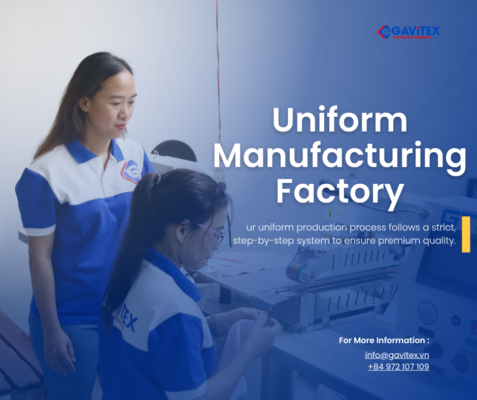
Value created for international brands and retailers
Working with a contract garment factory brings clear financial, operational, and strategic benefits. Financially, you convert fixed costs (buildings, machinery, payroll during slow seasons) into variable costs tied directly to orders. Operationally, your teams can focus on design, marketing, and sales while the factory manages the daily complexity of garment manufacturing. Strategically, you get access to new product types and materials without having to build internal expertise for each category.
Brands that work with Gavitex use this model to launch new private label apparel lines for e‑commerce, develop uniforms for corporate clients, or extend into activewear and athleisure. Because a contract garment factory already knows how to manage compliance, social audits, and technical requirements, it becomes much easier to onboard new retailers and marketplaces that demand strong traceability.
When to partner with a contract garment factory
A partnership with a contract garment factory is ideal when your brand wants to scale without adding heavy assets or when your current suppliers cannot meet quality or lead time targets. It is equally powerful for startups that want a professional production base from day one and for established labels that need additional capacity without disrupting their existing supply chain. Gavitex can act as your dedicated contract clothing manufacturer, helping you grow from initial concept to large, recurring orders with confidence.
2. Market overview for contract garment factory services
Demand for flexible garment manufacturing continues to rise as fashion cycles shorten and customers expect frequent new collections. Instead of keeping all production in‑house, brands mix their own facilities with strategic partners, especially in key sourcing countries such as Vietnam. A reliable contract garment factory gives access to competitive labor, strong textile clusters, and proximity to raw materials and logistics hubs.
The market is especially dynamic for OEM clothing manufacturer services, where factories help with product development and engineering, not just sewing. Many buyers now expect partners to propose material options, construction improvements, and cost‑saving solutions. At the same time, custom clothing production for niche brands, D2C labels, and influencer brands is growing rapidly. These customers need smaller batches, faster development, and the ability to reorder quickly once designs are validated.
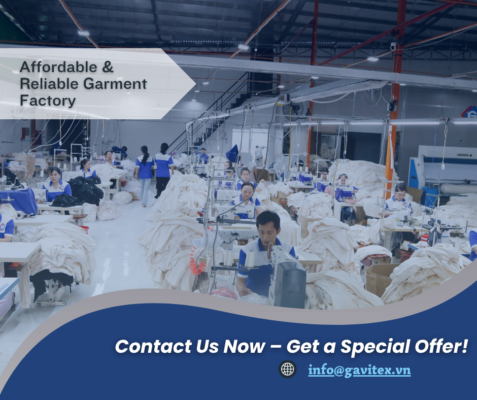
The illustrative chart below shows a typical demand share by type of client working with a contract garment factory. This is a conceptual view to help you understand where your brand fits in the landscape.
35%
athleisure 30%
uniforms 20%
capsule brands 10%
5%
In this context, Gavitex positions itself as a versatile contract garment factory that serves both high‑volume programs and premium private label apparel. Whether you are a large retailer needing millions of units annually or a growing brand testing new categories, Gavitex provides the flexibility and technical depth you expect from a modern OEM clothing manufacturer.
3. Contract garment factory vs in‑house production or local workshops
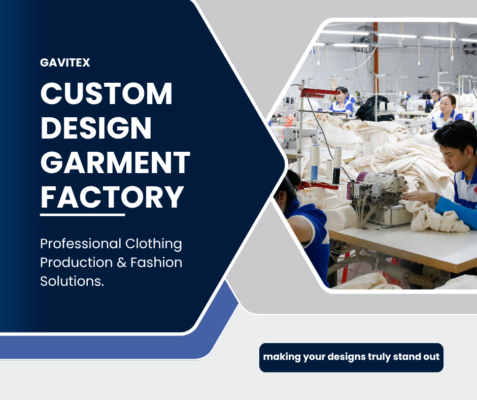
Cost structure and investment risk
Building your own factory requires heavy upfront investment: land, buildings, machines, utilities, and a permanent workforce. This model locks your brand into fixed costs, even when demand slows. By contrast, a contract garment factory works on an order basis. You pay for what you produce, when you produce it. For many brands, this significantly reduces financial risk and improves cash flow. Gavitex, for example, already invests in production infrastructure so clients can focus on design, marketing, and sales.
Local workshops can look attractive at first due to low apparent costs. However, they often lack standardized clothing production lines, proper industrial engineering, and strong quality control. As volumes grow, inconsistency, rework, and delays can end up costing more than the original savings. A professional contract garment factory applies proven methods to line balancing, efficiency improvement, and quality checkpoints, making the total cost per garment competitive even compared to informal suppliers.
Quality, compliance, and scalability
In‑house production gives direct control, but scaling capacity is slow. You must find and train workers, buy machines, and perhaps expand buildings. A contract garment factory with existing capacity can scale faster, either by opening more lines or adding shifts. Gavitex carefully trains operators, supervisors, and quality staff to sustain consistent workmanship across large orders. This is critical for retailers or private label apparel programs where every piece must meet the same standard.
Compliance is another major differentiator. International buyers require social audits, environmental controls, and traceability. Many small workshops cannot pass such audits. A certified contract garment factory like Gavitex understands audit frameworks, health and safety rules, and documentation standards demanded by global clients. This makes onboarding to new markets or retailers faster and less stressful.
Innovation and product development support
Another key advantage of working with a contract garment factory is access to technical innovation. Gavitex’s teams handle pattern optimization, material suggestions, and construction improvements during custom clothing production. When styles are engineered correctly, you gain better fit, fewer defects, and lower fabric waste. Local workshops may simply copy patterns without questioning whether they are efficient or production‑friendly, which can lead to hidden costs.
In short, for brands serious about growth, a professional contract garment factory offers a more strategic, scalable, and reliable approach than informal workshops, and a more flexible, lower‑risk alternative than owning a factory. This is why many global brands use a mix of internal resources and external partners such as Gavitex to build a resilient supply chain.
4. Production capabilities of Gavitex as a contract garment factory
Gavitex combines modern technology, carefully organized clothing production lines, and experienced staff to deliver reliable capacity for international brands. From bulk basics to detailed fashion pieces, this contract garment factory is designed to handle both volume and complexity.
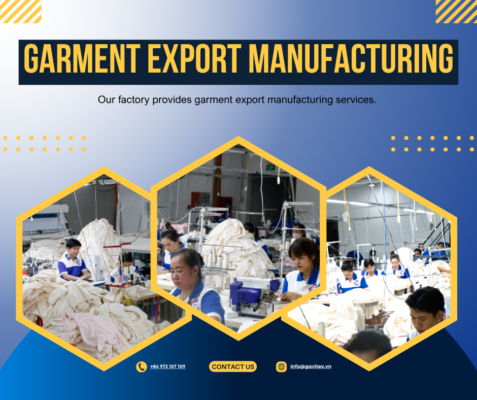
Scalable capacity and line organization
Gavitex operates multiple clothing production lines dedicated to specific product families such as T‑shirts, polo shirts, shirts, pants, and uniforms. Each line is engineered by industrial engineers who define operations, cycle times, and machine layout. This allows the contract garment factory to reach high efficiency while maintaining consistent quality. Lines can be scaled up or down depending on seasonal demand, launch schedules, and client forecasts.
For new programs, Gavitex often begins with pilot lines to confirm workmanship and quality standards. Once the style is stable, capacity can be expanded by replicating the line setup or creating mixed lines that run similar styles. This structured approach makes production planning predictable, reducing bottlenecks and last‑minute surprises for brands.
Technology and digital tools
As a forward‑thinking contract garment factory, Gavitex uses digital pattern and grading systems, computerized cutting, and data collection on the sewing floor. This improves marker efficiency, reduces fabric waste, and shortens style changeover time. Digital tools also support accurate size grading, which is essential for private label apparel sold in multiple regions or through online channels where fit consistency is crucial.
Quality control data, production outputs, and defect trends are tracked to support continuous improvement. Supervisors and technicians monitor styles across shifts and provide feedback to engineering and sample teams. This loop ensures that once a style is approved, each repeat order benefits from the lessons learned, resulting in better efficiency and fewer issues for the client.
Service range: from development to packed goods
Gavitex can support clients at different levels. Some brands provide detailed tech packs and materials; others prefer a more complete service. As a flexible contract garment factory, Gavitex offers custom clothing production including material sourcing support, lab‑dip and strike‑off management, sampling, size‑set production, and full packing according to client requirements. Carton labels, barcodes, and polybag markings can be prepared following retailer guidelines, simplifying inbound logistics and warehouse operations.
For brands searching for a trusted contract garment factory in Vietnam with a strong ecosystem of suppliers and logistics partners, Gavitex offers a balanced combination of capacity, technology, and attentive service, ready to support sustainable growth.
5. Legal assurance and brand protection with a contract garment factory
When you trust a contract garment factory with your styles, you are handing over designs, technical specifications, and sometimes even business strategy. Clear legal frameworks, contracts, and confidentiality measures are essential to protect your brand.
Contracts that define responsibilities and expectations
A professional contract garment factory such as Gavitex works under written agreements that define pricing models, delivery terms, payment conditions, liability, and quality standards. These contracts protect both parties and establish a transparent working relationship. Service levels, tolerance ranges, inspection procedures, and after‑delivery claim handling are clearly described so that there are no surprises when production scales up.
For long‑term projects, framework agreements may be used to cover multiple seasons or product categories, with annexes for each program. This provides stability for the factory to plan capacity and investments, while giving brands predictable conditions and priority on lines when volumes grow.
Confidentiality, NDAs, and sample protection
Protecting your designs is a top priority. Gavitex is ready to sign non‑disclosure agreements (NDAs) that specify how design files, tech packs, size charts, and samples must be handled. Access to digital files is controlled and limited to relevant departments. Samples and prototypes are stored in designated areas, and sensitive items are not used for marketing or shown to unrelated visitors. This professional approach ensures that working with a contract garment factory does not expose your intellectual property.
Internal rules cover the use of logos, trims, and packaging carrying your identity. Any photos taken inside the factory for case studies or internal training omit confidential details. This culture of discretion is particularly important for private label apparel programs, where your advantage lies in differentiated products and brand storytelling.
Brand integrity and compliance with destination markets
A reliable contract garment factory not only protects confidentiality but also supports compliance with labeling, safety, and documentation requirements in your target markets. Gavitex can follow specific rules for fiber composition labels, care instructions, and origin declarations, and can help coordinate testing with accredited laboratories when needed. This reduces the risk of goods being delayed or rejected at destination.
Combined, these legal and practical safeguards give brands confidence that their collaboration with a contract garment factory is not just about cost and capacity, but also about long‑term protection of brand value and customer trust.
6. Five reasons to choose Gavitex as your contract garment factory partner
Many factories claim to be the perfect partner, but it is the details that make the difference. Below are five practical reasons brands worldwide select Gavitex as their contract garment factory.
1. Balanced quality and cost
Gavitex focuses on building repeatable, stable quality backed by clear procedures and trained quality teams. At the same time, the factory constantly works on improving efficiency and reducing waste so that your landed cost remains competitive. This balance is essential when you operate in retail or online channels where price points are tightly defined. As a contract garment factory, Gavitex analyzes each style to find the right construction method that maintains the look while keeping sewing minutes under control.
2. Strong support for design and development
Instead of simply receiving orders, Gavitex collaborates with brands during development. Pattern makers and technicians review styles to ensure they are production‑friendly and cost‑effective. Suggestions may include alternative seams, revised measurements, or fabric options that maintain your desired appearance. This makes Gavitex a genuine OEM clothing manufacturer, not just a sewing contractor, and helps your products stand out in crowded markets.
3. Reliable lead times and communication
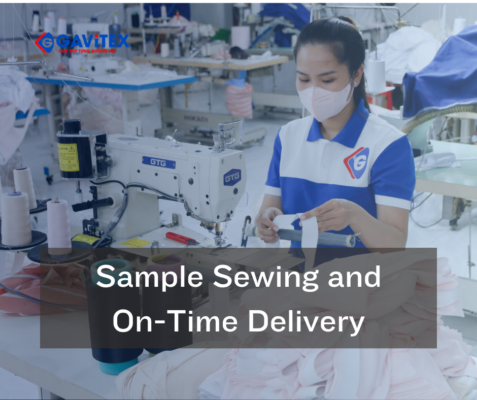
On‑time delivery is critical. Gavitex plans production carefully, using capacity reservations and realistic loading plans. The factory shares clear timelines, from fabric in‑house dates through cutting, sewing, and packing, so you can coordinate marketing campaigns and launch dates. Dedicated English‑speaking merchandisers keep you updated on each stage. When working with a contract garment factory, this transparency is often what keeps complex seasons running smoothly.
4. Flexibility for different order sizes
Not all clients require the same quantities. Some need large orders for major retail campaigns; others run smaller batches for niche private label apparel. Gavitex designs line setups and planning models to accommodate both, whenever feasible. Pilot runs, test collections, and seasonal capsules can be produced efficiently without disrupting major programs. This flexibility is especially valuable for brands experimenting with new categories and sales channels.
5. Strategic location and supportive ecosystem
Located within a strong textile and apparel hub, Gavitex benefits from proximity to yarn spinners, knitting mills, dye houses, trim suppliers, and logistics providers. This ecosystem shortens lead times and makes it easier to solve issues quickly. When combined with the advantages of working with a contract garment factory, brands gain a powerful platform for sustainable growth and diversification of supply.
If you are searching not only for a factory but for a long‑term garment manufacturing partner, you can also explore related resources at garment manufacturing insights to better understand the regional ecosystem that supports Gavitex.
7. Reference price list – how a contract garment factory like Gavitex saves your costs
Market prices for contract garment factory services depend on fabric, style complexity, order size, and compliance requirements. The table below presents an illustrative comparison. Market averages are indicative values; Gavitex aims to offer rates approximately 35% to 45% below typical market averages while maintaining professional standards.
| Product type | Average market price (FOB / piece) | Gavitex indicative price (FOB / piece) | Approx. saving vs market |
|---|---|---|---|
| Basic knit T‑shirt | 3.00 USD | 1.80–1.95 USD | 35–40% lower |
| Premium polo shirt | 5.00 USD | 2.75–3.10 USD | 38–45% lower |
| Woven shirt | 7.00 USD | 4.00–4.55 USD | 35–42% lower |
| Casual pants / chinos | 9.00 USD | 5.00–5.75 USD | 36–44% lower |
| Uniform set (top + bottom) | 15.00 USD | 8.25–9.75 USD | 35–45% lower |
Note: The figures above are illustrative and may vary based on fabric, trims, order quantity, and technical requirements. They demonstrate how an efficient contract garment factory like Gavitex can significantly reduce your unit cost compared with average market rates, while still providing professional service and strong quality systems.
Call for consultation & Get a quick quote
8. Frequently asked questions about working with a contract garment factory

1. What information do I need to prepare before contacting a contract garment factory like Gavitex?
2. What is the typical production lead time with a contract garment factory?
3. Can Gavitex support small or medium orders, or only large volumes?
4. How does Gavitex ensure consistent quality across large orders?
5. Why should I choose a Vietnamese contract garment factory like Gavitex instead of factories in other countries?
9. Contact Gavitex – your trusted contract garment factory in Vietnam
Ready to turn your concepts into production with a professional contract garment factory?
Gavitex is prepared to support you from the first sketch to the final packed carton. Whether you manage a global retail program or build a growing online brand, Gavitex can become your long‑term partner for garment manufacturing, custom clothing production, and private label apparel.
Call the Gavitex team today at 0972107109 or click the button below to speak directly with a specialist, discuss your project, and receive a tailored quotation for your next orders.